- Home
 Bell Phillips director Jay Morton launches RIBA presidential bid
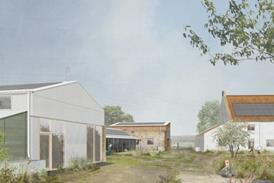 Clementine Blakemore submits plans to transform historic Somerset farmyard into peatlands research hub
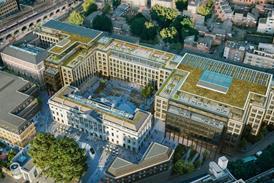 High Court allows legal challenge against decision to approve Chipperfield’s Chinese Embassy scheme
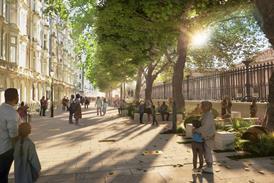 LDA Design reveals Holborn public space project ahead of public consultation
- Events

Early bird tickets available now
Find out more
Events calendar
Explore now
Keep up to date
Find out more
- Programmes


Opinion
Latest Opinion

Now is the time to take stock of architecture’s economic position
Architecture has in many ways typified the economic story of the UK since the Second World War. We are currently – and worryingly – becoming more and more exposed to global economic forces, writes Eleanor Jolliffe
Advertisement
Advertisement
More Opinion

Now is the time to take stock of architecture’s economic position
Architecture has in many ways typified the economic story of the UK since the Second World War. We are currently – and worryingly – becoming more and more exposed to global economic forces, writes Eleanor Jolliffe

Designing for tomorrow means delivering beyond compliance today
Manuela Fazzan argues architects, specifiers and developers must got beyond basic compliance to embed resilience, adaptability and sustainability into new homes if they are to meet future as well as current housing needs

Can the Future Homes and Buildings Standard deliver on its promise?
The homes element of just launched new energy regulations promises big savings on bills. It’s a pity that the benefits will come too late to help with the impact of the current energy crisis, writes Thomas Lane
Why texture is replacing flat surfaces in modern interiors
Paul Moody explains what’s behind the trend away from smooth surfaces and towards texture in interior design

Why coastal regeneration requires a new narrative
Coastal towns are central to our national identity, but too often revival strategies fail to reflect their distinct challenges. David Atkinson, director of development and investment at Willmott Dixon’s development business, argues that the sector needs to creatively rethink its approach

With healthcare buildings facing tougher conditions, how can performance keep up?
As healthcare buildings are asked to do more, under more extreme weather conditions and with less margin for error, Colin Rees argues the solution lies in using digital tools to narrow the gap between design intent and operational reality

The explosive growth of courses and classes in traditional design
A new and flourishing interest in traditional architecture and urban design is taking place around the world, challenging the dogmatic conventions of our profession and education, writes Robert Adam

While we are renovating our HQ at Portland Place, we must also renovate our profession
Architecture is at a low ebb and needs a reboot – we are ready to take it on, writes Jack Pringle, chair of the RIBA board

In CyanLines, Manchester has a green connectivity vision that other cities should follow
This legible, connected network of canals, rivers, parks, towpaths and tree-lined streets should mean that walking and cycling across the city region becomes not an afterthought but a defining feature of urban life, writes Martyn Evans
In CyanLines, Manchester has a green connectivity vision that other cities should follow
This legible, connected network of canals, rivers, parks, towpaths and tree-lined streets should mean that walking and cycling across the city region becomes not an afterthought but a defining feature of urban life, writes Martyn Evans

New towns can work, but only if we learn how to deliver them properly
Delivery structures, governance and long-term stewardship are just as important as the housing numbers attached to this next generation of new towns, Tom Mitchell at Metropolitan Workshop writes

We must strengthen national urban design guidance and apply it to greenfield developments
The government must go further to deliver a faster approval process and more efficient use of land as well as higher standards of urban design, a group of housing experts write
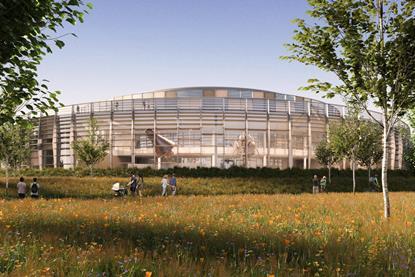
Architecture is the missing piece in the UK’s creative industry ambitions
UK film and high-end television production spend rose by 17% to about £5.5bn in the first nine months of 2025. Oliver Tyler, managing director at WilkinsonEyre, explains why developments such as Marlow Film Studios will be crucial to its continued success

Engineering the future: We already have the materials and the techniques to transform how we build
Decarbonising our industry means prioritising existing buildings, treating them as structural and material resources, and rediscovering efficient forms and the craft behind the processes that earlier builders refined under constraint, writes Rob Nield

Natural does not necessarily mean durable: why we need to think again about how we specify stone
Kristian Goodenough makes the case for rethinking how stone is specified – better informed by geology, performance characteristics and detailing

Energy-efficiency retrofits don’t have to create damp and mould – but only if they are tackled in the right way
Barrie Francis argues there is no need for retrofits to cause damp problems – providing the right steps are followed…

Stagnation and regeneration? A tale of two Scottish cities
Despite being just 40 miles apart, development prospects in Edinburgh and Glasgow could hardly be more different, Rab Bennetts writes

My response to the new Design Planning Policy Practice Guidance
Consultation on the latest guidance ended earlier this week. David Rudlin considers what it got right – and where it went wrong
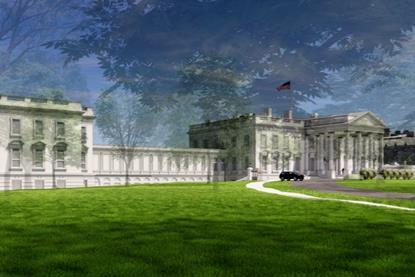
Ethics, choice and the demolition and rebuilding of the White House East Wing
The US president may currently be focusing on war in Iran but his decision to demolish the building constructed under Theodore Roosevelt has struck a deep nerve with the American public. The most troubling aspect of Donald Trump’s replacement is the way in which architectural standards have been lowered and ...

Women’s sport is forcing a rethink over stadium design
When venues work for women, families and first-time attendees, they become more commercially resilient and socially valuable for everyone, writes HOK’s Kirsty Mitchell
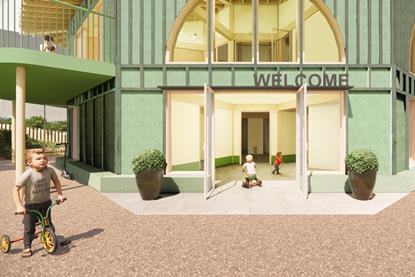
Designing for intergenerational care: an innovative way to bring people together and support communities
Delve Architects is working on what is believed to be a UK first by creating a forest nursery alongside three carehome facilities in rural Lancashire, Ed Martin writes

My hopes and fears for Manual for Streets 3
The DfT has circulated a draft of the eagerly awaited Manual for Streets update. It must not become just another well-meaning advisory document, writes Christopher Martin, managing director at Urban Movement

Back from Dubai: Iranian air strikes will shape a different city to the one I visited a month ago
The sight of smoke rising between skyscrapers has shaken one of the Gulf’s most stable hubs, where construction and real estate sectors have thrived on perceived insulation from conflict, writes Daniel Gayne

Housebuilding: The goose that lays the golden egg is dead
If the government is serious about building 1.5 million new homes, it must start by recognising the scale of the shift that took place in 1991 and everything that has been piled on since, writes Hugo Owen

Government should reflect real-world behaviour in Part G consultation response
Suzannah Adey argues changes to Approved Document G must reflect the way people actually use water or risk serious unintended consequences

Why regulation must focus on safety, competence and culture
Proportionate and effective regulation is a pre-requisite for thriving professions and markets. The ARB’s new strategy sets out our desire to be a leader in regulatory innovation in the built environment, writes Hugh Simpson

Parliament refurb poses important questions about correct way to conserve architecture
The French achieved a stunning feat by rebuilding Notre Dame in an improbably short space of time. So why does the Palace of Westminster restoration seem so much harder, asks Eleanor Jolliffe
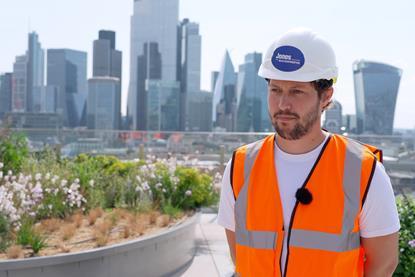
Why choosing the right weatherproofing for penetrations at data centres is key
Matt Jones explains why weatherproofing penetrations represents a particular challenge at data centres – and how specialist weatherprooding solutions can be a vital detail when specifying this cornerstone of digital economy infrastructure

Master the plan: what masterplanning means, and why it matters
Masterplanning and urban design are frequently conflated but serve very different roles, says Jonathan Tarbatt at Corstorphine & Wright. It is important that we clarify the language, challenge lazy assumptions and advocate for a more rigorous, place focused approach to large-scale development

Why architects should take a fresh look at London’s livery companies
Martyn Evans invites you to join the Worshipful Company of Chartered Architects and help protect a long tradition of professional responsibility by keeping it alive, active and relevant

Designing for difference: How thoughtful architecture can transform SEN environments
Being prepared to question standard solutions within the constraints of budget and safety leads to learning environments that are not only functional, but uplifting, Richard Paige of NVB Architects explains

In the age of artificial intelligence, what remains of the architect?
In a special long read comment piece, Martha Tsigkari and Sherif Tarabishy consider how the need for critical human reflection remains paramount in a profession that might otherwise risk becoming a recycling service

How trauma-informed design can shape spaces of safety and trust
Robert Hopkins explains how trauma-informed design can move inclusive architecture beyond compliance to create spaces that feel safe for all
