






Hundreds of studies into what people like and why have produced clear and consistent results. So it is beholden on us to build places that give residents what they want and need, writes Nicholas Boys Smith
Design, says the cliché, is in the eye of beholder: the sophisticate’s preference for burnished steel is as pertinent as the petit bourgeois liking for sash windows or red brick; one man’s modernism is another man’s palladianism. This is nonsense.
Over the past decade, the social enterprise that I founded, Create Streets, has read or conducted hundreds of studies into what people like and why. We have polled the public in Britain and abroad, creating a careful methodology for conducting fair visual preference surveys which is now being copied globally.
We have measured house prices, studied where people walk and don’t walk, examined data on mental health and neighbourood associations and asked the public from Surrey to Scotland what they favour and fear. We have interviewed or read reports by neuroscientists, psychologists, doctors and public health professionals from Syndey to Seattle. We have discussed and presented our findings on five continents.
Most of us prefer interesting places with a strong sense of place, with local materials, coherent complexity, variety in a pattern, some embedded symmetries and probably a dash of colour
And I can report, without qualm or caveat, that the results are in. We know what places most people prefer most of the time and where most of us tend to flourish. We know how to unlock public support for more homes on less land and how to create neighbourhoods in which we are more likely to be friendly and less likely to be friendless.
It is not a happy finding for the fans of driving architecture and atomising brutalism in which to nourish our solitude. Most of us prefer interesting places with a strong sense of place, with local materials, coherent complexity, variety in a pattern, some embedded symmetries and probably a dash of colour.
We prefer facades with detail and texture up-close which resolve themselves into a meaningful pattern as we step away. We prefer patterns that mimic nature or represent humanity.
We like curves and scrolls and faces. Think how many historic buildings are embellished by representations of nature or of ourselves: acanthus leaves, cornucopiae of fruits, the heads of gods or demons.
In an age of division, architecture unites us
The polling says this. In one of our recent national polls of a classical facade versus a bland and repetitive modernist facade, 79% of the public versus 17% preferred the traditional option. This preference has held true in study after study, and can unlock support for higher density development in polling and in practice, in town and country.
In every instance, this preference is shared by voters of all parties, by rich and poor, by old and young and in every region. In an age of division, architecture unites us. This is even true in more divided societies.
An American poll found that 72% preferred classical to modernist federal buildings, a preference likewise replicated across all demographics. Dutch and Swedish preferences are identical. So clear is the evidence that large language models, fed questions such as “which place will people find more friendly” confidently predict human preferences.
Pricing research agrees. A Dutch study of 60,000 property transactions across 86 comparable housing developments found that, everything else controlled for, more traditionally styled new houses sold at a 15% premium to non-traditional houses. The King’s beautiful urban extension of Poundbury now sells at a 55% value premium to the comparable local market. It cost 18% more to build and has more affordable housing than comparable developments.
Behavioural studies agree. In a Danish study, 25% of pedestrians stopped in front of complex facades. Only 1% did in front of sterile facades. In one American study, five times as many passers-by offered to help lost tourists in front of an attractive versus a featureless building.
I could cite hundreds more studies. We are also starting to understand why humans have such consistent preferences. It is hardly rocket science.
Our brains process symmetrical shapes more rapidly than non-symmetrical shapes. We need stimulation – but not too much
We like to be interested. And blank walls bore us, however “honest”. As Professor Colin Ellard, author of Places of the Heart explains: “Facades devoid of complexity don’t make us happy.” Natural shapes and curves reassure.
Our brains process symmetrical shapes more rapidly than non-symmetrical shapes. We need stimulation but not too much. The pioneering work of Cleo Valantine reveals different physical forms that reassure, alarm or bore us eliciting consistently different neurophysiological stress responses.
It is not just a question of what buildings look like, though that really matters. Our study, Move Free, showed how the more we can make it easier to move about from any one point in a town to any other point, and the more we can limit the polluting downsides of movement to others, then the more prosperity citizens can generate. More movement, more pleasingly conducted between more places, generates more value for more of us and makes for more prosperous places and economies.
This can be measured though land values: more walkable neighbourhoods are typically worth between 10 and 55% more in controlled studies.
In towns, cars are just not very good at moving lots of people around. The same street lane can move 21% of the people by car that it can move by bike. American and British studies both show how streets with more traffic are associated with few neighbourly friendships.
In our book Of Streets and Squares, we suggested seven golden rules for prosperous and popular places. Critical was the importance of “gentle density”, the sweet spot between towers and sprawl, providing an ideal balance between privacy and proximity.
This Goldilocks urbanism is incredibly efficient, typically requiring building heights of three to seven storeys. Urban greenery also matters, as hundreds of studies show. However, it should be “little and often”, so that we are exposed to greenery frequently in our daily lives.
Architecture and urbanism is a public art. It shapes our common home. What people feel about it is important and can turn isolated groups of individuals into communities.
So let’s empower public preferences if we are to build millions of new homes. Our hearts and our happiness will be better for it. Let’s accept our common humanity and create new places – and steward old ones – to make our souls sing and our bodies thrive.
Postscript
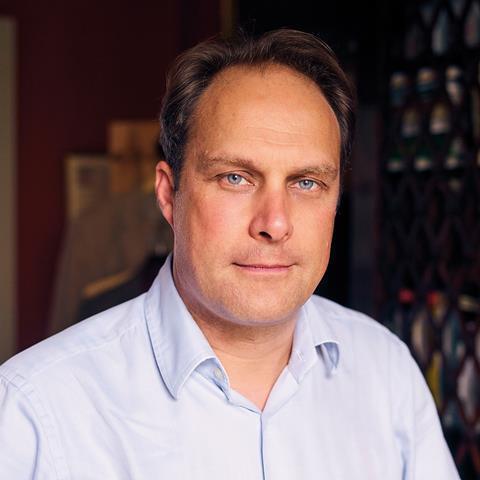
Nicholas Boys Smith is the founder and chairman of Create Streets







10 Readers' comments