






Delve Architects is working on what is believed to be a UK first by creating a forest nursery alongside three carehome facilities in rural Lancashire, Ed Martin writes

It is no secret that the UK population is ageing. With over-65s projected to make up a quarter of the population by 2050, there are serious conversations about preparing for social services, funding and healthcare.
The UK is already dealing with a housing crisis, and we need to be thinking seriously about a carehome crisis for future generations as we live longer and more active lives. With growing numbers in the coming decades, how will this demographic change and define our towns and cities?
With the larger demographic comes the question of how and where to create new carehomes. But shouldn’t we also ask ourselves what sort of architecture we want to create?
Architects such as Mae and Pollard Thomas Edwards have built some inventive projects that think differently around this issue, but how can we see third-age care as an opportunity to really create something different and thriving for potentially isolated old-aged communities?
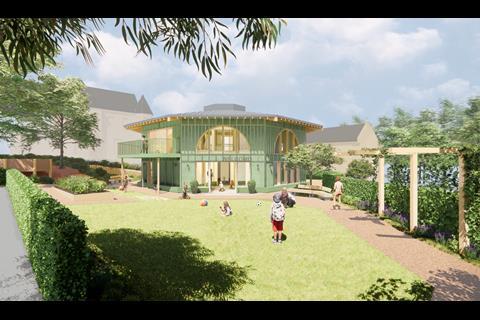
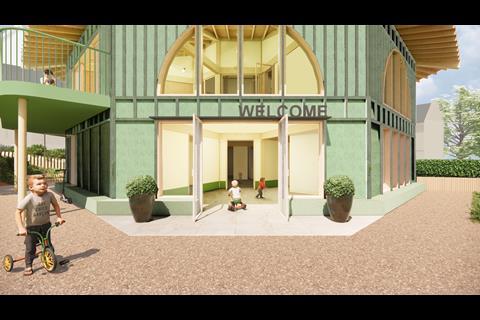
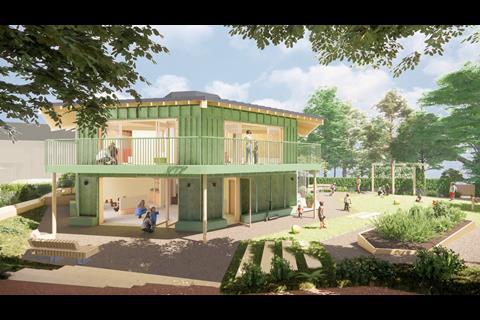
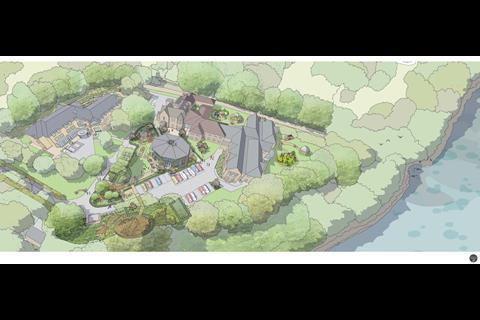
One answer lies in creating intergenerational facilities, such as The Nest Standish in Lancashire which received planning from Wigan council in November. Designed by Delve Architects for Millennium Care, a family-run and B Corp-accredited care provider, the facility is thought to be the first of its kind in the UK – an intergenerational and forest nursery positioned next to three existing carehome facilities on a single site in the rural village of Standish. It aims to support staff, residents’ families and the wider community by connecting generations with nature and fun, through joyous, sustainable design.
The Standish-based Nest nursery will be a flexible building, offering a consistent stream of intergenerational activities on the site which is one of the group’s main non-pharmacological approaches to elderly care.
At Delve, we have been privileged to deliver multiple early-years education and nursery projects across the country for clients who want to push back against the drab state of nurseries we have all grown accustomed to. Studies have shown how vital those early years are for the education of young people and our nurseries have favoured high-quality design, haptic material choices and retrofitting buildings within existing communities to help foster young minds.
Our use of natural materials is not just our responsibility to deliver low-carbon projects but about fostering an important connection to nature. This is something also curated by this new facility and its forest nursery ambitions, utilising timber with the goal of bringing together old and young in rural Lancashire around the green Worthington Lakes site.
It offers a welcome opportunity for families with young people in the area, especially as rural communities themselves face significant barriers to access to childcare. It is also an important reminder of the lack of access to nature that so many children in towns and cities lack. New findings have shown that 39% of UK children aged 3 to 11 never play outside in green spaces unsupervised; the WWF has also warned of a “nature gap” for poorer students in the UK.
This kind of connected environment supports mental and emotional wellbeing, reduces loneliness, fosters empathy and understanding, and creates a more connected, resilient community for the future
Our hope is that intergenerational care facilities can become focal points for existing villages and towns, bringing together different age groups and our surrounding natural world. Rather than isolated islands set apart from settlements, connected new villages can help to maintain a position in society for any age group.
And that closer connection also reduces the reliance on cars for integration, keeping essential services such as healthcare, retail and social activities within reach.
Emily Abbott, co-founder of Intergenerational England, believes that the benefits of such intergenerational care facilities are far-reaching for older residents, care staff, children, parents, and wider communities. Both research and practice highlight that this kind of connected environment supports mental and emotional wellbeing, reduces loneliness, fosters empathy and understanding, and creates a more connected, resilient community for the future.
The Nest Standish is just one answer to the problems we face with child and elderly care in the country, and it’s an innovative one provided by a client, Millennium Care, and campaign groups like Intergenerational England who have worked for decades in the sector. We are proud to be working on this project but know that it is only one approach – affordability and access to nature are not a given for every project, but alleviating loneliness and providing space for all generations to thrive are goals we can surely all get behind.
Postscript
Ed Martin is director and co-founder at Delve Architects www.delvearchitects.com





No comments yet