






Only around 6% of UK homes are designed by architects, but getting them involved early is one of the most effective ways of ensuring that homes are built to last, to support community life, and are easier to live in over time, says Simon Vernon-Harcourt at City & Country

A recent study by University College London reveals a worrying reality: three-quarters of new homes in England are rated either “mediocre” or “poor”. It is a damning figure, and one that points to a system which, for decades, has prioritised speed and volume over long-term housing quality.
This is especially important as the government pushes forward with its “build, baby, build” agenda to deliver hundreds of thousands of new homes every year. If we are to meet these ambitious targets in a meaningful way, quality cannot be an afterthought.
At the heart of this issue is a failure to involve architects. Too often, architecture is treated as a bolt-on rather than a core part of the development process. As a result, we continue to build housing that is disconnected from place, out of step with communities, and lacking the qualities that make somewhere feel like home.
If we want to build not just more homes, but better homes, we need to put design quality and community integration at the centre of the process, right from the beginning.
However, land is scarce and expensive, and in most cases, it goes to the developer who can promise the quickest financial return. This creates a model where housing is treated as a product, to be delivered efficiently, rather than a long-term piece of social infrastructure.
At the same time, the growing complexity of planning policy, environmental standards and infrastructure delivery has made housebuilding an increasingly technical process, and one in which design – and by extension architects – are often sidelined.
Homes are often built from a limited set of standard designs which fail to respond to the unique characteristics of the site or the needs of the community
This lack of architectural involvement is reflected in the fact that today. According to data published by the RIBA in 2018, only around 6% of UK homes are designed by architects. This is a missed opportunity, because architects are trained to consider how buildings relate to one another, to the street, to the wider landscape, and to the people who use them.
Without their input, much of new housing ends up feeling generic and cookie-cutter. Homes are often built from a limited set of standard designs which fail to respond to the unique characteristics of the site or the needs of the community. The result is repetitive and bland developments with little variation in layout, style, or quality of space.
This lack of thoughtful design affects residents’ quality of life by creating places that don’t foster a sense of belonging or community and often overlook practical aspects such as natural light, privacy, and access to green spaces.
A more diverse mix of housing could help change this. At present, large developers dominate the market, which can limit both the pace and variety of housing delivery. Giving SMEs more access to land, and particularly those willing to collaborate with architects and others who prioritise placemaking, could lead to better outcomes.
This is not just about appearance. When architects are involved from the start, housing tends to respond more directly to its context; how the land is shaped, how the streets connect, how people move through the area.
It is a different way of thinking that does not begin with units per acre, but with how people will live, gather, travel and put down roots.
Design, in this sense, is about how a place works. Seemingly small decisions such as the position of front doors, the use of corners or whether there are natural spaces to meet neighbours all make a difference to how a development feels. Many of these qualities are present in older towns and villages, which evolved gradually and reflect local patterns of life.
There are examples that show what is possible when architectural quality is taken seriously. One of the most widely cited is the Accordia development in Cambridge, a pioneering housing project completed in the late 2000s.
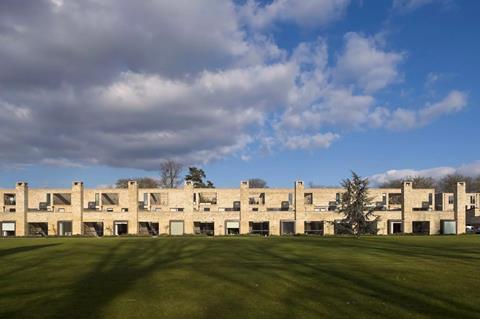
Accordia was led by an architectural practice which really understood the context of Cambridge, the street patten, materials and proportions of the area and turned this into a modern community of homes. It won numerous awards, including the Stirling Prize, because it demonstrated an innovative approach to spatial design as well as a new model for humane housing in a sensitive urban location.
The scheme was led by Fielden Clegg Bradley Studios. There have been many other examples of great modern housing developments designed by creative architectural practices since then.
There is no reason why better design should come at the cost of delivering the 1.5 million homes that the country needs
However, developments such as Accordia remain the exception rather than the rule. In most cases, especially outside major urban areas, design is diluted by the lack of creative architectural input, risk-averse decision-making, and a narrow focus on hitting delivery targets. This often results in generic housing which prioritises speed and cost over the quality of place and the wellbeing of residents.
Changing this will require a shift in mindset across the board. Landowners, developers, planners and architects themselves all have a role to play in pushing for a more collaborative, design-led approach. Multidisciplinary teams working together from the outset will be better placed to create housing that works over the long term.
Involving architects from the beginning does not mean slowing things down or making housing less viable. There is no reason why better design should come at the cost of delivering the 1.5 million homes that the country needs.
In fact, involving architects early is one of the most effective ways of ensuring that those homes are built to last, to support community life, and are easier to live in over time, which are all key goals if the government’s “build, baby, build” agenda is to truly succeed.
Postscript
Simon Vernon-Harcourt is design and planning director at City & Country







No comments yet