


The US president may currently be focusing on war in Iran but his decision to demolish the building constructed under Theodore Roosevelt has struck a deep nerve with the American public. The most troubling aspect of Donald Trump’s replacement is the way in which architectural standards have been lowered and democratic norms weakened, writes Chris Fogarty
I would like to believe that, if I were working on one of the most important historic buildings in the US and my client chose to demolish a substantial portion of it without following the usual approval process, I would have the resolve to walk away. Personal convictions aside, the AIA code of ethics is clear: architects “shall not, in the conduct of their professional practice, knowingly violate the law”. Nor should they “assist a client in conduct that the architect knows, or reasonably should know, is fraudulent or illegal”.

That test is now playing out in Washington, DC. Late last year Donald Trump demolished the East Wing of the White House to make way for a proposed new ballroom seating roughly 950 people.
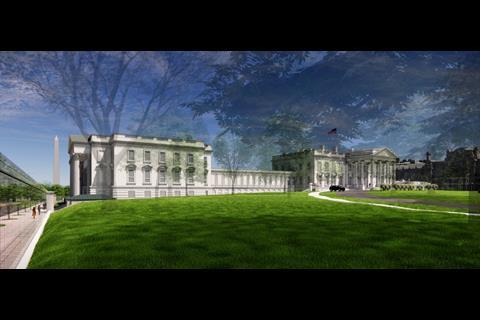
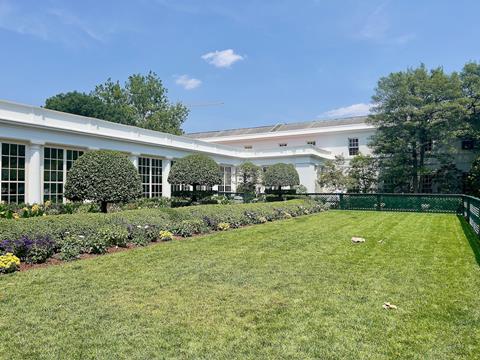
The East Wing, along with the more famous West Wing, was originally constructed in 1902 under Theodore Roosevelt and substantially modified in 1942 during Franklin D Roosevelt’s presidency. Though both wings have been altered many times over the past century, they form an integral part of the most symbolically important building in the United States.
It does not take a degree in architecture to see that the once-balanced composition of the complex will be fundamentally altered
Crucially, the original East and West Wings were low, deferential neo-classical additions. They were designed to support the growing machinery of government while preserving the primacy of the executive residence itself. Although FDR added second floors, the wings remained clearly subordinate to the central building. That hierarchy is in the process of being discarded.
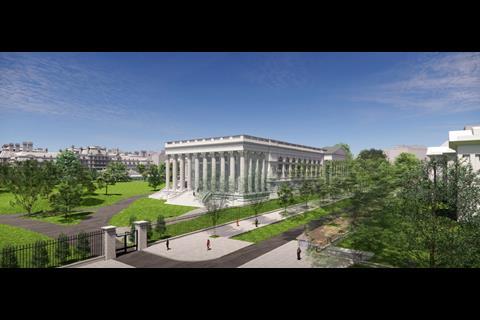
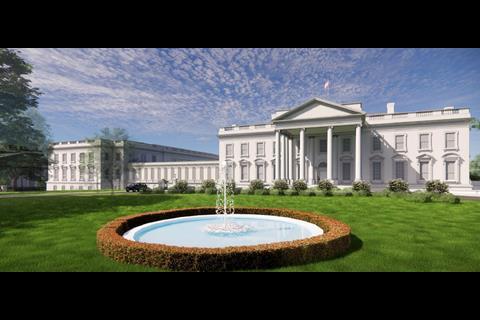
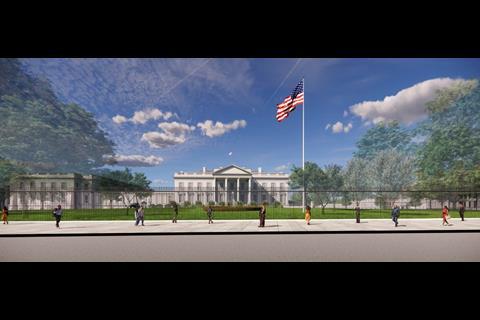
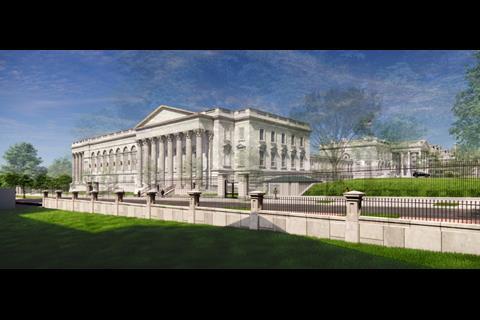
The proposed new East Wing matches the height of the residence portion of the White House and, at roughly 90,000 square feet, has a footprint nearly double that of the executive residence. It does not take a degree in architecture to see that the once-balanced composition of the complex will be fundamentally altered.
The demolition itself has struck a deep nerve with the American public. Perhaps it was the starkness of the imagery: televised footage of bulldozers smashing into a national symbol. Or perhaps it was the brazenness of the act – the implication that the White House is not a shared national landmark, but just another building that can be reshaped at will by its temporary occupant.
So, was the demolition illegal? Under federal law, modifications to most historic federal buildings require assessment and consultation through the advisory council on historic preservation. However, the White House, along with the Capitol and the Supreme Court, is exempt from this requirement.
Instead, oversight lies with two bodies: the National Capital Planning Commission and the Commission of Fine Arts, which review the planning, design and aesthetics of federal projects in Washington.
Under normal circumstances, plans for any major modification would be approved prior to demolition. The White House has argued that demolition and construction are separate actions, and that the review bodies are only required to assess the design of the replacement building. Both commissions have recently been repopulated with Trump appointees, and unsurprisingly the ballroom rapidly received full approval last month.
The architects involved may be able to reassure themselves that they are operating within the rules. But legality is not the same as ethics
From a narrow legal standpoint, the architects involved may be able to reassure themselves that they are operating within the rules. But legality is not the same as ethics.
Congress, which would ordinarily allocate funding for a project of this scale and provide public oversight, has been bypassed entirely. The estimated $400m cost of the ballroom is being covered by private donors, with no public disclosure of who those donors are or what influence they may ultimately seek in return.
At this point, responsibility cannot be shifted onto process alone. Architects chose to do this project.
There are now two firms involved. The original architect was James C McCrery II, who developed the initial ballroom design. McCrery is a former associate of Peter Eisenman who, in the 1990s, became a committed advocate of classical architecture.
He is a professor at the Catholic University in Washington, DC and has designed numerous Catholic churches across the US. In his writing and public appearances, architecture is presented as a moral and spiritual pursuit, deeply intertwined with religious belief.
McCrery was reportedly replaced after disagreements with Trump over the ballooning scale of the ballroom, which grew from an initial 650 seats to as many as 950. It is also possible that his small practice lacked the capacity to deliver a project of this magnitude.
Yet he has not fully exited the picture. He apparently remains involved and has recently been appointed to the Commission of Fine Arts – the very body which just approved the final design.
The firm that took over the project is led by Shalom Baranes, whose mid-size Washington DC practice is known for competent residential and institutional work. Baranes himself is a Jewish immigrant whose family fled persecution in Italy and Libya, has been a consistent contributor to Democratic political campaigns, and has written opinion pieces in the Washington Post supporting immigration during Trump’s first term.
Neither architect fits neatly into the caricature of a Trump loyalist. Which makes their participation even more troubling to me. These are experienced, intelligent practitioners who cannot plausibly claim ignorance of the political, cultural or ethical implications of working on the White House in this manner.
The most demoralising aspect is not procedural complexity or architectural taste; it is the now familiar willingness of responsible citizens to look the other way
There are, of course, ways in which architects justify such decisions. The White House is a singular commission, and the chance to work on it can feel professionally irresistible. Architects often tell themselves that their involvement will improve the outcome, that refusal would simply hand the work to someone less thoughtful.
Financial realities also matter. Projects of this scale stabilise practices, keep staff employed, and potentially secure future work. Of course, it is highly possible that these two architects are just fervent supporters of Trump and are honoured to have the commission.
Trump has less than three years left in office, and the ballroom project is already tied up in litigation over whether the demolition required congressional oversight. It may yet stall entirely. But the most demoralising aspect is not procedural complexity or architectural taste; it is the now familiar willingness of responsible citizens to look the other way, to narrow decisions to personal or professional impact while ignoring the broader consequences for laws, norms and those least able to absorb the damage.
This is how autocratic power advances – not through dramatic rupture, but through the accumulation of small, seemingly reasonable accommodations. The real danger is not that this project stands out, but that it disappears into the background, as another quiet moment when standards were lowered and democratic norms weakened by everyday choices made in plain sight.
Postscript
Chris Fogarty is co-founding principal of Fogarty Finger







1 Readers' comment