







We need a new system of registration which focuses on the competence of all built environment professionals if we are to ensure buildings are safe and of high quality, Chris Williamson explains
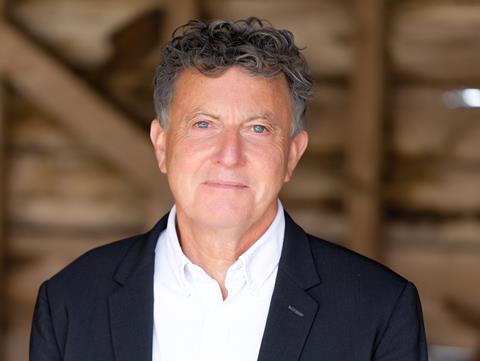
Last week I wrote to the Architects Registration Board (ARB) outlining my decision to remove myself from the architects’ register, meaning that from next year I am unable to call myself an architect. The current regulatory system does nothing to ensure quality or safety for those who procure architectural services – the public – and, although I will lose my title, in practice I can still perform all of the work of an architect.
The system makes little sense, so it has been encouraging to see that my announcement last week has, broadly, been well received by architects. But one of the most common questions I’ve been asked is: what’s next?
It is time for a new system that focuses on competence – not just competence of architects, but competence of built environment professionals who drive quality homes and places every day. A system that outlines defined activities, reserved for suitably competent professionals, should be implemented. The RIBA defines these activities as submitting full planning applications, building control applications and final compliance certificates.
These are three key touchpoints throughout the lifecycle of a project. Ensuring that those who undertake this work are competent can only help to drive quality and safety. As I said, this is not just about architects. Planners, engineers and surveyors may also wish to undertake this work – but whoever does so must be competent and able to prove it.
To achieve this there is a vital first step – repealing the Architects Act 1997, the current legislation which regulates the use of the title “architects” in the UK. This may seem radical, but we need to acknowledge that the status quo is not working.
In its place, we need a new piece of legislation for the built environment. This could be modelled on the Legal Services Act, which restricts certain legal activities to various groupings of qualified professionals. The new legislation would set out exactly which suitably competent professionals are able to undertake the reserved matters set out above. If applied to all significant building works, this would provide a high-level of accountability across the sector.
You then need a method to prove who is suitably competent. The built environment professional bodies have already been doing this for decades – through education standards and continued professional development (CPD) – for example. But, to ensure we are all working at the same high level, we suggest creating a built environment council. Such a council would oversee the construction industry chartered professional bodies, whose members are the suitably competent professionals, such as the RIBA.
Each built environment professional body would have to show that it has robust processes in place to ensure that its individual members are competent. These individuals are the chartered members who are then able to undertake the reserved matters set out in the new legislation. This moves the regulation from the individual to the oversight of the relevant professional body.
This new system would be a significant change from where we are today, but it is a change that we need. I stood for president on a platform of driving, improving and celebrating life-long learning. This, and proving competence are inextricably linked.
From meeting our net zero obligations to delivering 1.5 million homes and the next generation of new towns, the built environment is central to the government’s ambitions. I don’t want to see homes built that no one wants to live in because they are low-quality or cause health issues due to overheating or damp.
Quality and safety is at the heart of what chartered built environment professionals do. Now we need a system which supports this.
>> Also read: Chris Williamson: Architects are burying their heads in the sand on AI
>> Also read: Design competitions: can Chris Williamson move beyond a social media spat and help usher in change?
>> Also read: Chris Williamson: ‘I think we can do a lot for young architects – they need all the help they can get’
Postscript
Chris Williamson is co-founder of Weston Williamson + Partners and president of the RIBA






5 Readers' comments