


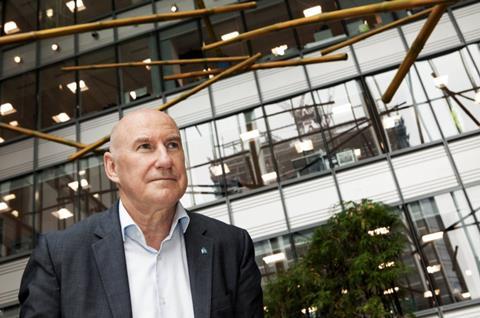
RIBA board chair Jack Pringle says we are stuck in a regulatory system which offers no real public protection – and with a regulator overstepping the mark. It is therefore time to take a stand
When Chris Williamson went public with his decision not to renew his Architects Registration Board (ARB) registration, he exposed a frustration long felt across the profession. His argument, that the title “architect” offered such limited public protection in the absence of reserved activities, struck a chord, and prompted a fair amount of praise and recognition from fellow professionals. But the absurdity of title-based regulation is not the only thing that is wrong with the ARB.
As I’m sure many will know, the board is the successor to the Architect’s Registration Council of United Kingdom (ARCUK), which was established in 1931. Sixty-two years later, by 1993, the Warne Report recommended that both ARCUK and the protection of title be abolished – with the statutory registration of architects bringing “no added benefit to the public, to consumers, or to the profession itself”.
The government accepted this recommendation and planned to remove statutory registration. But pressure from the profession, which at the time I found profoundly misjudged and disappointing, saw the government U-turn and, in 1997, a new regulator was born – the ARB.
Now, almost 30 years on, and several reviews later, we find ourselves in the same position: stuck in a regulatory system that offers no real public protection. But, on top of that, we also have a self-described “activist regulator” – a regulator clearly overstepping the mark, that must be called out. Alongside this sits the RIBA.
The need for change is clear, and we are leading it. But the ARB continues to hold the profession back
The RIBA has been the engine room of UK architecture since 1834 and has built the infrastructure of our world-leading profession – with an international standing that is second to none. The RIBA established the profession’s education and qualification base, pioneered continuing professional development (CPD), drafted contracts, created the internationally used Plan of Work, lobbied the government to the benefit of the built environment and continues to be globally recognised for celebrating what good architecture looks like through awards for students, clients, buildings and architects. But our profession now needs radical reform for the modern world – going beyond regulation alone.
The need for change is clear, and we are leading it. But the ARB continues to hold the profession back. For example, in architectural education, the ARB insists on self-accrediting all the schools of architecture which the RIBA already validates, refusing to harmonise its criteria or accreditation system with ours. The result is duplication, forcing schools to jump through two hoops.
We also have an outdated, minimum seven-year route to qualification, which drives student debt up to more than £100,000 and often takes 10 years to complete. This is deeply damaging for diversity.
The RIBA wants to see more flexible routes into the profession; one of these must be a “standard” five-year pathway, slashing student debt and improving inclusion. But the dead hand of the ARB bureaucracy continues to hold us back.
The board also appears constantly behind the times. It introduced CPD some 30 years after the RIBA. More recently, following the tragedy at Grenfell Tower, the institution revised both its academic and practice outcomes. Five years later, the ARB made its own changes.
The RIBA has vast technical skills to hand within its membership base. So, who is better able to protect the public?
The delay is disappointing in itself, but it is even more worrying that we still share fundamentally different beliefs about what competence means at the point of registration. For example, the ARB’s framework does not include technical requirements, which the RIBA regards as essential to professional competence and, ultimately, public safety.
In an increasingly technology-driven world, the ARB has no technical base to draw on, but the RIBA has vast technical skills to hand within its membership base. So, who is better able to protect the public?
On top of all this, the 2026 ARB registration fee is £225. This has almost doubled since 2021, when it was £119. Considering so many practices are under acute financial pressure, how can it possibly justify such a steep increase in such a short amount of time?
The ARB, like its predecessor ARCUK, is ineffective and undermines the development of the profession. The government’s single construction regulator prospectus makes plain that the time for change is now – and the profession must seize it.
The RIBA’s campaign is clear: repeal the Architects Act, reserve activities of Building Regulations and planning applications for suitably qualified professionals and regulate through a new built environment council, ensuring that professional bodies across the sector maintain strong, enforceable competence requirements in the interests of public safety.
I have not renewed my ARB subscription fee – and am no longer a UK architect.
Postscript
Jack Pringle is managing director of Studio Pringle and chair of RIBA board







4 Readers' comments