- Home
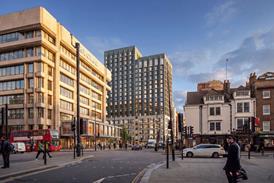 Go ahead for Ackroyd Lowrie and Leach Rhodes Walker’s 21-storey City fringe hotel
 More than half of practices believe AI will lead to staff cuts as adoption soars
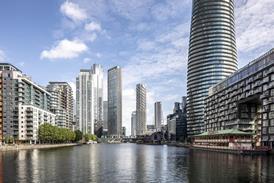 Patel Taylor's plans for one of London’s tallest resi towers in Canary Wharf gets green light
 RIAS and RIBA call for national response to save the Mac
- Events
Early bird tickets available now
Find out more
Events calendar
Explore now
Keep up to date
Find out more
- Programmes



Opinion
Latest Opinion

Into the wilderness? Or just an alternative view of the landscape?
The story of human culture is about taming the wild and making it home, but a new book has David Rudlin questioning how best to conserve the natural world that surrounds us
Advertisement
Advertisement
More Opinion
Beyond the ceremony: My reflections on RIBA’s big award anniversaries
Each project recognised this and every year tells a story about what architecture can achieve and reinforces the value of architects in shaping places to which everyone can relate. That is something worth celebrating, writes Jack Pringle, chair of the RIBA board
When everyone is responsible, noone is – the accountability gap in construction products reform
Brittany Harris argues that the government’s proposed reforms to the construction products regime will only succeed if accountability is clearly defined and backed by reliable digital evidence throughout the supply chain
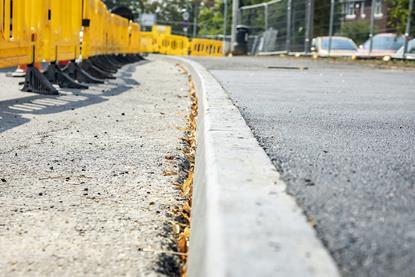
Why national recognition changes everything for recycled kerbs
Phil Sutton welcomes a change in the rules that will allow the easier specification of more sustainable kerbing

What a successful landscape-led urban framework looks like for future communities
The key to bringing beneficial change through public space design to densely populated, multi-generational urban areas, such as Central Somers Town, is demonstrating a people-first approach that centres residents’ voices and uses green spaces to strengthen community and access, argues Anne Wynne at DSDHA

Could composites be the future of high-performance building systems?
Guillaume Klein argues that a new European standard for composites should prompt architects and specifiers to rethink material choices

Will Burnham’s ‘Manchesterism’ be a lifeline for housebuilding?
The next prime minister must resist the temptation to unpick everything and instead build on existing progress, writes Ben Derbyshire
The time is now for reserved activities, and RIBA is leading the charge
We need to make sure that those responsible for the critical decisions in delivering buildings have the specific and assessed skills and competencies required for the task, This is how, rites Jack Pringle, chair of the RIBA board

What if creativity was the value all along?
When people choose where to live, work or invest, culture is often the decisive factor. The smartest developers appreciate that, writes Martyn Evans

Specifying flooring to meet the challenges of contemporary healthcare settings
Donna Hannaway offers practical advice for anyone specifying floor coverings for healthcare settings
Specifying flooring to meet the challenges of contemporary healthcare settings
Donna Hannaway offers practical advice for anyone specifying floor coverings for healthcare settings

We are at a turning point for heritage skills – and action is needed now
Adrian Attwood argues time is running out to save Britain’s heritage craft skills and says urgent action is needed to ensure the future of the trades that conserve our historic built environment

Engineering the future: Public toilets are the invisible infrastructure our cities still badly need
A lack of amenities may be just a minor inconvenience for some, but for others it means they cannot leave home. Elisa Sartori says public toilets may be ‘the most honest spaces in architecture’

The danger of building homes at any cost
Delivering 1.5 million homes means little if quality is sacrificed in the process. Without strong design leadership and long-term thinking, today’s solutions could become tomorrow’s regeneration failures, says Satish Jassal

How heritage can shape the future of new communities
A former RAF airbase in Oxfordshire lies at the heart of a unique and exciting new residential neighbourhood, writes Harrison Symonds

A good architect should be a polymath more than a specialist
If we lose our wider intellectual curiosity, we loss the essence of what it is to be in this profession, Eleanor Jolliffe writes

From brief to build – the process behind delivering a high-performance office
Sarah Edwards says designing the “perfect” office is a complex process that often requires proactive, strategic – and early – engagement with specialist workplace designers

From promises to proof – what the Net Zero Carbon Buildings Standard expects
Jeremy Douglas says that the built-environment sector has spent years making net zero carbon promises. However, with version 1 of the UK Net Zero Carbon Buildings Standard (UKNZCBS V1) now in effect, the industry must start keeping them

From private practice to public purpose: An architect’s switch to public sector planning
As a project architect, Kirsten Williams was used to working on individual buildings, but since joining Dorset Council she has been able to help realise healthier environments at scale and to understand how policy, planning and delivery intersect in practice

The infrastructure gap that nobody wants to price properly
Hien Nguyen considers what the current state of development in and around Cambridge reveals about the future of housing delivery in Britain

Why we’re providing a platform where young voices can be heard
This year’s London Festival of Architecture will feature a new key strand: a closing address from a speaker near the start of their career. It is an exciting and deliberate challenge to the established order, writes Martyn Evans

Life on the high street: The case for office-to-resi conversions
If we are thinking creatively about where we can deliver new homes for people, then these conversions are a compelling option, write Catrina Stewart and Hugh McEwen

How systems thinking can safeguard placemaking in the next generation of new towns
The UK has a rare opportunity to rethink how new towns are delivered and governed and ensure we move from fragmented, output-driven development toward genuinely place-led settlements that create lasting legacies, Alison Coutinho writes

Barnsley’s success is still no defence against populism
Despite extensive investment and a highly successful town centre regeneration scheme, the long-standing Labour administration was swept from power last week. David Rudlin considers the reasons

Why early collaboration is the key to successful fit-out projects
In today’s complex construction industry, against a backdrop of political and economic uncertainty, the traditional sequential approach to fit-out projects has given way to more collaborative models. In fact, there is a fundamental rethinking of how projects should be delivered. James Woolfrey explains why early engagement and a multi-disciplinary approach ...

Rethinking space in high-density buildings
As buildings grow taller and more compact, the space required for drainage systems has become a critical design consideration. Antony Corbett explains how innovative drainage solutions are allowing architects and developers to maximise usable space – without compromising functionality or quality
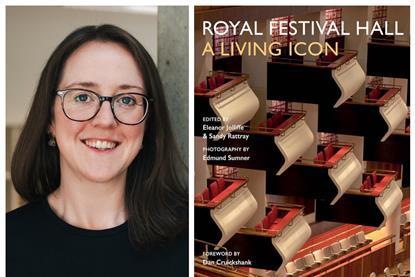
The Royal Festival Hall is 75 years old – and I have played a small part in keeping it very much alive
Eleanor Jolliffe has just published a book which celebrates the history of one of London’s best-known buildings. It is fair to say that she enjoyed the experience

Is architecture in crisis?
There is a growing sense among younger architects that the profession they trained so hard to join may not offer a viable long-term career. Institutions like RIBA must step forward to challenge the norms that have led us here, writes Martyn Evans

Inclusive workplace design – designing for dignity, not just access
Mark Shepherd argues accessible workplace design must move beyond basic compliance if it to support autonomy and enable equal participation

Regulate what architects do, not what we’re called
Fire safety, design coordination and specification decisions are being made across complex teams. A function-led approach to regulation would focus scrutiny where risk sits, regardless of a person’s professional title
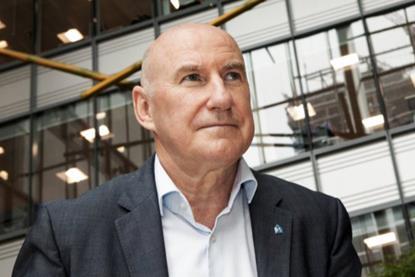
Single industry regulator is a chance to frame more sensible oversight for architects
It makes no sense for architects to be regulated while other critical built environment professions are not, writes Jack Pringle, chair of the RIBA board

What Stage 0 entails – and why it matters
Eva Diego says it is vital architects are involved in projects earlier – especially when it comes to retrofit

Repeal, reserve, regulate – but is it only half an argument?
Architectural education needs to be reformed in parallel with moves to replace the ARB, writes Tim Burgess

Happy days: The early 90s, Urban Splash and a time of creativity and risk
Following a recent conversation with one of the Urban Splash founders, David Rudlin wonders whether we can ever rediscover the time when property was the new rock and roll
