





A former RAF airbase in Oxfordshire lies at the heart of a unique and exciting new residential neighbourhood, writes Harrison Symonds
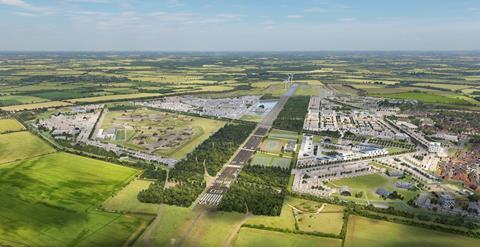
Heritage is often treated as a constraint in development. At Heyford Park, the former RAF airbase, it’s the opposite, it gives the masterplan its starting point, its structure and much of its identity.
Proctor & Matthews first became involved with Heyford Park in 2020, looking at one of the development parcels on the southern taxiway from the original 2018 masterplan. The parcel sat close to the flying field, where there were significant heritage constraints, so our early work focused on understanding how the airbase once functioned and how that history could inform a new residential neighbourhood.

From there, Dorchester Living asked us to look at the wider masterplan, using the same heritage-led approach, helping to shape a people-focused, sustainable community. Our role has been to connect the future of Heyford Park to its past, while creating a vibrant, forward-thinking destination where history, nature, and innovation come together.
The early vision, developed with Kim Wilkie, looked at historic fortified towns and military settlements, including Lucca in Italy and York in the UK. These places show how former military structures can evolve into thriving communities with their history helping to shape their character over time.
That thinking has guided the approach at Heyford Park. The ambition is to create a 21st-century community where people can live, work, learn and play within walking distance. What makes the site distinctive is the way this new community is being shaped by the structure of the former airbase.
The runways and taxiways are central to the masterplan. Their geometry gives Heyford Park a character unlike most other residential developments. From above, the site will still be recognisable as a former airbase. On the ground, those long views and routes will remain part of how people experience the place.
Reusing the taxiways as movement corridors and green spaces also helps the masterplan function. It allows movement to sit around the development parcels, rather than cutting directly through them. That creates the opportunity for calmer, more people-focused residential areas, with streets and spaces that feel safer, more liveable and better suited to everyday community life.
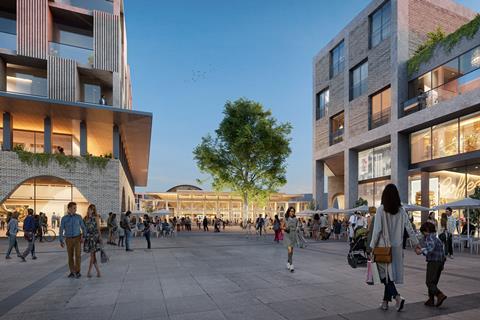
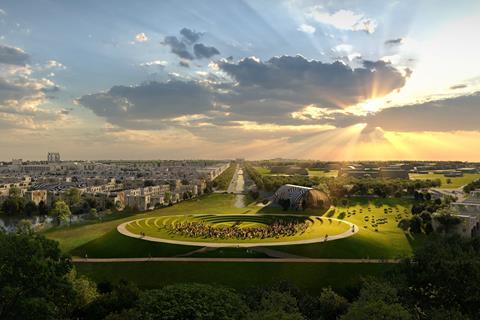
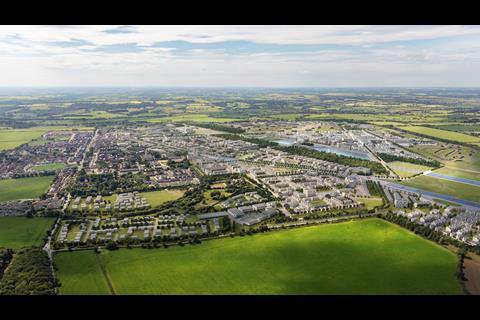
Balancing that heritage with the needs of a modern community has been one of the biggest challenges. The Cold War character of the site is powerful and important, but it is also stark and exposed.
While there were areas of the base with barracks and housing, much of the site remains a functional and engineered landscape. These areas were never designed as a place to live. The challenge has been to retain the key heritage elements while introducing new layers of trees, water, buildings and public realm.
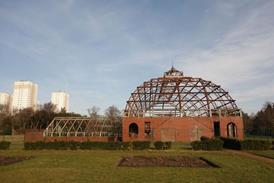
The Peace Pavilion reflects the wider ambition for the site: to make Heyford Park’s history visible, accessible and meaningful to future generations.Bringing that history into the life of the new community is an important part of the masterplan vision.
The masterplan could not be applied anywhere else. The former airbase shapes the layout, the movement, the landscape and the character of the place
The scale of Heyford Park brings further challenges. Working at ambitious densities means thinking carefully about the whole picture. The number of homes matters, but so does the mix of homes, the public spaces, the local services, the employment, the education offer, and the landscape. All of these elements need to work together if the place is going to succeed.
Dorchester Living’s long-term commitment to Heyford Park is also important. Large-scale places take many years to evolve, and Dorchester has already been involved with the site for more than 16 years. That level of stewardship gives the project a stronger foundation because decisions are being made with the long-term community in mind.
For us, what makes Heyford Park different is that the masterplan could not be applied anywhere else. The former airbase shapes the layout, the movement, the landscape and the character of the place.
That is where the strength of the project lies. Heyford Park has a history and structure that can give the new community a real sense of place. The opportunity now is to work with that carefully, so that its past continues to shape its future.
Postscript
Harrison Symonds is a senior associate at Proctor & Matthews Architects






No comments yet