


For decades, UK homes have been designed to keep people warm. Today, the challenge is keeping them cool. Lisa Grosse, product and marketing lead at Cedral UK and Ireland, explains how fibre cement cladding can help reduce solar gain and improve year-round building performance

While traditional masonry absorbs and slowly releases heat, modern buildings face overheating caused by extensive glazing and airtight construction. The challenge is no longer about insulation. It’s about creating building envelopes that perform efficiently in every season.
Climate control
Unlike traditional external finishes, rainscreen facades create a ventilated cavity between the cladding and insulated wall. As the outer skin heats up, warm air rises and escapes before significant heat can transfer into the building.
Research from BRE has highlighted the role of ventilated facade systems in improving summertime thermal performance as overheating becomes more common in UK buildings.
Envelope thinking
Material selection is becoming increasingly important as temperatures continue to rise. Fibre cement offers a particularly robust alternative to timber and dark masonry surfaces. Dimensionally stable, resistant to moisture, rot and insect attack, and requiring minimal maintenance, fibre cement has been developed to withstand repeated thermal cycling without compromising performance. This durability makes it especially suited to the increasingly volatile weather patterns experienced across the UK.
Gimme shelter
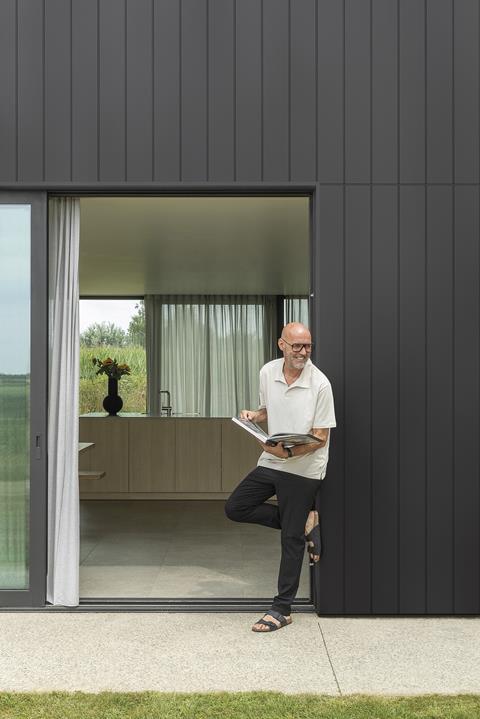
External shading remains one of the most effective passive cooling strategies. Alongside projecting roofs and deep reveals, facade systems are increasingly helping to reduce solar gain.
Brise soleil panels, such as those manufactured by Cedral’s sister brand Equitone, are seeing renewed interest as designers seek passive ways to manage overheating. Installed as horizontal or vertical screening elements, they intercept direct sunlight before it reaches glazed facades, reducing internal temperatures while preserving daylight and outward views.
Passive measures first
While air conditioning systems are not banned for new builds in the UK, the government has adopted a ‘passive measures first’ policy when it comes to housing design. Outlined in Approved Document O, the rules clearly state that mechanical cooling can only be used where enough heat can’t be removed without it.
Architects need to demonstrate first serious consideration of things like window design, shading, ventilation and reducing solar gain – before aircon can be specified.
New and retrofit facades
New-builds and refurb projects provide great opportunities for facades to reduce heat in buildings. Insulated rainscreen systems enable improved thermal performance while simultaneously transforming appearance, protecting ageing structures and enhancing occupant comfort.
Rather than treating overheating as an unavoidable consequence of climate change, retrofit facades allow contractors to intervene at the building envelope itself.
Best of both worlds
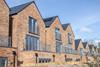
Projects such as the Somerset Energy Innovation Centre demonstrate how fibre cement facades combine contemporary design with the long-term durability and environmental performance of ventilated facade systems. Meanwhile, a housing development for Galway City Council shows how fibre cement cladding delivers an attractive exterior alongside improved weather protection and insulation.
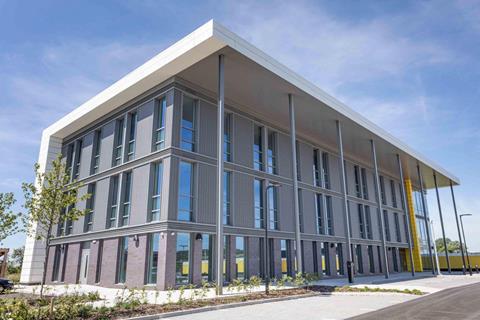
As temperatures rise, architects need to design homes that use less energy while remaining comfortable in increasingly extreme weather. The facade is no longer simply the face of a building, but one of its most important environmental systems.
Postscript