




The loss of Manchester’s Grade II-listed All Souls church is more than the disappearance of a beloved local landmark. It is a symbol of a planning and development system that too often favours demolition over imagination, write Rachel Coll and David Tigg
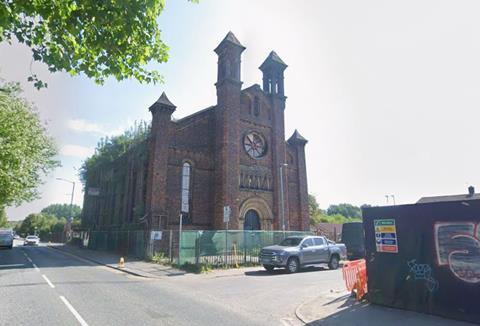
The sad demise and demolition of All Souls, a handsome grade II-listed church in Ancoats, Manchester, represents a further step in a downward spiral in how we approach buildings with extraordinary past lives and deep roots in their communities. The outcry was significant, and with good reason. By some margin, it was the best-looking and most beautifully detailed building in the area, and the last echo of a past community that has been progressively wiped out. These losses happen far too easily. The writing is on the wall as soon as the local parishioner locks the building for the last time.
We face a major challenge, with a government pursuing an ambitious target of 1.5 million new homes that sadly has little chance of being met, alongside a chronic need for better-designed homes and investment in place-making to secure a sustainable future. Yet Historic England and the government estimate that up to 670,000 homes could be delivered by repurposing vacant or underused heritage buildings.
Much of what has happened in New Islington, neighbouring Ancoats, including the loss of this once-stately church, is repeated across the UK, with few exceptions. The ubiquitous, vanilla, piecemeal developments replacing buildings like this will neither stand the test of time nor offer the quality these majestic community buildings once provided. Can anything in the surrounding neighbourhood come close to those triple-height windows and intricate detailing? From what we can see, perhaps not.
Yet we all yearn for meaningful place-making, for somewhere distinctive that we can call home and cherish for generations. How can we achieve this if we continue to tear down the very things that are good, both architecturally and metaphorically, in our society?
The Ancoats church had been on a watch list since 2023, with several opportunities to save it. So, what went wrong and what needs to change to give hope for the future?
Money is the obvious starting point. Development is difficult, developers face significant tax burdens, and finance is both expensive and hard to secure. A government calling for bold solutions to meet its ambitious housing targets should be backing those willing to take on challenging heritage buildings. Repealing George Osborne’s VAT policy would be a good start. Why are new builds zero-rated for VAT while the far more complex work of reusing and rejuvenating existing buildings is taxed at 20%? This only makes it harder to save these wonderful buildings. Making VAT treatment reciprocal would provide a much-needed incentive to bring them back to life.
Government needs to look beyond new-build development to address the housing crisis. In the current climate, rising costs make delivery increasingly difficult, with Labour’s changes to National Insurance contributing to an 18.5% increase in labour costs over the course of this government, according to Builders Merchants Federation research.
Instead, we should make better use of the existing building stock. Good bones are everywhere, and we need to value them and reward those willing to take them on, giving buildings that were once at the heart of their communities a new life and purpose.
Architects have a unique role in unlocking these community assets and showing what they could become. Many practices have transformed such buildings into their own studios because they recognise the potential and value in these spaces in a way others simply cannot.
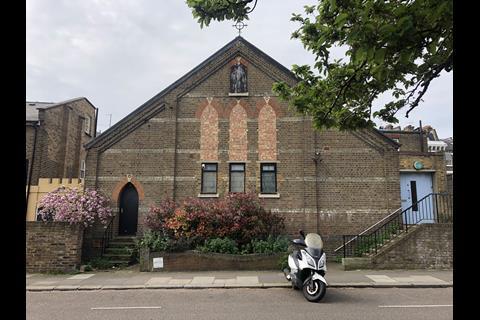
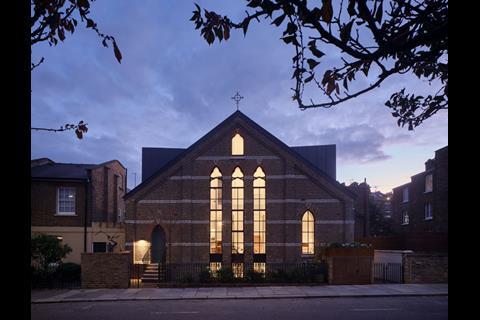
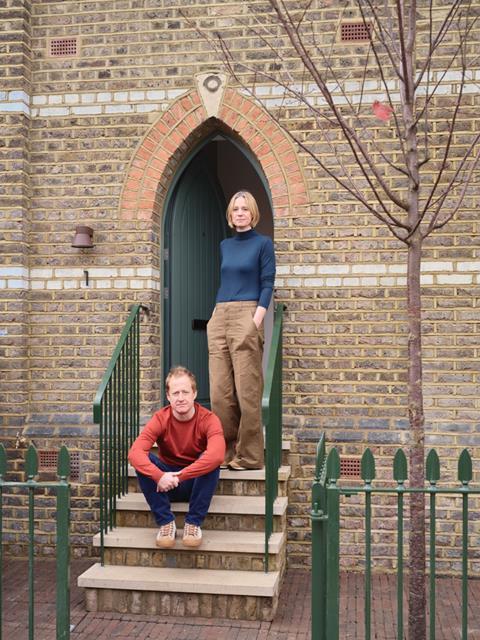
Development is hard. We learned this first-hand as both architects and developers of our own redundant Victorian mission church. It was a steep learning curve, balancing design, restoration and pragmatism, but one that showed us what is possible with this building typology. These buildings are challenging to work with, but their character and natural light can create soulful places to live, work and play. There should be no excuses for architects, designers or developers to overlook them. Their valuable ‘bones’ can be given a new lease of life.
There are fantastic examples of heritage churches and community spaces across the country that we should be championing more loudly. These include the RIBA Award-winning Sheerness Dockyard Church, a grade II*-listed church reworked following a catastrophic fire in 2001; the grade II-listed Arding & Hobbs in Clapham; and the imaginative St John’s Convent in south London. Each puts resilience and sustainability at its heart while bringing delight to new users through historic craftsmanship and detail. Crucially, giving these buildings a new purpose helps sustain the cultural heart of their communities. These spaces are crying out to be reused, offering flexible, characterful places with the strong sense of place.
Our experience at Addison Studios, alongside our wider work with listed and redundant buildings, shows that courage and creativity can transform them into homes, offices, retail spaces, swimming pools, health clubs, restaurants and cafés. All are possible with imaginative thinking, which the government needs to back and incentivise if it is to meet its housing targets and create truly resilient communities. As a profession, we excel at bringing spaces back to life. With government support, there is no reasonnot to be bolder, challenge mindless development and prevent the sad stories we see repeated. So, before that parishioner locks the door and throws away the key, they should think again… and call a creative architect.
Postscript
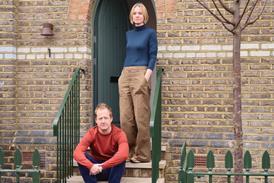
Rachel Coll and David Tigg are the founders of TiggColl






No comments yet