



Engineer and environmentalist Will Arnold explores how the built environment can move beyond reducing its environmental impact, examining the potential of material innovation, reuse and resource efficiency to create a more regenerative approach to construction

As the built environment faces growing pressure to reduce its environmental impact, Future Build: How Construction Can Heal Our Planet arrives as an essential and timely contribution to the conversation. Written by engineer and environmentalist, Will Arnold, the book challenges the assumption that construction must inevitably come at the expense of the natural world, offering instead a compelling vision of an industry capable of becoming a force for environmental regeneration.
Construction has shaped every aspect of modern life; from the homes we live in and the schools we attend to the infrastructure that keeps society moving. Yet the sector is also responsible for significant carbon emissions, resource depletion and ecological damage. In Future Build, Arnold confronts these realities head-on, examining the environmental consequences of the materials and systems that underpin contemporary building practices. From energy-intensive cement production to the widespread reliance on steel and concrete, he reveals how the construction industry has become one of the defining environmental challenges of our age.
What sets this book apart, however, is its optimism. Rather than simply cataloguing the industry’s problems, Arnold explores the solutions already beginning to transform the way we design, construct and maintain buildings. Drawing on projects from around the world, he demonstrates that a more sustainable built environment is not a distant aspiration but an emerging reality. Readers are introduced to innovative approaches that rethink materials, embrace circular economy principles, and prioritise resource efficiency at every stage of a building’s lifecycle.
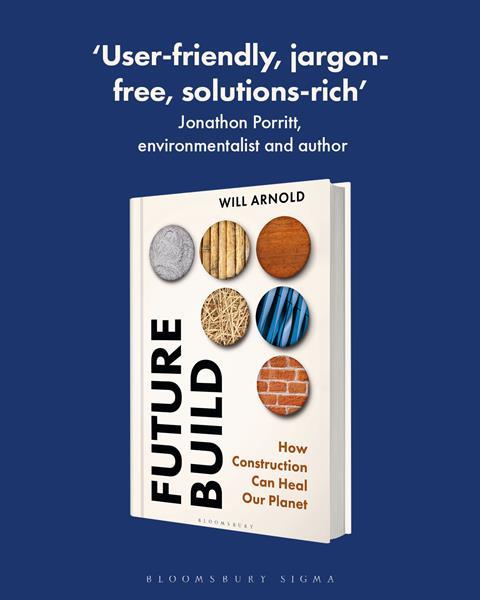
Among the book’s most fascinating examples are schools built from bamboo, homes created using waste materials, and structural systems inspired by the efficiency of natural forms. These case studies illustrate Arnold’s central argument: that buildings can do far more than simply minimise harm. With the right design philosophy and technological innovation, they can actively contribute to environmental restoration and resilience.
The book’s broad scope makes it relevant to a wide audience across the built environment sector. Architects, engineers, contractors, developers and policymakers will all find valuable insights within its pages. At the same time, Arnold’s accessible writing ensures that the subject matter remains engaging for readers outside the profession who are interested in sustainability, climate change and the future of cities.
Structured around themes including materials, alternatives, reuse, upcycling and designing for longevity, Future Build argues that meaningful change requires a fundamental shift in the way we think about building. Bigger is not always better, Arnold suggests; instead, the future lies in doing more with less, extending the life of existing assets and designing structures that deliver long-term value while reducing environmental impact.
At a moment when the construction industry is searching for credible pathways to net zero and beyond, Future Build provides both a critical assessment of current practice and an inspiring roadmap for what comes next. For anyone involved in shaping the built environment, Future Build is a thought-provoking reminder that the buildings of tomorrow can be more than sustainable: they can help heal the planet.