







The story of human culture is about taming the wild and making it home, but a new book has David Rudlin questioning how best to conserve the natural world that surrounds us
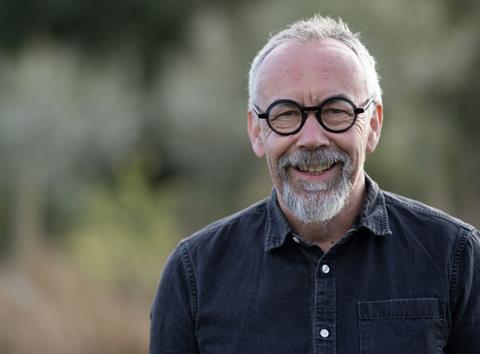
Don’t tell anyone, but a few years ago my partner Hélène and I moved to rural north Wales. Not a good look for an urbanist, I realise, but after 60 years in the city it is sometimes good to get a bit of perspective!
We bought a bit of land closely cropped by sheep, and a garden equally closely mown by the previous owner, and set about a process of rewilding. Since that time the field has become a profusion of wild flowers, insects and birds with resident moles, adders and a family of hedgehogs while all the time buzzards and red kites circle overhead.
As George Mombiot has suggested, the ecology of Wales has been “sheep-wrecked” by a white plague of grazing animals that has compacted the soil and prevented the land from naturally regenerating. At least we have rescued our little patch of Wales from this destruction.
In Wales, the notion of rewilding has become controversial – something done by English people who don’t really understand Welsh culture
But that is not how it is seen in Wales, where the notion of rewilding has become controversial – something done by English people who don’t really understand Welsh culture. I did not really understand why this was until Hélène gave me a fantastic book by Carwyn Graves called Tir: The Story of the Welsh Landscape.
It is rare for me to have read a book that tells me so much about where I live. There is definitely a need for something similar for urban areas. In Wales it is all in the language, with words like “coed” (native woodland), “ffridd” (lightly wooded mountainside) and “rhos” (heath moor and bog) relating to the nature and function of land. Welsh place names are a collection of these words containing a narrative of their landscape history.
At one point the books quotes professor of archaeology David Austin, who had studied ancient farmsteads and field systems in the Pennines and Dartmoor. He reports being “befuddled” about why there were no such remains in Wales. Then, after years of work, it dawned on him: those ancient Welsh farms and walls were underneath the modern ones.
This is what historians call “time depth”, the extent to which human-made landscape features go back in time. It is not that the walls, trackways, fields and buildings are ancient, it is just that the logic of their placement in the landscape means that the new ones were built on top of the old ones. In Wales, these patterns go back at least three thousand years and potentially much further.
This idea of persistence is also true of cities. Overlay an ancient map on a modern city and you will find the high street was once a country lane and many of the field boundaries correspond to modern features. The geometry of their layout persists despite the buildings having been built and rebuilt continuously. It is just that the pace of change is such that you cannot feel the time depth as you can in rural Wales.
Which brings us to rewilding and why it is such an alien concept in Wales.
The first point is that, 20,000 years ago Wales was mostly under a glacier. Humans colonised the land as the ice retreated alongside plants and animals.
They may not have been farming, but they were hunting and managing the landscape by, for example, burning forests to encourage grazing animals. So, you really cannot turn the clock back to a mythical Eden when the landscape was untouched by human hands.
Then there is the Welsh word “diwylliant”, which broadly translates into English as “culture”. Like culture, diwylliant has the dual meaning of “to grow or cultivate the land”, as well as the human culture of tradition, art, craft and society more generally.
But, if you look at the etymology of the word it includes “di”, which in English would be “un” and”wyllt”, which means wild. So, a central word embracing the essence of Welsh culture is to “un-wild”, no wonder the word “rewild” worries the Welsh so much.
Graves suggests that a return to traditional farming techniques would be much better for nature than rewilding
The story of human culture (not just in Wales) is about taming the wild and making it home. Graves points out that the process of unwilding can hardly be blamed for the loss of nature today.
Within living memory Welsh farming, grazing patterns and landscape management produced plenty of food, was home to thriving communities and was also incredibly rich in its ecology. Indeed, he suggests that a return to traditional farming techniques would be much better for nature than rewilding.
Meadows are better for being grazed at the right time than they would be if left to be colonised by brambles, gorse and bracken.
I am not sure I am quite ready to disagree with George Mombiot, but it has caused me to look very differently on the landscape around our cottage.
Postscript
David Rudlin is founding principal of Rudlin & Co and visiting professor at Manchester School of Architecture. He is a co-author of High Street: How our town centres can bounce back from the retail crisis, published by RIBA Publishing.







2 Readers' comments