



Donna Hannaway offers practical advice for anyone specifying floor coverings for healthcare settings

When it comes to interior finishes and materials, the healthcare sector presents a unique set of demands – not least because these are incredibly busy, high-traffic environments in use 24/7.
Daily wear and tear, caused by heavy equipment, hospital beds, wheelchairs and high volumes of foot traffic, makes durability a top priority, and calls for products that are quick to install and easy to clean, minimising disruption.
Design is another consideration, with newer healthcare facilities increasingly moving away from the cold, clinical look and feel. Meanwhile the NHS’s overall commitment to achieving net zero by 2040 remains an ever-present factor.
Whether it is specifying for a state-of-the-art cancer-care wing, emergency department, maternity unit or for facilities for children and the elderly, flooring is one of the biggest surfaces in a healthcare building – making it a key specification decision. However, this can also make it an overwhelming one – with so many different solutions available on the market.
Low-carbon flooring
Since the NHS become the first health service to commit to achieving net zero by 2040, hospitals across the UK are working towards significant carbon reduction targets. Driven by its Carbon Reduction Plans (CRP), the NHS is aiming for net zero by 2040 for directly controlled emissions (carbon footprint) and by 2045 for influenced emissions (carbon footprint plus). This year will see the NHS further embed Net Zero Supplier Roadmaps to evaluate the carbon footprint of suppliers.
Because flooring is one of the largest surfaces in any building, a significant carbon impact can be made with smarter and more sustainable flooring choices. This is made easier following real advancements in manufacturing, with many companies becoming increasingly innovative in their material sourcing and production techniques to meet industry demand for more sustainable products.
When looking for low-carbon flooring, linoleum remains the leader of the pack, despite its roots dating back to the mid 19th century. Widely regarded as one of the most sustainable floor coverings available, linoleum is made using rapidly renewable natural raw materials, such as linseed oil, jute, pine rosin and wood or cork flour. Some manufacturers have taken this further still, offering linoleum that is independently certified as Climate Positive (carbon negative) from cradle to gate, without offsetting.
A growing emphasis on material circularity and the circular economy has also seen increases in the amount of recycled content making its way into manufacturing. This can take the form of post-production waste, unwanted flooring samples and installation offcuts, with schemes in place for this material to be returned to manufacturers and repurposed back into production. And new innovations are appearing on the market all the time.
Take vinyl as an example: it has long been recognised for its durability and ease of maintenance, but perhaps less so for its environmental credentials. Now, there are solutions available that offer a bio-based approach to PVC, based on used cooking oil instead of fossil fuels, and plasticisers made from recycled bottles.
Adhesive-free flooring is another area that is seeing increased investment. Favoured for its ease and speed of installation, this is brilliant news for the healthcare setting, where downtime is limited and refurbishments must be carried out quickly and efficiency so beds and wards can back in use as soon as possible. With no adhesive, there is no need to factor in curing times, the floor can be walked on immediately after installation and there is no lingering odour. There is also no need to worry about the floor covering lifting or rucking with wheeled beds and equipment. It also ticks boxes for material circularity, with adhesive-free products making it easier for the flooring to be reused or recycled at the end of its useful life.
Durability
Interior refurbishments can cause headaches in the healthcare sector because of the busy 24/7 nature of the environment, which means durability is vital. At the same time it can also be a challenge thanks to the high volume of footfall and wheeled traffic travelling over the floor every day, which leaves it open to scuffs and scratches. Resilient flooring solutions like linoleum and vinyl can be ideal, especially ones with protective surface lacquers or layers that provide additional protection against scratches and stains and protection against dirt build-up.
Entrance flooring systems also have their part to play, with some proven to prevent as much as 95% of dirt and moisture from foot and wheeled traffic from even entering the building. As well as helping to ease cleaning and maintenance schedules by up to 65%, these can also contribute to the improved longevity of interior floor finishes – further mitigating refurbishment cycles. Some manufacturers even offer an extended guarantee on their interior flooring products if they are installed in conjunction with entrance flooring systems.
Enhanced hygiene
Infection control is, of course, a key priority for all healthcare facilities. So, as well as durability and ease of maintenance, it is worth looking floor coverings that are certified antibacterial. Linoleum is once again a prime example being naturally bacteriostatic – meaning it can inhibit the growth of infections like C Difficile, Norovirus and MRSA. This also places less reliance on the use of harsh cleaning chemicals, which contributes to a healthier indoor environment.
Biophilic design
While performance and function are critical, it is also important to carefully consider the colours and design of your chosen flooring, as extensive research has shown the positive impact a well-designed environment can have on recovery.
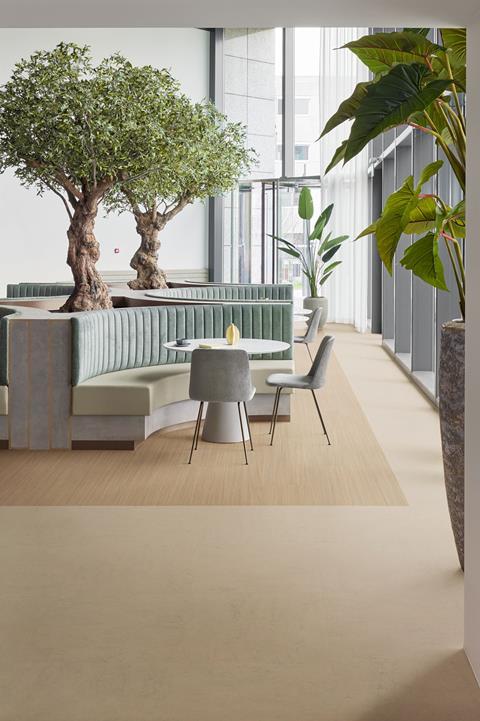
Biophilic design has earned its place as a design pillar rather than a fleeting trend. Centred around “bringing the outside in” – which is key considering we spend an estimated 90% of our time indoors – biophilic design is also proven to result in improved physical and mental wellbeing. Within the healthcare sector specifically, it has been linked to improved patient recovery times.
Thanks to advancements in digital printing capabilities and research by design teams, many modern flooring solutions offer highly realistic imitations of wood, stone and other natural materials without the associated installation and upkeep costs of their natural counterparts.
Creating inclusive environments
As well aesthetics, it is incredibly important to focus on creating environments that are inclusive for all – especially in healthcare settings, where visitors can span from the young to the elderly, and include those with neurodiversity and dementia and other age-related conditions.
Sensory, mobility or cognitive impairments – or sometimes a combination of all three – can have a serious impact on the way neurodiverse patients, older people and those with dementia experience healthcare facilities. Appropriately designed environments – including the correct specification of floor coverings – can ensure that a person’s experience of space isn’t detrimentally affected and doesn’t cause unnecessary stress.
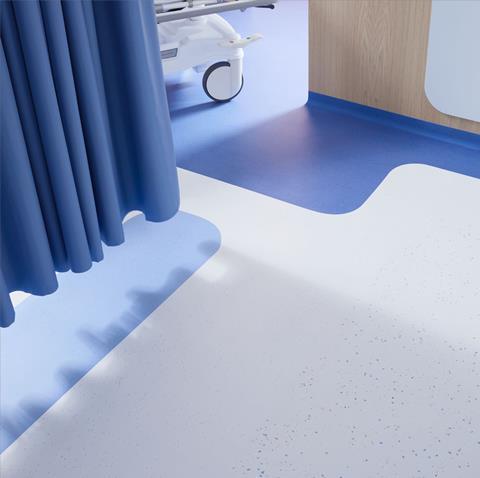
Chosen correctly, flooring can also assist wayfinding, using colour to help visitors to identify clear zones and distinct areas and pathways, to make it easier to navigate a labyrinth of corridors. Another consideration for colour is to be mindful of light reflectance values (LRV) and transition strips, with any sudden contrasts in colour or tone – whether between wall and floor or adjoining floors – potentially being visually confusing or difficult to navigate.
The healthcare sector demands a lot from its buildings and interiors, which presents architects with many factors to consider when specifying materials, finishes and solutions. Manufacturers with a comprehensive product portfolio can help you to find the right floor coverings that tick all the boxes.
Postscript
Donna Hannaway is head of marketing at Forbo Flooring


No comments yet