



Each project recognised this and every year tells a story about what architecture can achieve and reinforces the value of architects in shaping places to which everyone can relate. That is something worth celebrating, writes Jack Pringle, chair of the RIBA board
RIBA awards season is officially in full swing, with the National Awards announced, and the Stirling Prize shortlist revealed last week. And this is a particularly significant year, as 2026 marks five major milestones in RIBA’s awards history: 10 years of the international awards, 20 years of the Norman Foster Travelling Scholarship, 30 years of the Stirling Prize, 60 years of RIBA awards across the UK, and 190 years of the President’s Medals.
These milestones prompt reflection on the significance and legacy of the whole programme, which offers much more than recognising architects and architecture in the here and now. The legacy of the awards lies in the culture of excellence they foster. By raising expectations and setting new benchmarks, they help to shape what comes next.
The awards don’t just celebrate buildings, they also seek to recognise the ideas, concepts and critical thinking which shape architecture in its earliest stages. For nearly two centuries, the President’s Medals, the most coveted prizes in architectural education, have honoured emerging talent and innovative thinking, launching the careers of some of the most prolific names in our profession, from Norman Foster in 1959 to Richard Rogers in 1985. Unlike our other awards, they offer a window into how architectural thinking evolves long before ideas become buildings.
Alongside the President’s Medals sits the Norman Foster Travelling Scholarship. Inspired by the transformative role that travel played in his own architectural education, Foster established the scholarship in 2006, during my presidency.
The intention was to give architecture students – regardless of their background or financial circumstances – similar opportunities to study cities, buildings and cultures at first hand, just as he had when he was a student. Twenty years on, the scholarship continues to invest in the ideas and people who will define what comes next.
Every building in competition is visited by the judges, which maintains the quality and credibility of the awards
Internationally, this year RIBA also celebrates 10 years of the International Prize, recognising outstanding global architecture that demonstrates responses to social, cultural and environmental challenges. From Barcelona’s Modulus Matrix: 85 Social Housing, to Friendship Hospital, a climate-conscious hospital in rural Bangladesh, the International Prize has consistently shown how architecture positively tackles the world’s most pressing challenges – and I’m sure this year’s winner, announced at the Stirling Prize ceremony in October, will continue the same legacy.
Returning to the UK, it is the regional awards that form the foundation. For 60 years, they have provided the profession’s broadest point of recognition, celebrating the best architecture across every part of the country.
Critically every building in competition is visited by the judges, which maintains the quality and credibility of the awards. Along with their shortlists, they identify excellence early and create a pathway to national recognition.
In doing so, they have consistently demonstrated how thoughtful design can transform buildings and places, strengthen communities and improve people’s lives. They are, in many ways, the quiet infrastructure of architectural credibility, underpinning six decades of architectural excellence across the UK.
And lastly, we have the Stirling Prize, which provides a national platform and brings our work into the public conversation. Over the past 30 years, the prize has reflected the changing ambitions: moving beyond recognition of high-profile buildings to celebrate architecture which creates lasting social, environmental and community value, with an increasing focus on sustainability, retrofit and the role of design in improving everyday lives.
Winning schemes have varied enormously, but whether widely recognised or operating under the radar, each project tells a story about what architecture can achieve and reinforces the value of architects in shaping places to which everyone can relate.
Seen together, these awards are not separate initiatives but an evolving story of how architecture grows and develops. From celebrating the earliest ideas in architectural education, where minds can run free, through regional recognition, national debate and global exchange, they trace the journey of architecture from aspiration to achievement – and continue to shape and influence what comes next.
Join us at Old Billingsgate for the landmark 30th anniversary edition of the Stirling Prize on 15 October.
Postscript
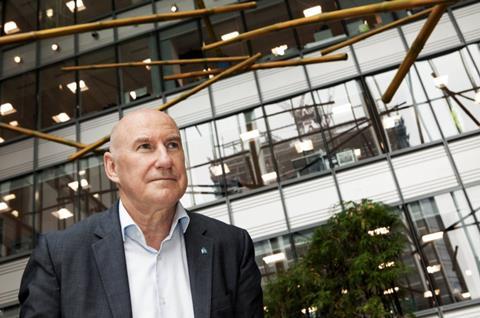
Jack Pringle is managing director of Studio Pringle and chair of the RIBA board







1 Readers' comment