







In an exclusive interview, the King’s Cross Station architect tells Building Design about his submission to the National Gallery expansion competition, his rival plans for Liverpool Street station, the ‘baffling’ restoration of the Houses of Parliament and what he thinks of the Olympia redevelopment
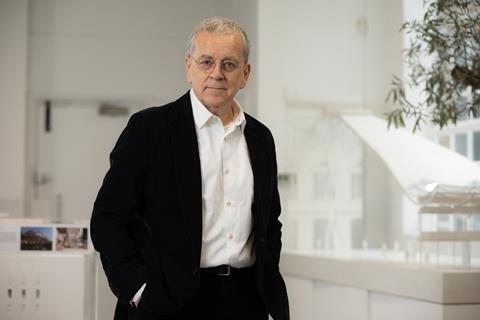
While the architecture profession has its problems – low pay, long hours, diminishing project roles – one resource it has never been short of is strong opinions. John McAslan is arguably the most outspoken, shoot-from-the-hip of the lot.
Take, for example, his thoughts on the proposed restoration of Parliament. A report by the scheme’s delivery authority caused a certain amount of consternation last month when it suggested that the refurbishment could take 61 years and cost £40bn. McAslan, one of the country’s leading experts on heritage projects, admits he was “baffled” by the timescale.
“You could do it in 10 years,” he claims. “Set a limit – say £10bn, ten years – sort out the infrastructure … and get a core project done which allows occupancy.”
He is not the only one to question the programme, the result of a decision taken in 2023 to commit to a more ambitious overhaul of the building which goes far beyond a simple restoration. Create Streets founder Nicholas Boys Smith has called it a “scam”, while the Conservative party leader Kemi Badenoch has described it as “out of control” and in need of a “fundamental rethink”.
Could McAslan charge into the controversy in dramatic fashion? He says he is not sure, but that the project is “something that desperately needs a fresh look”. Judging by his recent interventions, it would not be out of character.
The John McAslan + Partners (JMP) founder most recently made headlines by proposing a rival scheme for the redevelopment of Liverpool Street station, without the agreement or endorsement of the scheme’s client, Network Rail.
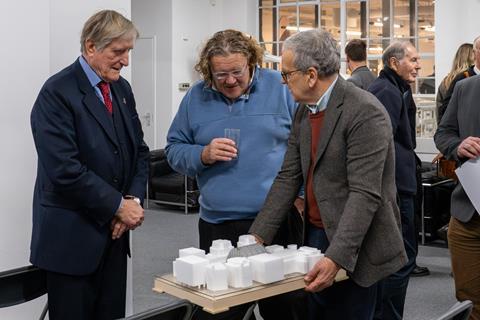
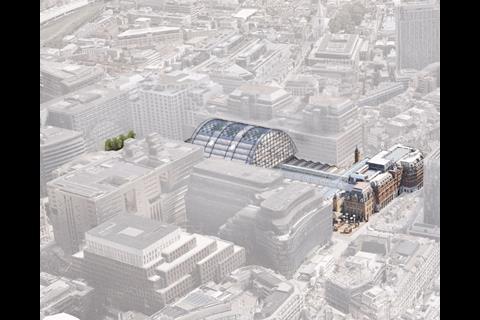
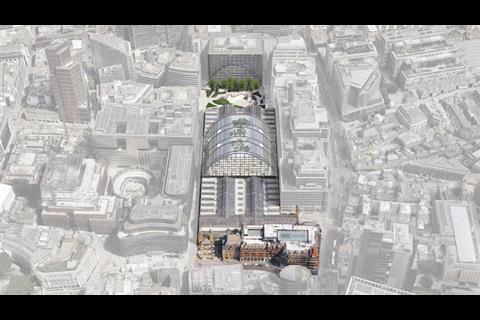
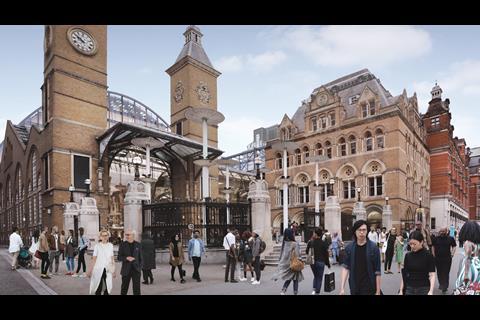
The £1bn Acme-designed scheme is set to remove a large section of the station’s trainshed to make way for a 17-storey office development above. It was resoundingly approved by the City of London last month despite years of bitter fighting with heritage groups opposing the plans.
McAslan was one of five objectors chosen to speak at the City of London’s planning committee hearing on the project’s planning application. He told the committee that Network Rail’s plans would be “ruinous” to both the station and the context of the surrounding area, while causing a decade or more of disruption to station users and an outcome which is “both unviable and undeliverable”.
There’s a long, long, long time to go in a project like this. We will be in for the long game, because we think there’s an alternate way to do this
John McAslan on the redevelopment of Liverpool Street station
He also used his speech to call for the City to defer a decision on the application in order to consider his own alternative proposal, designed in collaboration with Chris Wise, co-founder of engineering firm Expedition. The speculative plan was inspired by an impromptu walk that McAslan took around the station one summer afternoon last year, and the work was entirely self-funded – “I don’t know what it cost us. I shudder to think,” he admits.
McAslan’s proposal would cantilever a lightweight, arched structure over the existing train shed, providing less overall office space but, McAslan claims, at a much lower cost and with a quicker delivery programme.
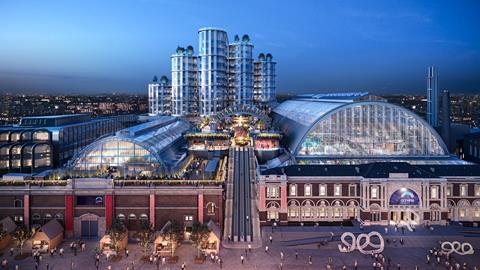
McAslan’s thoughts on the redevelopment of the Olympia
The John McAslan + Partners founder recently happened to pass by Yoo Capital’s Heatherwick Studio and SPPARC-designed transformation of the Olympia on a walk through Kensington, and he was not happy with what he saw.
“I just came across it and I thought, ‘what in the name of God is this?’ I mean, why? What is it?” he tells Building Design during a phone call earlier this month.
“It’s just horrible,” he continues. “Is it residential? I have no idea. Is it apartments? I have no idea. I thought what is this? What is in this building? […] It’s a shocker.”
The much-delayed £1.3bn scheme, set to open later this year, has added a 3,800-capacity venue, a 1,600-seat theatre, two hotels and tens of thousands of square metres of food and drink, office and retail space. Yoo Capital says it will be “one of the UK’s most exciting new destinations” and have 10 million visitors a year.
What has provoked McAslan’s wrath is the scale of new additions to the Victorian complex, many parts of which are listed, which he says have “swamped the original building beyond belief” and he is saddened by the “lamentable” way that the scheme has turned out.
Yoo Capital, Heatherwick Studio and SPPARC declined to comment.
The City did not agree, voting 19 votes in favour and just three against to approve Network Rail’s proposals, which were emphatically defended by the planning committee’s pro-development chair Tom Sleigh. But, according to McAslan, “that is not the end of it”.
“That’s the beginning of something else, whatever that is. And this fight will continue,” he told Building Design prior to the City’s vote. JMP has already submitted a listed building application for its own proposal for the station, which could lay the groundwork for a full application if a legal challenge against the City’s decision persuades Network Rail to change course.
“There’s a long, long, long time to go in a project like this,” McAslan says. “We will be in for the long game, because we think there’s an alternate way to do this.”
McAslan is one of the UK’s few remaining true starchitects and a global leader in sensitive refurbishment projects. Perhaps best known for the extension of King’s Cross Station, restoring and reimagining treasured heritage assets has been the hallmark of his professional career, although his practice has also designed numerous large newbuild schemes including Grand Central Station in Belfast, completed in 2023.
Last year, the practice reported a quite extraordinary set of results following the completion of a string of major projects. In the year to 31 October 2024, its turnover almost doubled to £21m and its profit jumped fourfold, from £1.1 to £4m. What is behind this spectacular performance?
“Maybe the numbers are wrong,” McAslan suggests, with a disarmingly deadpan tone. The numbers are actually, he says, due to several big schemes finishing at around the same time.
Normally the firm’s turnover hovers around the £7m or £8m mark. “It never really goes up, it never goes down,” he says, although the practice has consistently made a profit. The practice runs a “tight team” of around 50 staff which, he says, is constantly reviewing projects and looking for more efficient ways to work.
“We don’t have wasted resources or wasted time. We’re just a very tight studio.”
Born in Glasgow in 1953, McAslan went to secondary school in Dunoon, a town on the Cowal Peninsula facing the mouth of the river Clyde, and later to the prestigious Dollar Academy boarding school in Clackmannanshire, where Grimshaw chairman Andrew Whalley was also educated.
In 2012, the same year that he was awarded an OBE for services to architecture, and in the year that King’s Cross Station completed, he established an annual film festival in Dunoon which regularly partners with his former school.
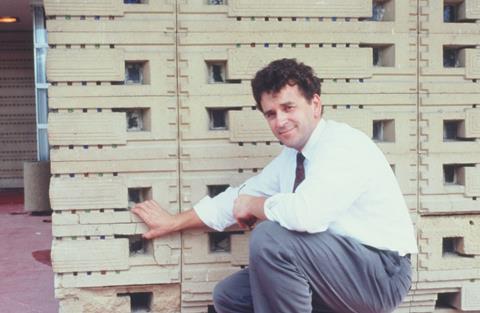
He went on to study at Edinburgh University before training as an architect in Boston in the US with Cambridge Seven Associates. He later returned to the UK to join Richard Rogers and Partners, and left to set up JMP in 1993.
He is now executive chair of the firm, which has studios in London, Edinburgh, Belfast and Sydney – a team in New York was recently disbanded following the end of the firm’s work on the redevelopment of the city’s Penn Station.
The firm’s first major project was the refurbishment of Camden’s grade II*-listed Roundhouse. Reopened in 2006, the reimagined venue became the blueprint for much of JMP’s later work, although it was the studio’s dramatic extension of King’s Cross station, approved the following year, which brought the firm into wider public recognition.
Our approach is about turning something that is old into something that’s new
The scheme, which created a new plaza at the entrance of the station by removing a clunky 1970s extension while adding a soaring new concourse to the west of the building, encapsulates much of McAslan’s personal design philosophy with heritage buildings.
It is also what sets JMP apart from more conservation-led practices. “I think our approach is about turning something that is old into something that’s new,” McAslan says. “There are great preservation architects like Purcell, but we’re not Purcell.”
JMP’s specialism is repurposing existing heritage assets on projects which require an element of new-build to be added in a way which does as little harm as possible to the existing building.
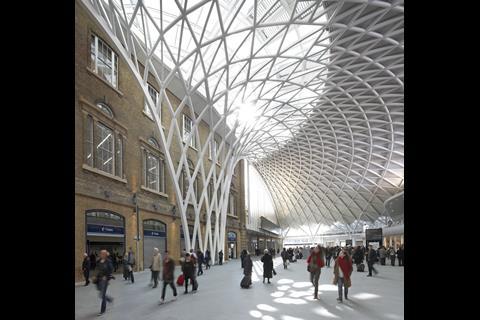
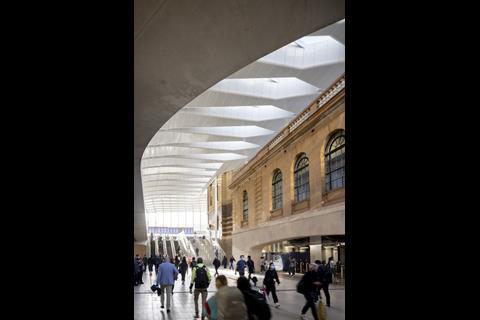
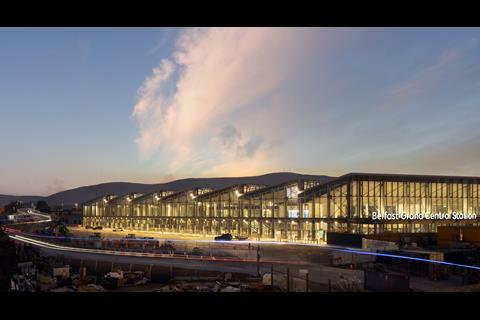
The same treatment can be seen on King’s Cross Station, on Central Station in Sydney, on the firm’s in-progress designs for Saïd Business School at the University of Oxford and on its alternative plan for Liverpool Street station.
He describes it as a “dynamic new dropped in and not really touching old”, an approach that leaves the existing building intact and coherent while creating a newbuild component which can be clearly perceived as a separate space.
“It’s how you view what exists,” he says. “And I’m passionate about working with what exists, if it is at all possible … it’s a different way of looking at what exists and how interventions and change might be realised.”
In the case of the Saïd Business School, which opens this year, a former Victorian power station has been transformed into a teaching facility with a 120-bed student accommodation wing while retaining the building’s former turbine hall as an open “agora”, or meeting place, for students.
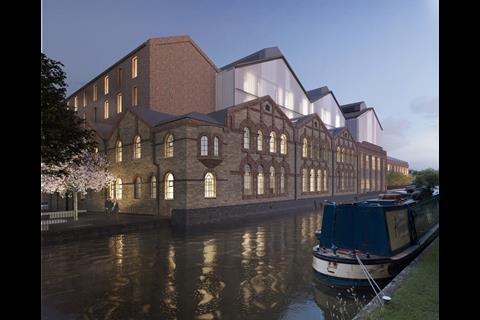
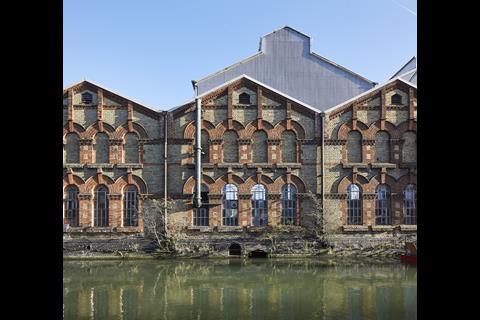
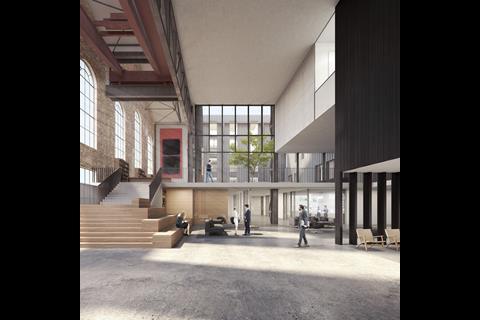
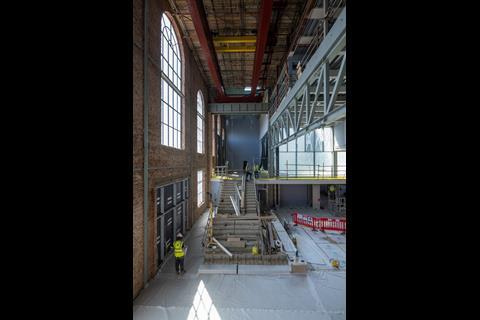
Retaining the building was effectively a “practical” solution to maximising space on the site, because replacing it would have restricted the amount of new-build space deemed acceptable within Oxford’s strict planning rules, McAslan says. “So you get a double benefit. You retain something and all of the ecological and other reasons for doing that, but you also create volumes and spaces which have a history attached”.
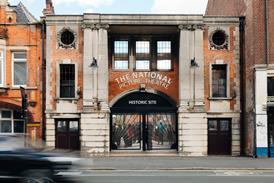
The firm used a similar approach on its submission for the National Gallery’s £375m new wing, which is set to replace a 1960s hotel building (pictured below) directly behind the Sainsbury Wing. Described as the most significant expansion in the museum’s 200-year history, it is one of the most prestigious design jobs in London of the last few years. Six finalists including teams led by Foster + Partners, Renzo Piano Building Workshop and Farshid Moussavi have been shortlisted following an international competition.
JMP’s proposal, which was not shortlisted, would have retained the structure of the existing building while hovering the first floor slab to create an open-air forum space beneath the structure like Lina Bo Bardi’s São Paulo Museum of Art.
“Working with that frame, there’s something kind of magical that could happen,” McAslan says. “You think, can you really justify a new building on the site? Probably not, because you can work with [what exists] and provide a much richer outcome.”
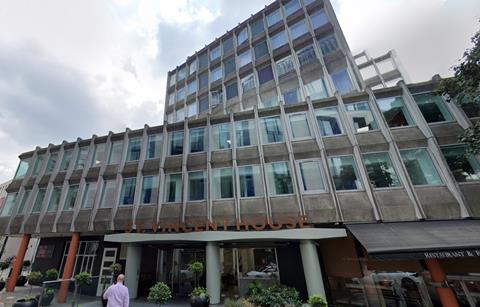
The submission was also based on the principle that the volume provided in the existing building was likely to already closely match what could possibly be provided within the planning system. Like with the Saïd Business School, it was a pragmatic solution which happened to save an existing building which, as McAslan argues, does not need to go.
“And so you think, well, let the programme for this building be informed by what exists. Because there’s only so much space you can get on the site, and it matches pretty much exactly what exists,” he says. ”If it matches what exists and is therefore set by what exists, then you know, work with that. Find a rich outcome that comes from that.”
Aside from the National Gallery, JMP rarely enters competitions. Instead, the firm often tries to “make our own projects”, McAslan says, by making a speculative proposal to a client who might take interest. This was the case with Liverpool Street station, and also with the grade II-listed Johnny Haynes Stand at Fulham FC’s Craven Cottage stadium.
The ground’s oldest stand, built in 1905 and containing original wooden seating, is generally loved by fans despite its nine columns partially obscuring views of the pitch. McAslan saw an opportunity to solve the issue.
“It’s a wonderful Victorian thing, but it’s not really fit for purpose. So we came forward with a plan.”
What is the point of doing anything unless you stand up for what you believe in? It’s as simple as that
The practice proposed retaining the back wall while “scooping out” the stand and reusing the seats. He says Fulham FC were interested in the plan when it was presented to them by JMP, although it has yet to go any further at time of writing.
“We do lots of things like that,” McAslan says. “We just find a few days to do something which we come across and think there is a need, and then we try and make something of it. And even if it doesn’t happen at that time, it may happen at some point.”
McAslan is at a stage in his career now where he is able to devote his time to passion projects and work that interests him personally. Sometimes, as with Craven Cottage, it is seeing work which the client itself might not yet have seen. Other times, like with Liverpool Street station, it could be directly challenging the client to think differently.
“As I get older, I think I’m more like Liverpool Street,” he says. “There’s a client, Network Rail, and maybe a client in the future, but yet I’m opposing them. And I think, well, I believe in it. What is the point of doing anything unless you stand up for what you believe in? It’s as simple as that.”
He adds: “I really feel strongly that, if you are opposed to something… think of all the bad decisions that are made, lousy decisions, because people didn’t stand up for things that we should have stood up for.”







4 Readers' comments