








With the two parties polling strongly and expected to be the biggest beneficiaries in Thursday’s local elections, Daniel Gayne asks what their stated positions and local-government records could mean for housing, planning and delivery
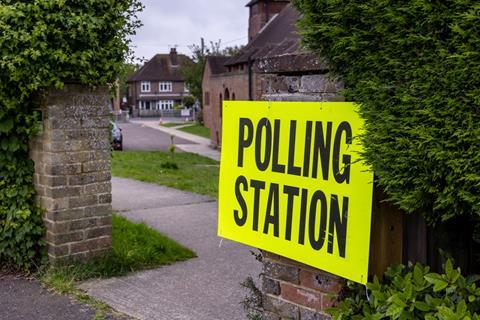
On 7 May, a hefty chunk of the English public will go to the polls to elect thousands of local councillors, while their compatriots in Scotland and Wales elect representatives for the devolved parliaments.
The elections are expected to deal a major blow to Labour incumbents, many of whom are predicted to lose out to challengers, particularly from the left and the right. In Britain’s urban centres, the Green Party is expected to make major gains among voters frustrated with the government’s record on Gaza and the cost-of-living, while Reform is forecast to dominate across much of the rest of the country, with a platform focused on immigration and government waste.
So with each of these parties expected to take a large number of council seats, and potentially take the reins in quite a few councils, how can we expect them to use their powers as it relates to housing, infrastructure and planning?
Reform set to be biggest winner, with housing and planning priorities still emerging
Reform is expected to perform well in county council elections across East Anglia and the south coast, district council elections scattered across rural England, and in the West Midlands. In the latter region, YouGov’s MRP analysis projects the party will secure the highest vote share in 11 of its 13 councils. Reform is also thought to be neck and neck with Plaid Cymru in the Welsh Senedd elections, which would most likely result in it becoming the main opposition to a coalition government. Even in London, some are expecting it to win a few councils on the outer edges of the city, such as Havering and Barking and Dagenham.

This expected success comes with limited detail so far on housing policy ahead of the local elections. The party doesn’t appear to have launched a manifesto specifically for the local elections and in some areas has offered few specific policy commitments. A Reform councillor in Norfolk told a local BBC Radio station that his party would need to carry out a financial review before committing to policies due to the council’s “huge level of debt”. Nor is housing among the 19 issues mentioned in the ‘what we stand for’ section of the party’s website. “The jury’s out in terms of what their policies and priorities will be,” one local authority director of housing told Housing Today. “Speaking to other housing directors we just don’t really know”.
Manifestos published for the Scottish and Welsh devolved assembly elections give an outline of their plans. Daniel Humphreys, managing director of public affairs at consultancy Cratus, says these are “clear that they want to remove excessive regulation in the private rented sector and speed up the planning process to enable the faster delivery of new homes”.
Léonie Mathers, director at political consultancy Arden, agrees that the party has a “supply-led” housing offer based on deregulatory instincts, framing the housing crisis “primarily as a planning failure aggravated by high migration and excessive regulation”. These assessments chime with the vision sketched out by Reform’s short-lived housing spokesperson, Simon Dudley, who was removed from his role following controversial comments about Grenfell. During his time in post, Dudley said Reform would have YIMBY orientation, criticising high affordability requirements and nature protections.
The jury’s out in terms of what their policies and priorities will be
Local authority housing director
From a development and delivery perspective, this emphasis on supply may be viewed positively by parts of the industry, although some may be waiting for clearer detail on how it would translate into local decision-making. Dudley revealed much when he said that this building bonanza should focus on “expanding and densifying successful towns and cities”, the areas least likely to turn out big majorities for the party. According to the local authority housing director who spoke to Housing Today, Reform councillors have vocally opposed building on the green belt. It seems possible that Reform will be the inheritor of the old Tory conundrum - a YIMBY platform at the national level and a NIMBY grassroots constituency.
Reform’s record in power at the local level is difficult to assess due to the speed and recentness of its ascent, but it has mainly been noted for its focus on keeping council taxes low and efforts to cut what it sees as waste. The party made its first major inroads in last year’s local elections, winning 677 councils and mayoralties along the east coast. Ahead of those elections, party leader Nigel Farage promised to institute a “British form of Doge”, referring to the US’ efficiency taskforce once led by billionaire Elon Musk. Heading into this year’s local elections it currently has majority control of nine upper-tier authorities. According to Full Fact, the average council tax (Band D) rise in these councils in 2026/27 was 3.94%, lower than the cross-party average of 4.86%.

The party’s opposition to net zero could frustrate the development of energy infrastructure if Reform councils decide to take a hard-line on such schemes in planning committees. However, the party’s action on clean energy has so far been mixed. In Derbyshire County Council, the Reform administration axed a climate change committee established to measure progress against net zero targets and approved a motion to ban solar farms across the county, but also approved plans for such a farm on a former colliery site.
Reform’s other big talking point related to housing is to link it with immigration. “A big focus for Reform UK is on putting local people first for housing, especially veterans,” says Cratus’ Humphreys. The party has often framed this as putting foreign nationals to the back of the queue for social housing, but how much they can actually do on this issue is a big question. A lot of allocations policy is determined by national legislation, although the Localism Act has provisions that allow councils to set “local connections” policy differently. Reform councils could use these provisions to turn the dial towards their preferred policy, but have no power to put foreign-born social housing applicants “to the back of the queue”.
Nevertheless, rhetoric like this could make for some difficult conversations between housing associations, council housing departments and elected members. Rachael Williamson, director of policy, communications and external affairs at the Chartered Institute of Housing (CIH), says there will need to be some “mythbusting” for the CIH to do “to make it really clear that actually nobody gets to just turn up in the country and have access to social housing - there are very clear processes.”
Urban gains could put important planning authorities in Green hands
Compared with last year’s local elections, 2026 has a very urban slate of councils up for grabs, to the benefit of the already-surging Green Party. Authorities across the whole of London, as well as major towns and cities across the rest of England are in play, with the Greens anticipating progress in Newcastle, Norwich and Sheffield among others. But it’s the capital where it expects its most high-profile wins. Several boroughs in central, east, and south-east London are likely to be governed by Greens, either as coalition partners, minority administrations or even majorities. The party is also hopeful of winning some directly elected council mayors, for instance in Hackney.
Given that central London has some of the highest targets for housing development, and is currently experiencing significant viability challenges, the prospect of an environmentalist party with a left-wing policy platform sweeping the board might make for uncomfortable reading among those who make their money from property development. Nor will Polanski’s rhetoric on this issue - he talks of housing developers “taking the mickey” with “excess profiteering” - put advocates of a private sector and supply-led solution to the housing crisis at ease. As Mathers puts it, for the Greens housing is “social infrastructure, rather than a market commodity”. In its national policy platform this translates to building 150,000 new council homes annually, introducing rent controls, and the “effective abolition” of landlords (a policy which sounds like an outright ban on private lets but appears to be more of a concerted push to municipal provision and an attempt to squeeze private landlords on regulations and taxes).
Green run planning committees can set higher policy thresholds, interpret viability tests sceptically, and refuse schemes on environmental or social grounds
Léonie Mathers, director at Arden
What might soothe opponents of interventionist policies like rent controls is that the Greens will have no power to put it into practice, with the exception of Wales, where the Senedd does have such powers and where the Greens could be kingmaker for a Plaid Cymru-led administration. But what is in no doubt is that the Greens will have greater influence over planning decisions in the areas where they make gains. According to Mathers, Green-run committees could “set higher policy thresholds, interpret viability tests sceptically, and refuse schemes on environmental or social grounds”. The party has also stressed the need for refurbishment over demolition and supported Passivhaus-standard housing. Mathers says developers should expect “fewer marginal approvals, higher standards, and slower, more contested development driven by public consent rather than volume alone.” This will certainly unsettle many developers, but some professionals with a focus on social housing and homelessness may welcome tougher standard-setting.

The Greens are not complete newbies when it comes to running local authorities - they are the biggest party in local government on a dozen councils, mostly outside of England’s biggest cities, and are part of governing coalitions in more than 30. One local authority housing director with experience of working with a Green administration told Housing Today that their reputation as NIMBYs was unfair, instead describing them as taking a “very careful approach” to development, while “understanding local need”. They said the party was “keen on looking at exemplar schemes, particularly around energy efficiency” and “really interested in increasing the amount of social housing”. They said the Green administration had a “really good relationship” with the council’s housing department and also noted that the party had introduced a “quite successful” forum with local registered providers.
Beyond planning, Green housing policies at the local level are focused on tighter landlord licensing, bringing empty homes into use, and launching council-run housebuilders. But the party’s relatively decentralised structure means we could see fairly significant policies introduced at the initiative of local parties. This is reflected in some fairly detailed manifestos published by local Green parties in the capital. In Islington, they have promised to “prioritise new models of collective public ownership, such as Community Land Trusts”, while in Lambeth, the party said it would pause all planning estate demolitions, including South Lambeth, Cressingham Gardens, Central Hill and Fenwick Estates.
In Hackney, its policy platform for housing alone runs several pages long. It includes commitments to cash incentives for downsizing from large council homes, an increase in the proportion of family-sized homes, more in-house temporary accommodation provision, and the phasing out of the use of bailiffs to collect council tax debt. The borough’s Green party has also promised to work with neighbouring boroughs to create a ‘Housing for London’ building company to build new council homes.
Impact of new parties could come more from inexperience than radical policy shifts
Despite housing being a high salience issue for voters left and right in these elections, big changes in policy might not actually be the main impact for the housing sector itself. “The irony is that local government still has relatively limited levers,” explains Arden Strategies’ Mathers. She tells the sector to expect housing to become “even more of a political football” locally, with councils “signalling hard in response to local demands even where they can’t always follow through”.

This might be true even in planning matters, as central government continues to try to make the system more rules-based and permissive. “It’s not going to be so easy for a local councillor to oppose development if it’s ticking the boxes,” says the CIH’s Williamson, who says this might be frustrating for councillors who got into politics to boost affordable housing or block unwanted development. Humphreys at Cratus agrees there will “inevitably be tensions between the government’s national policy framework” and insurgent run councils. “There will be resistance to green field developments and new infrastructure like pylons, but the councils will need to work within the national planning framework,” he explains. “Green Party councils like West Suffolk are instructive. Here the councillors have been proactive in drawing up new local plans and delivering new housing”.
At a glance: what insurgent local election gains could mean for housing
If the Greens gain influence
- Higher planning and design thresholds: stronger requirements on energy efficiency and environmental performance, and more emphasis on refurbishment over demolition, potentially raising costs and complexity for marginal schemes.
- Tougher viability scrutiny and more contested approvals: greater scepticism toward viability arguments and more politically charged committees, which could mean slower decisions and fewer marginal consents.
- More interventionist local housing agenda: greater use of landlord licensing/enforcement, a focus on bringing empty homes into use, and council-led delivery vehicles/partnerships with registered providers.
If Reform gains influence
- Short-term disruption from inexperience or unclear priorities: slower early decision-making and shifting signals while new administrations learn the system.
- Less predictable planning outcomes: potential tension between pro-supply messaging and local opposition to development (especially greenfield/green belt), increasing scheme-by-scheme political risk.
- Tension around housing allocations: “local people first” rhetoric may not change national rules, but could create more engagement work for councils and housing associations.
Indeed, rather than major shifts in housing policy or planning decisions, some analysts seem to think that the major impact of the Greens and Reform winning widely will come from the run-of-the-mill disruption caused by relatively inexperienced parties getting to grips with the levers of power. “There are some concerns in other local councils about Reform candidates, because they are such a new party, understanding the legislation and the governance that councils work to,” a local authority housing director told Housing Today.
Williamson says the CIH has been focused on supporting new members to understand how the housing system works and what powers and responsibilities local authorities have. She adds that this more banal form of disruption could be exacerbated by the number of authorities where no party wins a majority of seats. “In a scenario, which will probably see quite a few, where you have a council with no overall control, it’s going to take a bit of time for them just to work out how they’re going to make it work,” she says.
Ultimately, Thursday’s elections look set to usher in a period of adjustment for the housing sector rather than any immediate revolution in policy. What both insurgent parties share is a degree of inexperience that may prove more disruptive in the short term than any of their headline policies. For housing associations, developers and local authority officers the best approach may be to engage early rather than wait for the dust to settle. The councils that emerge from this week’s votes will be finding their feet, and it will be in the sector’s interests to find ways to help.




1 Readers' comment