






There are few architectural books that are hard to put down, but this is certainly one of them, writes Gavin Hale-Brown
It is an indulgent delight to be asked to review a book, more so one of this stature that follows on from two previous noteworthy volumes. My shelves are full of architectural tomes which have only been skim-read, or worse, only flicked through – I know they are there and one day, yes one day, I will find time to read them. So, being given the responsibility to read each page of such a book feels like a privilege – and it must be said that this book is rather special.
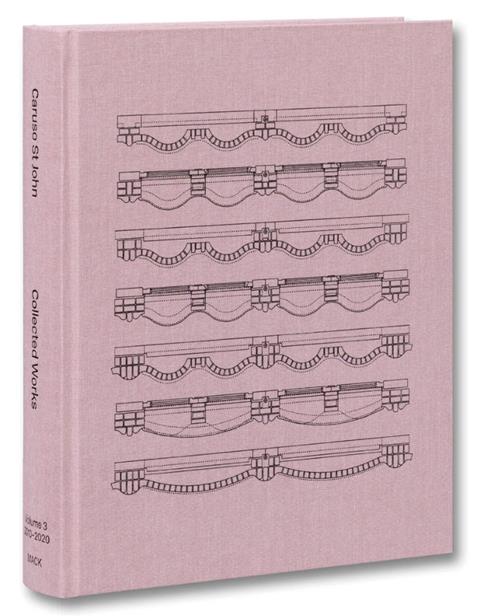
Having recently published our own monograph, I can appreciate the energy and dedication that has gone into producing something this perfect. Even my daughter, walking past my desk, ran her hand over it and commented on its beauty, and she certainly isn’t an architect.
Volume 3 of the Collected Works covers 2010 to 2020, a prolific period for Caruso St John. So prolific, we are told by the authors, that a fourth volume covering the same period is currently in production.
The book’s beauty is matched by its heft, running to over 450 pages. Like the previous two volumes, content is arranged thematically into five chapters – The Urban Figure, Exhibitions, Colour, Residues of Memory, and Transformation – and includes contemporary building reviews of and articles about the wider practice.
There are also a series of found texts that have proved influential to Caruso St John’s thinking. These meander away from the projects and offer insights into the conceptual foundations of the work.
The volume presents a truly eclectic group of projects, from bank headquarters to small exhibitions of the practice’s work and large-scale adaptive reuse schemes. Most buildings are familiar, having been widely published before, but to see them assembled together as a body of work and presented in such a way, is both intriguing and illuminating.
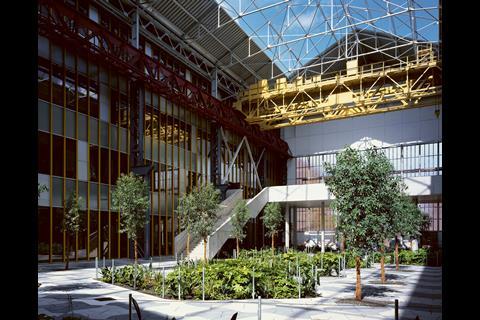
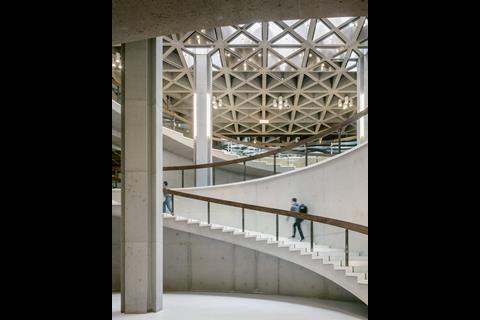
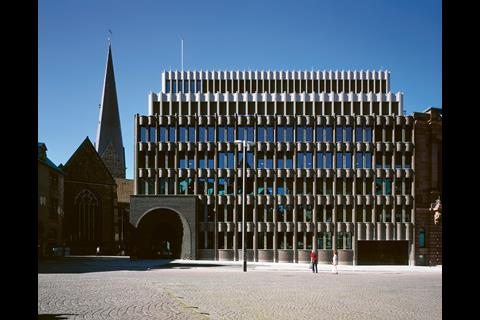
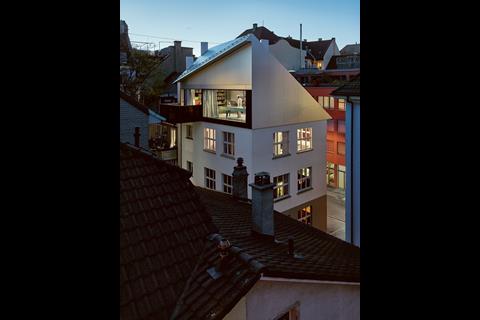
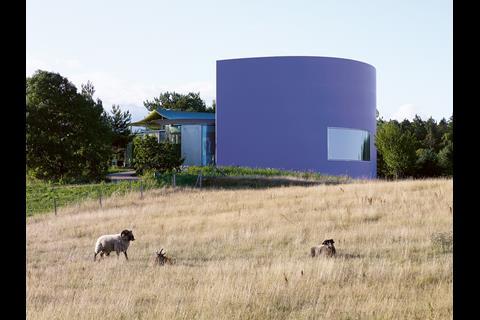
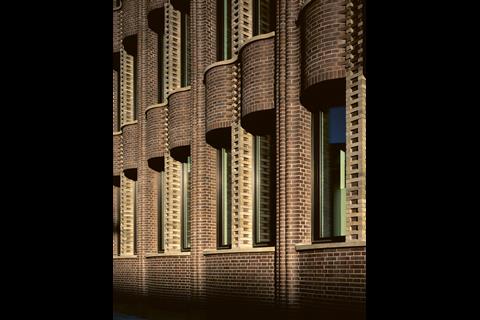
If there is a small gripe it is the lack of keys on drawings, and the tiny text on details – which are apparently the original working drawings scaled-down to fit the page. It is frustrating not to be able to read the text, or to find explanation of issues that intrigue. As a small example, there is a person suspended in a ten-metre void under the Görtz Palais. What is that space? I have several theories!
Through interviews that are contemporaneous with the work, it is easy to track the practice’s move towards its current standpoint of wanting to retain as much as possible of any existing building, eschewing some earlier work where site clearance and demolition were less questioned. There are also insights into their clients, which may pique professional jealousy in many.
Most appear to be exemplary, happy to listen, and to a certain extent, learn from their architects. One notable exception is the City of Stockholm, which appears to have allowed the renovation of Asplund’s Stadsbibliotek to peter out without apology or explanation.
This book had me flicking back and forth finding connections across the pages, trying to work out the sequence of ideas and themes
There is also refreshing honesty, with building reviews reproduced unedited. Teachers at the Lycée Hôtelier de Lille are apparently unhappy with the detritus created by the pigeons, leaving the head teacher rather unimpressed. This is balanced, indeed trumped, by numerous positive accounts of working with the architects, be it from with banks, cathedrals, producers, artists or collaborators. A single page from artist Thomas Demand’s sketchbook is reproduced, alluding to a special working relationship: it is hand marked asking; “Dear Adam, can you make this into Architecture” – of course they could!
The projects are presented with little text, just a short introductory commentary here and there. This makes sense when you read the thesis put forward by Louis de May on the practice’s use of imagery; the idea of ‘intervisuality’ suggesting images reference and respond to other images. I have to say, this book had me flicking back and forth finding connections across the pages, trying to work out the sequence of ideas and themes. This leads to a literary game of hide and seek, with snippets in interviews provoking a desire to revisit earlier or later projects.
When discussing the Bremer Landesbank, Peter St John recollects that the client wanted a building that didn’t stand out too much, “something that was the exact opposite of a brand”. This seems fitting when reviewing this collection of work. It is the perfect anti-brand, hard to define but undoubtedly exemplary.
Very few architects in their third decade of practice can assemble works and influences ranging from exhibitions exploring the power of shamanism to repair society post conflict, and national memorials to 19th-century uprisings, to major banks and commercial offices. It is hard to think of another practice that has managed to maintain this level of rigour and invention without becoming a “brand”; impressive indeed.
There is a quote from Dieter Bartetzko who suggests that all architecture wants to be immortal. This is decried by Caruso St John, who suggest that holding on to a building once complete is the worst thing an architect can do. But it must be said that these projects do feel immortal, simply because of the care and relevance that has been bestowed on them through clever, thoughtful and serious design.
There are few architectural books which are hard to put down, but this is certainly one of them.
Postscript
Collected Works: Volume 3 2010-2020 by Caruso St John was published by MACK in February. Gavin Hale-Brown is principal of Henley Halebrown





No comments yet