




Liverpool ceramics studio Granby Workshop has released a new range of hand-glazed tiles made from 80 percent recycled glass, fired using a low-temperature process the studio says cuts embodied carbon by around three-quarters compared with conventional ceramics
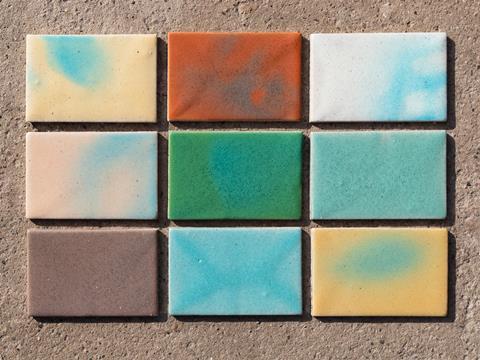
Developed with material-research studio Matter at Hand, the tiles are the first product to use a “devitrified” ceramic. This is an innovative glass-ceramic material formed when waste glass is mixed with natural clays and minerals, extruded, then fired to 825°C rather than the 1200°C or more typically required for ceramic tiles.
The lower temperature firing would normally leave a ceramic porous and brittle, but the glass content triggers a sinter-crystallisation process that produces a dense, durable material comparable in performance to porcelain stoneware.
Bright colours with less harm
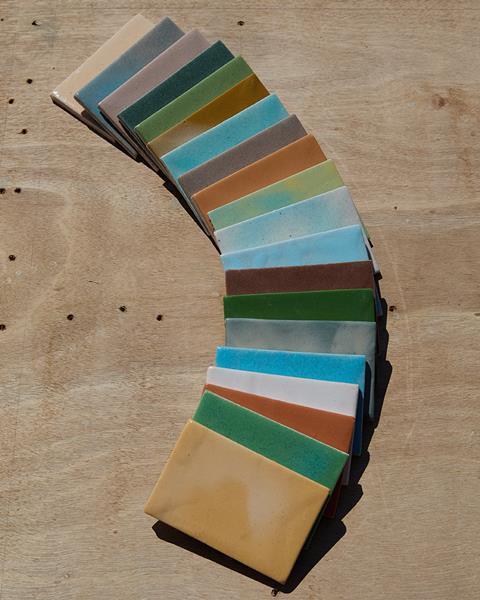
Colour has been another focus of the project. Granby Workshop and Matter at Hand set out to achieve vivid glazes without the cobalt, lead, cadmium and rare-earth minerals that are commonly used to produce bright ceramic pigments, but which carry significant environmental and toxicity concerns.
“We love creating colourful tiles, it’s a core part of what we make,” said Takiyah Daly of Granby. “But some of the raw materials used to create bright colours can be extraordinarily damaging. As part of the development of our new range of devitrified ceramic tiles, we set ourselves the challenge of creating vibrant colours with pigment recipes that avoid the most damaging minerals. While no material is perfect, we focused on common metals like copper and chrome in search of bold blues and greens without resorting to cobalt. For reds and yellows, we explored various forms of iron in place of cadmium and praseodymium.” And they have indeed achieved a range of bright and aesthetically appealing colours.
Handmade finish
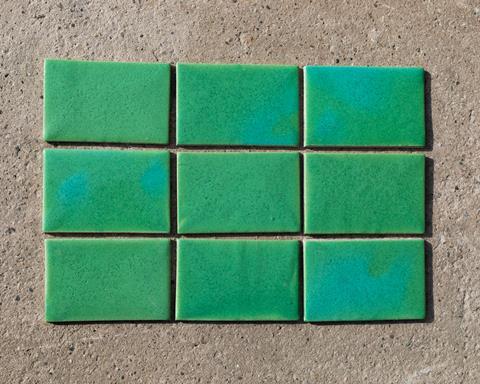
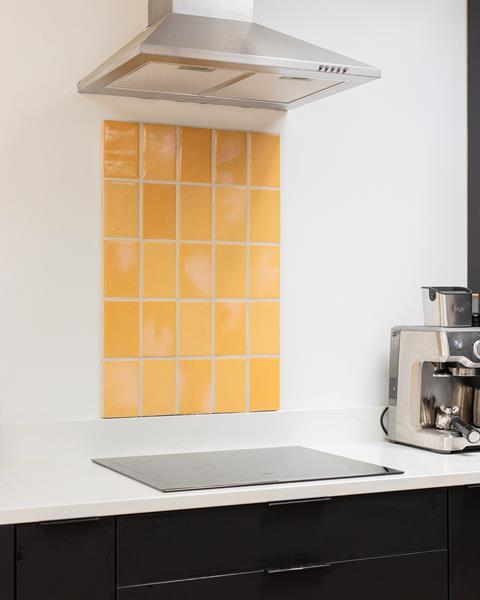
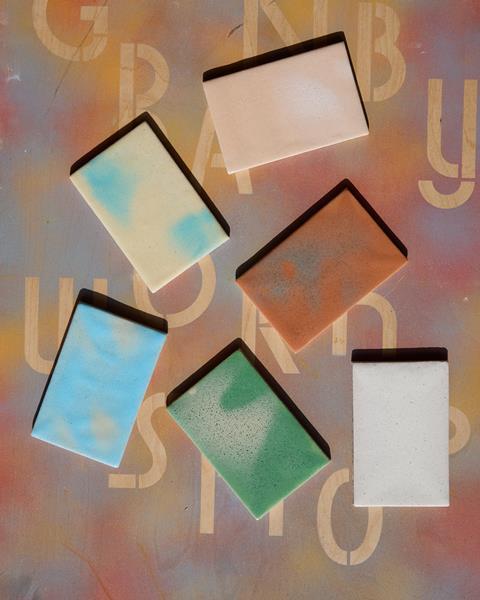
Each tile is glazed by hand in layers of fine mist, a process that leaves soft-edged, individual markings on the surface. The resulting variation – with no two tiles alike – creates shifting, overlapping patterns when the tiles are combined across a larger surface.
The tiles are now available to order in five colourways — green, yellow, terracotta, aqua and off-white — suitable for interior or exterior use, with matching profiles available for corners and edges. They measure 9 x 145 x 95mm and are priced at £270 per square metre, excluding VAT. Bespoke colours and custom dimensions can be developed for individual projects on request.
Ceramic research
The underlying material used to make the tiles was developed through research by Dr Lewis Jones, one of the co-founders of award-winning architecture and design collective Assemble, who has been a leading force at Granby, and who has a PhD on reducing the environmental impact of ceramic firing. In 2025 the Workshop’s research work was spun off as a standalone studio, Matter at Hand.
Devitrification is something that is usually treated as a defect in glass manufacturing: when molten glass cools too slowly, or comes into contact with impurities, crystals form within it, leaving a cloudy or hazy finish that producers of clear glass go to considerable lengths to avoid. Turning that “flaw” into a feature is what makes the process useful for ceramics – the same crystal growth that ruins clear glass gives the tile body its strength, allowing it to be fired at roughly two-thirds the temperature of conventional stoneware without becoming porous or brittle.
Using the worst waste
The waste stream behind the tiles is the result of a long-standing problem for the recycling industry. Glass can in theory be recycled indefinitely, but any glass contaminated with grit or ceramics and the smallest shards in mixed colours aren’t suitable for remelting into new glass. In the UK, close to 460,000 tonnes of this mixed, sub-quality container glass is generated annually, most of which is currently downcycled into low-value aggregate rather than put to higher-value use.
Granby Workshop’s production process was designed specifically to work with this material. Fine fractions of the waste glass are combined with natural clays, minerals and a small proportion of organic cellulose binder – added to give the mixture the plasticity needed to hold its shape – before being extruded into tile form rather than pressed, the method more commonly used for conventional ceramic tiles.
Lower-temp firing
The shift to a lower firing temperature also has a practical dimension for a UK ceramics sector that has faced acute pressure from energy costs. Granby Workshop fires its tiles in renewably powered electric kilns, an approach the lower 825°C firing temperature helps make more viable at scale.
Community cafe
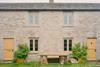
The tiles were originally developed for Fourth Corner, a community cafe and apartment building in Toxteth designed by Assemble for the community-led regeneration project Granby Four Streets. Around 10,000 of the new tiles will clad the building’s facade when it completes later this year, in a palette drawn from the red and yellow brickwork characteristic of the surrounding Granby neighbourhood.





No comments yet