









Elizabeth Darling has produced a definitive account of the early years of the BBC and George Val Myer’s “monument to the invisible” in which it was based, writes Jon Wright
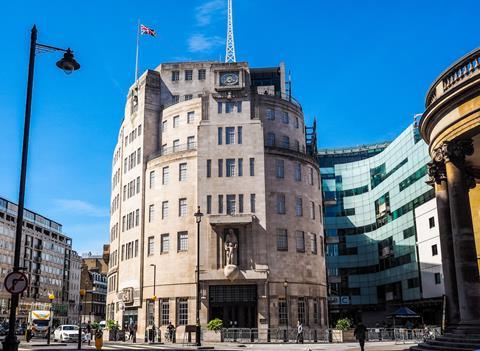
The interwar decades have lately been rescued from their reputation for stagnation: by Gavin Stamp’s Interwar, which recovered a period of stylistic abundance flattened by its modernist historians to a prelude, and by Neal Shasore’s Designs on Democracy, which turned from the battle of the styles to the question of how architecture should answer to a mass democratic public. Broadcasting House belongs near the centre of that enlarged picture.
George Val Myer’s headquarters for the BBC, finished in Portland stone in Portland Place in 1932, never fitted easily into our binary view of the period. A building too solid for the modernists and too plainly a machine-age instrument for the traditionalists.
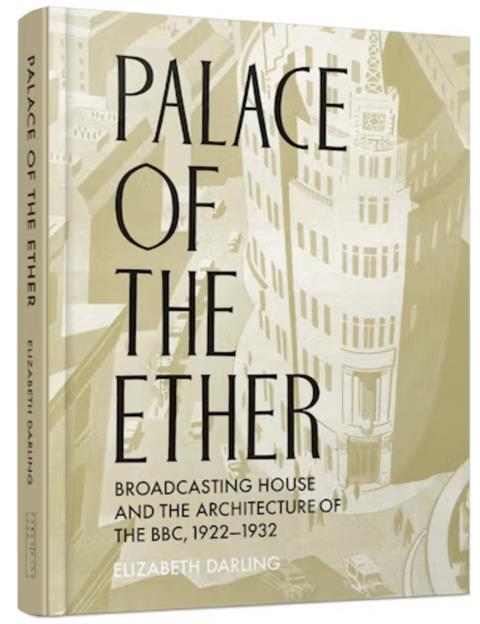
Darling files it instead under something far more interesting – as a building caught in the crossfire of a manufactured style-war: It was, she argues, a building entirely without precedent and an attempt to give solid, visible form to a medium (radio), that could be neither seen nor touched.
Radio entered the home as sound alone, and the young corporation under Reith grasped that a public service needed a face the listener could recognise and trust. Darling takes the decade from 1922, when the British Broadcasting Company was founded, to 1932, when the headquarters opened, and resists the temptation to hurry toward the monument, giving the years in borrowed rooms at Marconi House and Savoy Hill room to breathe.
By the time we reach Portland Place, the building is unveiled not as a stylistic gesture but as the settling of a long argument the institution had been having about what it was and how it should appear.
Darling follows the stone and timber back to their sources across the British Empire, letting the building be read as matter gathered from far off
The interiors are where the book is at its most confident, and where Darling’s own scholarship tells. Having written the standard account of Wells Coates, she is well placed to describe a fitting-out in which Coates worked under Raymond McGrath’s coordinating eye, with Serge Chermayeff and others among them.
What emerges is a building assembled from different temperaments: rooms in chromium, cork and plywood, thoroughly modern, sealed inside a shell that spoke the older language of civic permanence. The two registers might have quarrelled; instead they hold, and Darling draws a larger point from it.
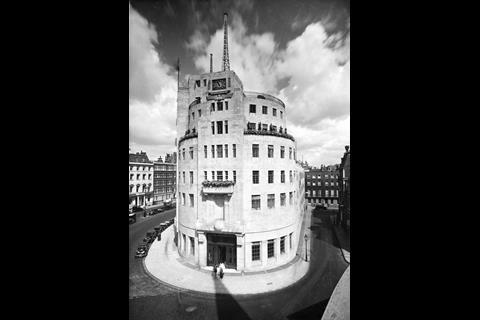
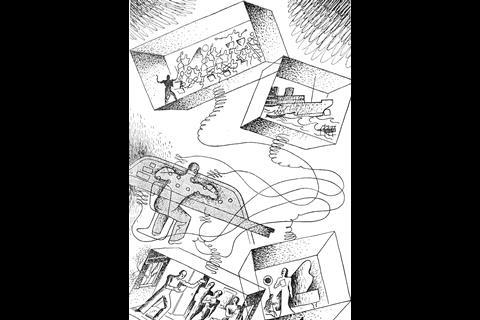
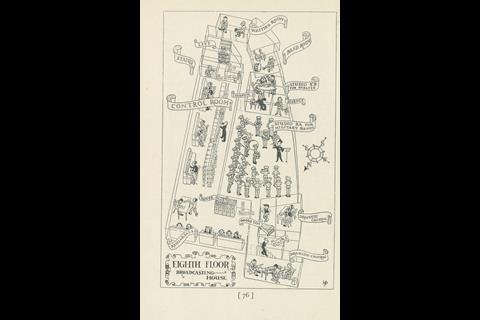

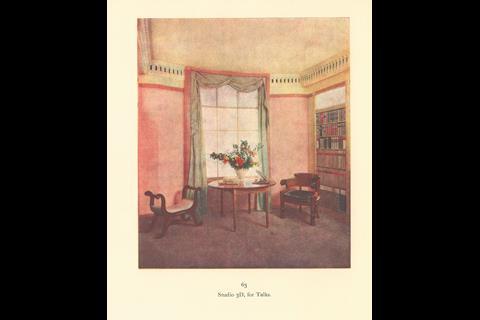


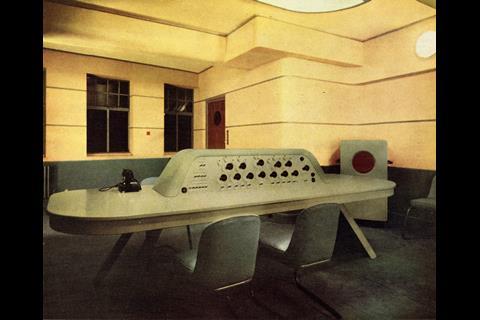
English modernism, in her telling, rarely arrived as a manifesto and almost always as a negotiation, worked out inside institutions that wanted to look modern and permanent at the same time.
Some of the finest pages concern where the building came from. Darling follows the stone and timber back to their sources across the British Empire, letting the building be read as matter gathered from far off, its fabric drawn along the same imperial routes that broadcasting was built to travel.
There may have been more to say about the “concentric coloniality” of the building itself, which obviously reflected a “whiteness” both in the nationality of its designers and in the choices of materials from the dominions.
Broadcasting House is where the invisible was given a body, and where an institution that would come to matter worldwide first declared, in stone and sound, what it hoped to become
The book is best when Darling is explaining what the building says and the language in which it is speaking. Sections on Eric Gill’s work and concurrent chapters on the designs for the studios are highly illuminating and are backed with wonderfully evocative archive images, many in colour.
Set beside Re-forming Britain and the Coates monograph, Palace of the Ether extends Darling’s effort to treat modernism as a culture rather than a style, and makes the case with characteristic authority. The buildings that tell us most, she argues, are not the white villas but the compromised institutional ones, where a new technology, a new public and an old craft in stone had to meet under one roof.
Broadcasting House is where the invisible was given a body, and where an institution that would come to matter worldwide first declared, in stone and sound, what it hoped to become. Darling has here written the definitive account of its early life with learning and affection.
Postscript
Palace of the Ether: Broadcasting House and the Architecture of the BBC 1922-32 by Elizabeth Darling was published by Lund Humphries in June
Jon Wright is Twentieth Century Heritage Consultant at Purcell






2 Readers' comments