






Jon Wright explores the enduring legacy of the Royal Festival Hall, the 75th anniversary of which is marked by a new book edited by Eleanor Jolliffe and Sandy Rattray
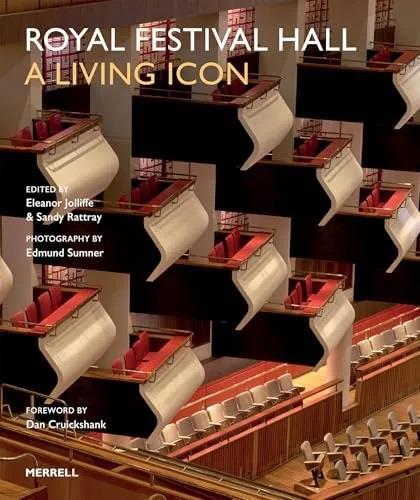
There is a particular quality of light in the upper foyers of the Royal Festival Hall on a winter afternoon, when the low sun catches the south-facing glazing and floods the interior with something that feels, improbably, like optimism. It is not an accident. It was designed that way, by architects who believed that a public building could and should change how people felt about themselves and the city in which they lived.
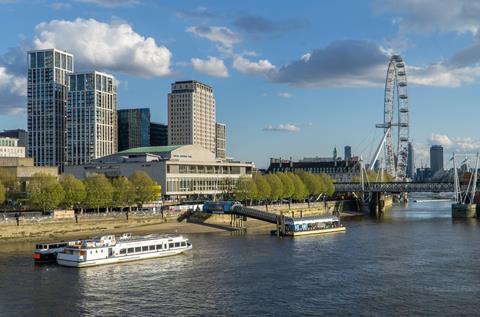
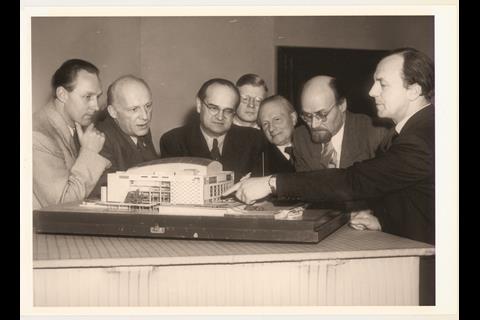
Seventy-five years on from its opening, that ambition remains legible in every section of the building, and the quiet radicalism of what Leslie Martin, Robert Matthew and Peter Moro achieved here has lost none of its power. This handsome book, edited by Eleanor Jolliffe and Sandy Rattray and published to mark the anniversary, is the most comprehensive account of the building yet assembled, and it does justice, finally, to a work of architecture that has too often been celebrated without being properly understood.
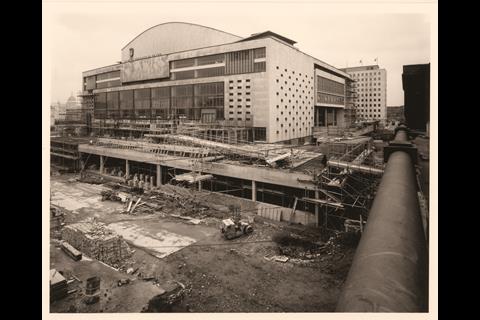
The Royal Festival Hall was the sole permanent building of the 1951 Festival of Britain – its last surviving remnant, and still the most eloquent testimony to what that extraordinary national moment was trying to say. Built on a stretch of industrialised South Bank marshland that required draining before construction could begin, constrained by railway lines on three sides and delivered in a matter of months under conditions of post-war material scarcity, it was an achievement of structural invention as much as architectural vision.
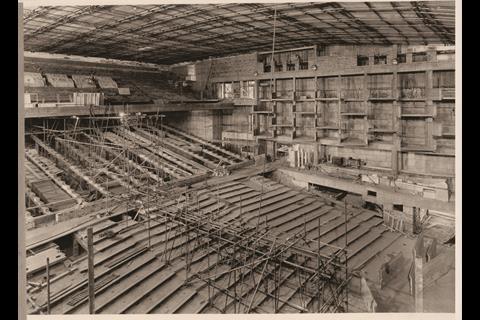
The fundamental problem was acoustic: how to build a concert hall of the necessary scale and quality in a location that was, by any measure, catastrophically noisy. The solution, devised with what the editors describe as the audacity of relative inexperience, was to float the auditorium as an egg within the outer box of the building, wrapping foyers around and beneath it to buffer the inner chamber from the surrounding city.
Two layers of concrete 25cm thick, double-set entrance doors at every point of entry, and a sectional ingenuity that has since become a textbook solution: this was architecture practised as problem-solving at the highest level.
The book is honest about its sources. Matthew had toured Nils Einar Eriksson’s Göteborgs Konserthus in 1947 and was lastingly impressed by its sectional organisation and its auditorium’s warm timber lining of elm, birch and teak. The debt is real and the editors acknowledge it without apology, because what Martin and his colleagues did with that influence was to transform it into something that could only have been built in London, in 1951, by architects who had grown up in the shadow of Lubetkin and understood that modernism in this country needed to earn its place in the street.
The original facades, with their disciplined fenestration and their relationship to Lubetkin and Tecton’s Finsbury Health Centre of 1938, speak a language that is recognisably continuous with the best pre-war British modernism, while the section and the interior inhabit a completely different register: generous, sensuous, alive with natural light and with the grain and warmth of timber.
What elevates this book above a conventional monograph is the breadth and candour of its contributors, 21 in total, drawn from architecture, music, literature, production management and the daily operational life of the building. Dan Cruickshank’s foreword frames the hall as a tangible expression of a burning desire to create a better society after the destruction of the Second World War, Wallpaper* and that social programme runs as a constant current through everything that follows.
The building was designed without class divisions. There were no separate entrances, no tiered bars, no architectural hierarchy between those who could afford the stalls and those who could not. It was conceived, with a seriousness of purpose that is still moving, as a people’s palace: a place where the full range of London’s population might encounter great music, great architecture and the quiet dignity of a public realm that had been made for them.
The contributors who work within it – production technicians, literary programmers, musicians – speak about this with a feeling that is neither sentimental nor performative. They mean it, because the building continues to mean it.
The chapter on the organ is exceptional. Leslie Martin designed its gilded case himself, one of the great interior set-pieces of post-war British architecture, and the story of the instrument’s life across 75 years illuminates in miniature what the whole building represents: something made with exceptional skill and care, continuously sustained by people who understand its value.
The production team’s account of the building’s daily operation carries a similar charge. A concert hall of this complexity is never finished. It is maintained, interpreted, argued over and renewed by successive generations, and the book is admirable in attending to that continuous human labour.
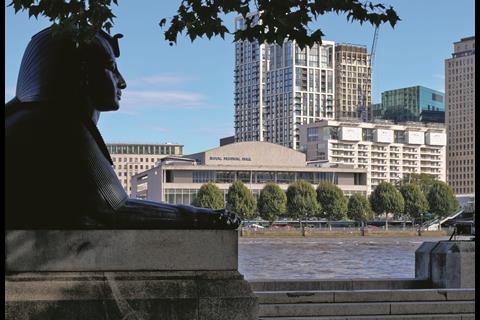
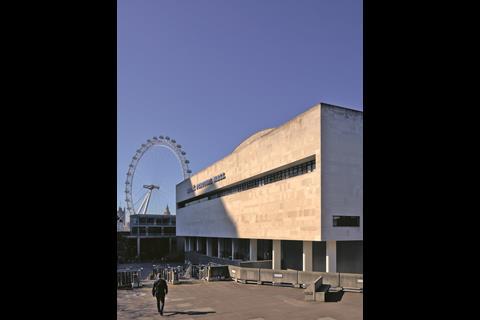
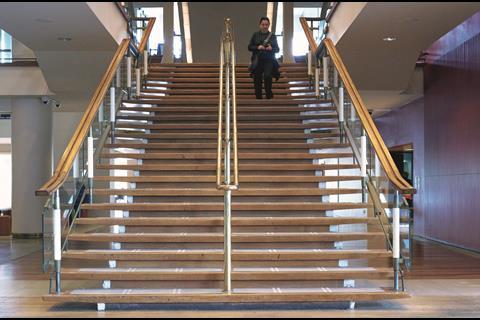
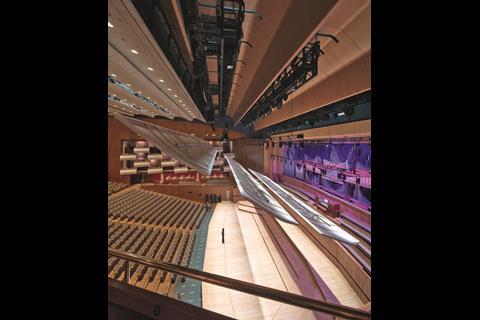
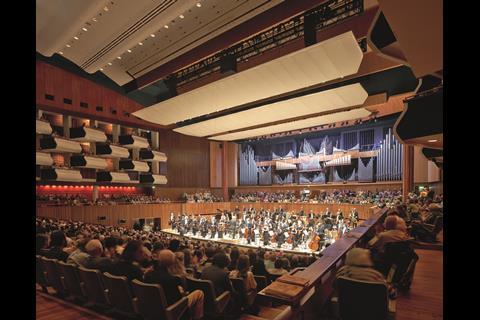
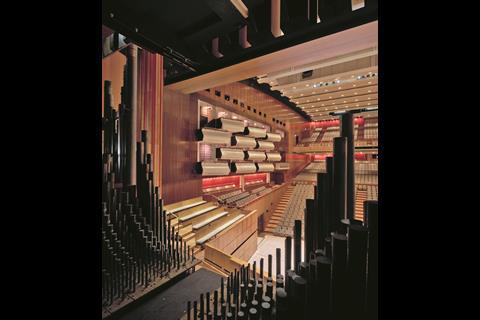
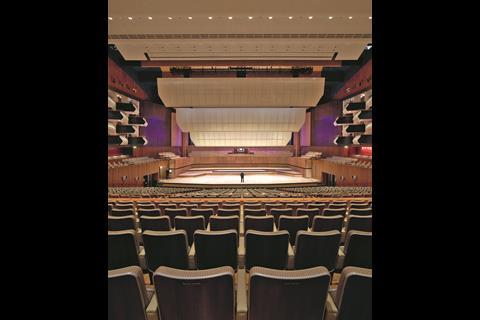
Edmund Sumner’s photography, specially commissioned throughout, matches the quality of the writing. His images are disciplined and precise, never decorative. He knows that the building rewards patience and that its most powerful effects are subtle: the fall of light through the foyers on a clear morning, the perspective of the auditorium from the upper tier, the grain of the timber cladding at close range.
These are not the images of a building being sold. They are the images of a building being looked at with sustained attention and genuine love.
The sole reservation is that the 2005 refurbishment receives less critical scrutiny than it merits. A building of this significance, substantially reimagined once already within its own lifetime, deserves a fuller reckoning with what those interventions preserved, what they altered and what questions they leave open for the future.
That aside, the range of contributors is the book’s most distinctive and effective quality. By bringing architects and historians into the same frame as musicians, technicians and cultural programmers, the editors resist treating the building as a closed artefact and attend instead to its life as a working public space, one that has remained at the centre of London’s civic and cultural identity for three quarters of a century. That is the right approach for this subject, and the book is the better for it.
Postscript
Royal Festival Hall: A Living Icon, edited by Eleanor Jolliffe and Sandy Rattray, is published by Merrell, 2026. £39.95.
Jon Wright is Twentieth Century Heritage Consultant at Purcell.






No comments yet