Loader Monteith, finalist for Social Value Architect of the Year at last year’s Architect of the Year Awards guides us through the specification challenges at its Harmeny Learning Hub

Loader Montheir was shortlisted for Social Value Architct of the Year at last year’s AYAs. Here we take a look at the Harmeny learning hub, one of the projects that formed its entry, and ask Matt Loader, director at the firm, to talk us through the biggest specification challenges involved.
The vocational learning centre was delivered by Loader Monteith with Studio SJM for for the Harmeny Education Trust. Located on the Scottish charity’s 35-acre estate south west of Edinburgh, the centre provides an uplifting learning environment for students with complex needs. The project has also won a gold award for an education project and a silver award for client of the year at the Scottish Design Awards, and commendations from the Edinburgh and Glasgow Architectural Associations.
What were the key requirements of the client’s brief? How did you meet these through both design and specification?
The client’s brief was to create a safe, welcoming and practical learning environment for students aged 14-18 who face complex challenges due to trauma and early adversity. They wanted spaces that supported emotional wellbeing while also giving students opportunities for hands-on learning and building usable skills for the future.
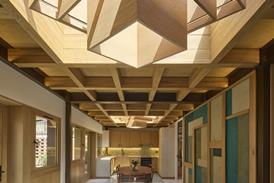
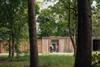
To meet this need, the building was designed like an embrace, with an L-shaped layout that creates a protected courtyard in the middle of the woodland. Every classroom and workshop opens directly onto nature, so students can move freely between indoor and outdoor spaces. Materials like larch timber and muted bricks were chosen to blend the building into the natural surroundings, while energy-efficient systems like ground-source heat pumps and ventilation recovery keep it comfortable and sustainable. Inside, the classrooms and workshops were designed with calm colours, natural light, and warm lighting, creating spaces that are inviting without being overwhelming. Areas like the ”My space room” and “Welcome room” give students places to relax, focus and socialise.
Overall, both the design and the materials were carefully chosen to support learning, personal growth and emotional wellbeing, exactly reflecting what Harmeny wanted.

What were the biggest specification challenges on the project, and how were these overcome?
Our key focus was creating spaces that feel welcoming and supportive while also working well for practical, hands-on learning. The hub brings together workshops, classrooms and quieter retreat spaces, so the specification needed to be flexible and considered.
This was achieved through materials that speak to the woodland landscape, simple yet coherent layouts and a strong connection to the outdoors. Careful coordination was also needed to sensitively place the building within the woodland setting and alongside neighbouring listed buildings, allowing the new hub to sit comfortably within its surroundings.
As a learning hub for children and young adults, it was vital to design a building that can “take a knock”. At the same time, the site was so lovely – in a glade in the woodland – that we wanted to make a building that whispered its presence rather than shouting it. To meet these divergent aims, we came up with a strategy to use a combination of timber cladding and brick. We placed the cladding behind areas where there is planting externally and adjacent to places such as the outdoor classrooms where people linger, and the brick along the primary routes around the building.
The pandemic also presented a specific specification challenge in terms of sourcing the materials. Thankfully, we had early conversations with local Scottish sawmills to help source both the primary timber structure and the timber cladding.
Internally, we used Habito board throughout instead of plasterboard to help ensure that the walls could be used for storage – and that they could take those knocks. We ”softened” it with the use of sisal wool acoustic ceiling panels and ash for the internal doors.

What are the three biggest specification considerations for projects of this type? How did these specifically apply to this project?
First priority is the young people’s wellbeing. Spaces like this need to feel calm, open and reassuring, which at Harmeny was achieved through natural light, soft colours, warm lighting and direct access to outdoor areas from every room.
Second is durability. The learning hub supports vocational teaching, so materials and layouts were chosen to work well for daily use while still feeling inviting and easy to care for.
Third is sustainability. The building was designed to perform well over the long term, using timber construction, high levels of insulation and low-energy systems to reduce environmental impact and running costs.
As a practice, we have a default preference to try and specify products that can either be recycled or consumed by microbes at the end of their life. This means we try to use fired clay and timber products, such as brick and locally grown Scottish larch cladding, along with uncoated aluminium. All of these were evident at the learning hub.
This principle meant we used a timber kit primary structure and tried as far as possible to minimise the amount of hot-rolled steelwork in the project. The value-engineering process meant there were concessions to these principles: we used a combination of natural and PIR insulation, and there is a ground-bearing concrete slab. We try to take a principled approach to material selection, but accept that there are instances where a degree of flexibility needs to happen to get projects off the ground – especially when there is significant construction inflation, which was the case during the pandemic, when this was tendered.

Are there any suppliers you collaborated with on the project that contributed significantly? And what was the most valuable service they offered?
Studio SJM played an important role in shaping the interiors. Their expert understanding of learning environments and sensory needs informed the classroom and workshop design, making sure the spaces feel comfortable, engaging and supportive. Their collaborative approach ensured the interior spaces reflected Harmeny’s ethos and supported the everyday experience of students and staff.
Aside from that, the following deserve an honourable mention:
- Kirkwood timber for the timber kit
- International Timber for the timber cladding
- the Wienerberger Terca bricks
- main contractor Thomas Johnstone for all the interior joinery.
What did you think was the biggest success on the project?
The greatest success is how the centre has expanded what Harmeny can offer its students. It provides a place where young people can learn practical skills, connect with nature and feel a strong sense of belonging. The building supports different ways of learning and gives students a choice in how they use the space, which has had a clear, positive impact since opening. It is a calm, uplifting environment that reflects Harmeny’s values and supports young people as they grow in confidence and independence. The external “cloister” space is particularly fantastic – it has been such a success that the students (who all live on campus) hang out there even when school is out.
Project details
Start on site November 2022
Completion November 2023
Gross internal area 500m2
Lead architect Loader Monteith
Architect Studio SJM Architects
Client Harmeny Education Trust
Main contractor Thomas Johnstone Ltd
Project management Faithful & Gould
Landscape architect Wardell Armstrong
Structural engineer Harley Haddow
M&E consultant Harley Haddow
CDM co-ordinator Principal CDM
Timber kit Kirkwood Timber
Timber cladding International Timber
Bricks Wienerberger Terca range
Our “What made this project” series highlights the outstanding work of our Architect of the Year finalists. To keep up-to-date with all the latest from the Architect of the Year Awards visit here.
Postscript
Photos Jim Stephenson


No comments yet