





A modest residential development in London’s Euston references the areas history whilst pioneering new reclaimation techniques that save carbon
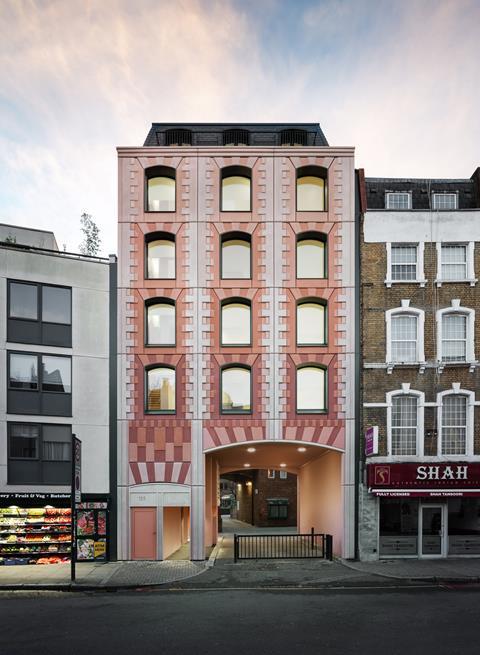
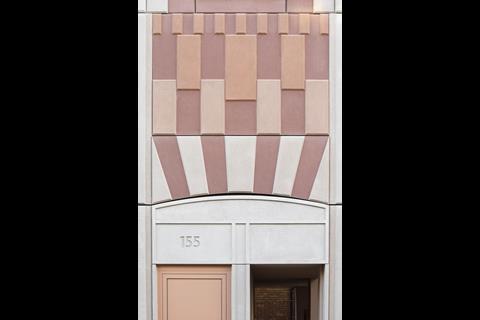
Bureau de Change architects has completed a residential scheme in Euston featuring a unique reconstituted crushed brick façade reclaimed from the building formerly on the site.
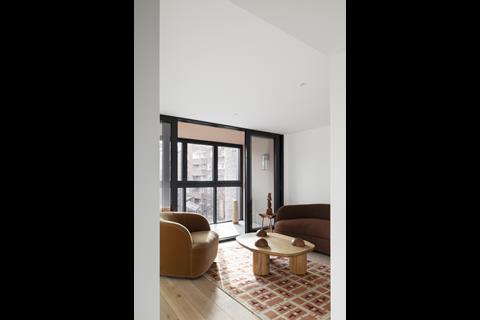
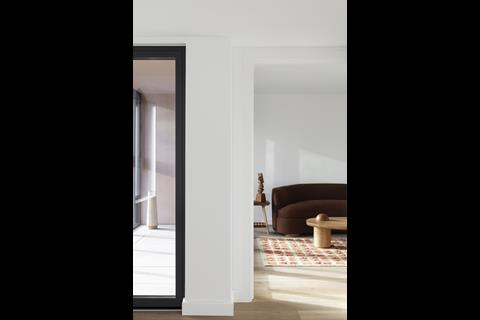
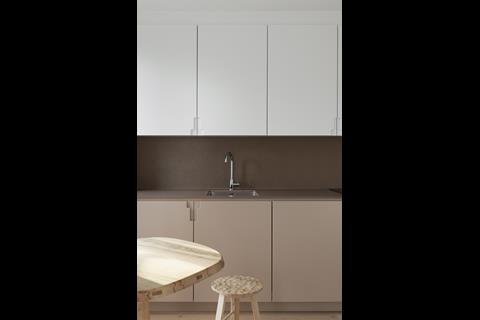
Designed for developer HGG London, the six storey building which is called Trace includes three two bedroom and two one bedroom apartments which were designed specifically for rent. Each apartment is double aspect and features separate living and kitchen/dining areas connected by an open doorway with the idea that this provides a degree of separation for occupiers who need a degree of privacy such as those working from home.
The apartments on the lower floors also feature winter gardens at the rear with sliding glass windows that can be folded back to turn these into open balconies in the summer. Residents on the top floor have standard balconies with good views over London.
The foundations and ground floor were retained to save carbon. The ground floor is mostly occupied by a large arch which provides access to the Tolmer’s Square housing development behind the scheme.
Billy Mavropoulos, the co-founder of Bureau de Change said the building was designed to evoke the memory of the former Euston Station, which is nearby and the Georgian and Victorian houses formerly on Tolmer Square which were replaced after a long battle in the 1970’s. “Trace looks both backwards and forwards,” explains Mavropoulos “By combining traditional architectural memory with contemporary fabrication, we’ve created a building rooted in its context yet designed for future living. The circular principle of repurposing the façade became a guiding idea, both environmentally and conceptually for the project as a whole.”
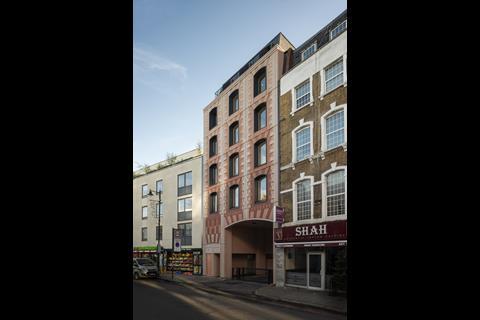
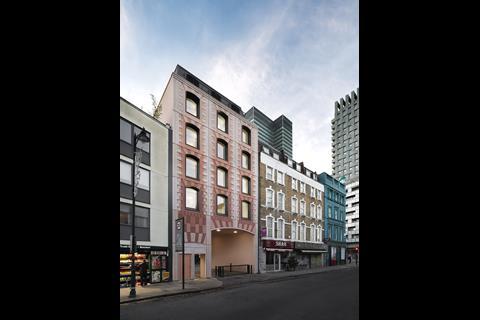
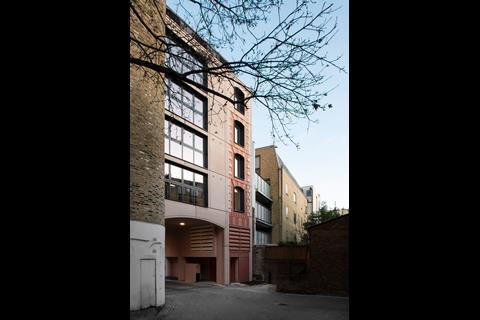
The former building on the site was an uninspiring 1980’s job with mean windows and built from a dull red brown brick. HGG London managing director, Dicle Guntas says that it wasn’t worth trying to preserve the building facade above the ground floor. “We wanted to have larger windows for the flats, so there’s more daylight,” she explains. “By the time you enlarge the window openings there would have been very little of the facade left. So, it was an opportunity to something that was aesthetically more appealing.”
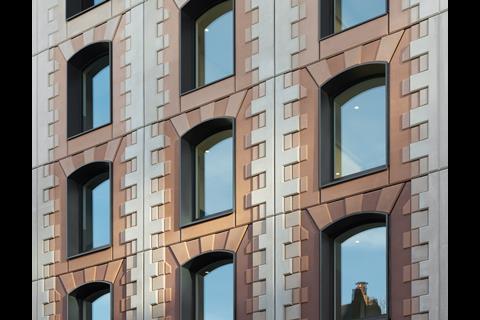
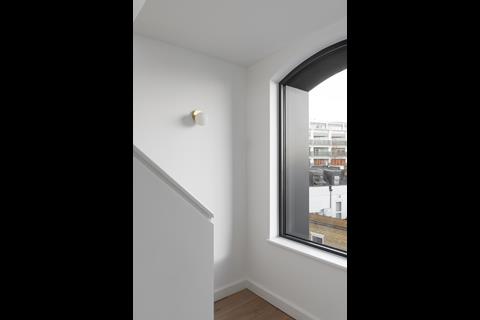
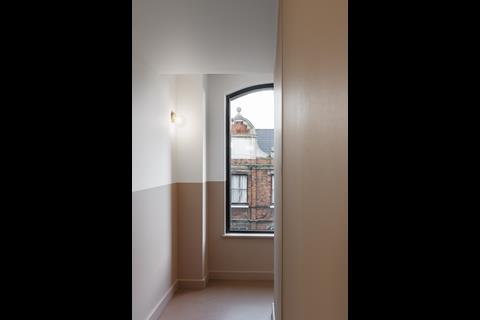
Architecturally, the building is conceptually Classical yet overtly modern with arched windows featuring single pieces of glass, rustication around the windows and a mansard on the top floor.
The original façade was constructed with cement mortar, making reuse impossible. Instead the façade was demolished to first floor level and taken away to be crushed with a maximum aggregate size of 6mm down to a fine dust.
This material has been used to make new glass reinforced panels. Guntas says several GRC specialists were approached but the experimental nature of the job meant that hardly any were prepared to take it on. Eventually, the job went to a specialist called Simplicity. The new façade gets progressively lighter storey by storey toward the top of the building. Five different colours have been used with each panel made up from several different colours. Crushed brick was used as the aggregate with dyes added to make the darker colours. To make up each panel one colour is poured at a time and allowed to initially set before the next colour is added next to it. Once all the coloured material has been added glass reinforcement is added. “It was a very laborious process,” Mavropoulos says. Once cured, the panels were sandblasted to give these a rougher, more organic appearance. The end result looks stunning, highly distinctive yet respectful of its context and a great way to use bricks that would normally end up as hardcore. Both Guntas and Mavropoulos say reclaiming the bricks in this way was a very site specific response but hope that the work done at Drummond St could set a precedent to use the technique on other projects.
Project team
Developer HGG London
Area 400m2
Architect Bureau de Change
Planning consultant Maddox
Structural Engineer HRW
MEP engineer Integration
Fire engineer Jensen Hughes
Contractor HGG Construction
GRC panels Simplicity
Furniture Jan Hendzel Studio, Sedilia, A Rum Fellow




No comments yet