






A research and demonstrator project at Liverpool John Moores University is set to offer practical data-driven insights on retrofitting homes of different ages
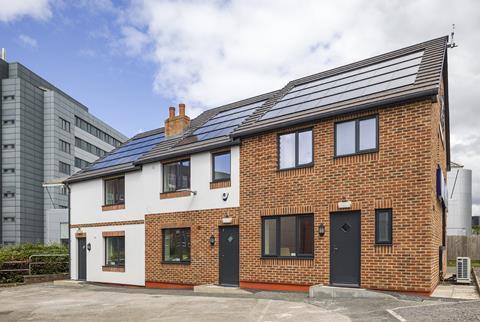
The project, which is a partnership between the university’s school of civil engineering and the built environment, BRE and wienerberger, has seen test houses on the Liverpool campus fully retrofitted, and their performance will be monitored for two years generating data on energy efficiency, comfort levels and cost impacts.
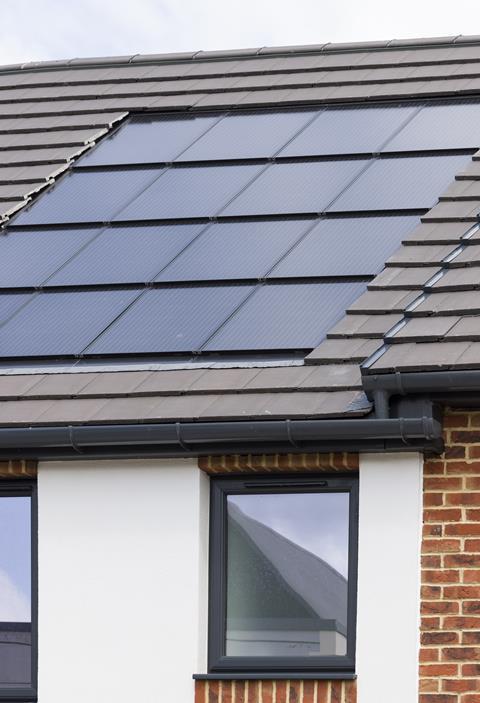
The Renatus retrofit test houses are three properties designed to represent typical UK homes from the 1920s, 1970s and 2010s. Each has undergone whole-house retrofit using wienerberger’s Renatus retrofit solution for social housing. This is a coordinated, evidence-based turnkey package that includes monitoring and testing; retrofit design and specification; supply (of fabric upgrades, airtightness improvements, ventilation enhancements, sustainable roofing, low-carbon heating etc); inspection; guarantee and certification.
Upgrades installed
Each house has been given an appropriate set of retrofit upgrades:
|
House |
Pre-retrofit condition |
Post-retrofit upgrades |
|
1920 (solid wall) |
• Uninsulated timber ground floor • Solid brick external walls • Uninsulated roof• Gas boiler |
• 200mm External Wall Insulation (EWI) with render finish • New roof including membranes, tiles, solar PV, inverter and battery • 400mm loft insulation |
|
1970 (early cavity wall) |
• Uninsulated concrete ground floor • Unfilled cavity wall • 100mm loft insulation • Gas boiler |
• 200mm EWI with render to upper walls • 170mm EWI with 22mm brick slip finish to lower walls • New roof (same as 1920s house upgrade) • Air-source heat pump (ASHP) using existing radiators and pipework |
|
2010 (modern cavity wall) |
• Concrete floor with 100mm rigid insulation • Cavity wall with 40mm rigid insulation • 100mm loft insulation • Gas boiler |
• 170mm EWI with brick slip finish • New roof (same as 1920s house upgrade) • Air-source heat pump (ASHP), pre-plumbed hot water cylinder, new pipework and radiators |
Heat-pumps connected to existing systems
It is interesting to note, as the table shows, in the 1970s house, an air-source heat pump has been attached to existing pipework and radiators to see if this low-disruption intervention can provide a satisfactory heating solution.
The retrofit works were sequenced to replicate real-life conditions, with the aim of demonstrating that upgrades can be delivered while residents remain in their homes, minimising disruption.
Hi tech monitoring
Each house is full of sensors that monitor the following:
- Thermal transmittance (U-value) before and after
- Fabric and room moisture content before and after
- Condensation below the solar panel and roof membrane
- Pressure difference between loft and the outside
- Thermal image before and after
- Diffuse and global radiation on PV panels
- ASHP performance.
Upfront intrusive and performance surveys were also carried so the team could understand how the properties were performing before the retrofit work began.
The test houses also use innovative technology to simulate tenant behaviour. Robots replicate everyday household activities such as heat generation, moisture production and ventilation patterns, allowing researchers to analyse building performance under realistic living conditions.
EPC improvements
Standard modelling has already shown significant improvements in energy efficiency post retrofit. The 1920s property has improved from an EPC D to A, while the 1970s and 2010s homes both improved from C to B. Data collection is ongoing.
Professor Mike Riley, director of the school of civil engineering and built environment, said, “This project combines academic research and industry expertise to create a living laboratory for social-housing retrofit. The data we gather will help providers make informed decisions that improve both building performance and residents’ quality of life.”





No comments yet