






Rossella Faraci and Andy Thomas, project directors at John Robertson Architects (JRA), talk us through the firm’s refurb of 20 Gresham Street in the City of London – a successful example of creative office retrofit. They explain how light-touch interventions transformed the foyer into a social space with an art gallery aesthetic that encourages staff and visitors to linger
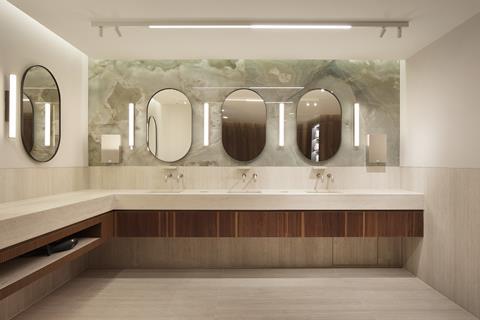
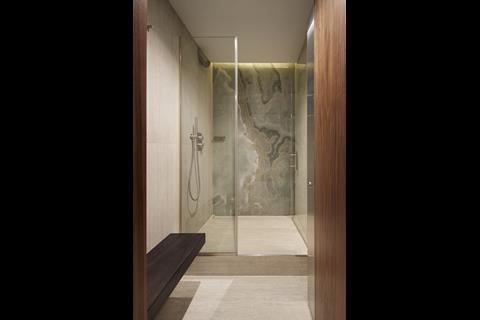
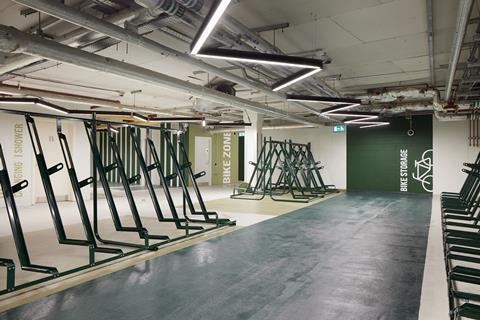
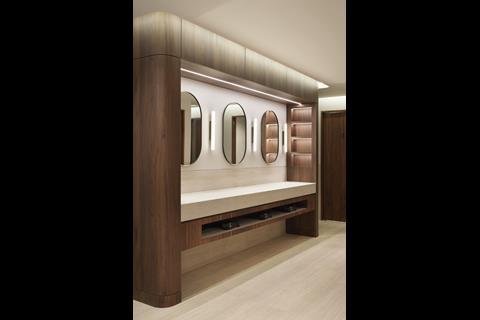
JRA was appointed for 20 Gresham Street as the end of lease was approaching. The building was only 16 years old, but, in the time since it was built, the way we conceive of the workplace has changed substantially. Our brief for the building – which was originally delivered by KPF in 2008 – focused on reimagining the entrance hall, refurbishing the CAT A floors, and enhancing amenities with new end-of-trip facilities, including a new cycle store and changing rooms.
Echoey entrance hall
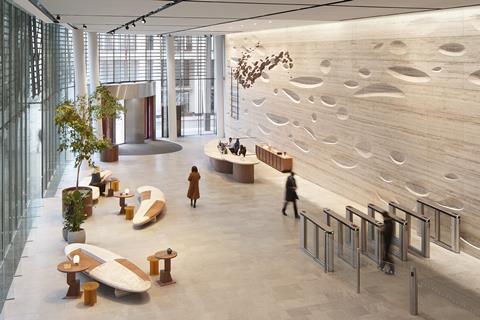
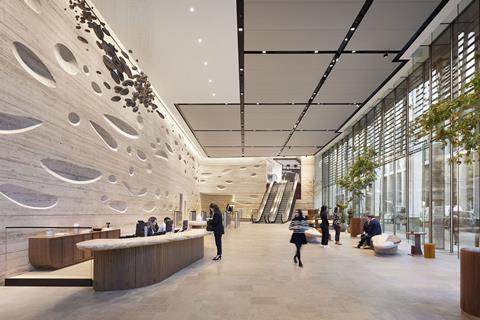
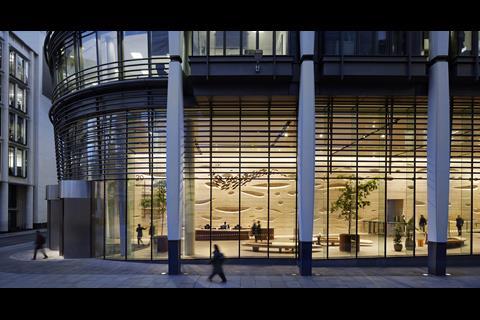
When 20 Gresham Street was built, its reception was a distinctive offering for the Square Mile. A vast double-height space, the entrance hall incorporated long sightlines and full-height glazing along the street facade. Though visually striking, this configuration created an often echoey and somewhat intimidating entrance for visitors. It also discouraged spontaneous meetings in the reception area between colleagues coming in to work.
In recent years, the approach to office entrance design – and workplace design more broadly – has evolved significantly from that of the late 2000s. Entrance halls are no longer just transient spaces – a point of entry to the workplace – but instead are being reimagined as more akin to hotel reception areas, with a welcoming arrival experience where visitors are invited to utilise the space.
Working with the existing space
Because of this, a “business as usual” approach would typically have involved a complete overhaul of the entrance hall with the creation of entirely new spaces to enable the introduction of new amenity spaces, soft furnishings, artwork and ambient lighting. However, at JRA we are adopting a progressive shift towards limiting CAT A waste: an approach to retrofit led by a moral imperative to work with the existing and prioritise reuse. So, it was agreed that the existing entrance hall did not need a complete overhaul – it just didn’t warrant such a drastic intervention. Instead, we decided to embrace the challenges and opportunities the space presented by retaining the elements we could work with while still reimagining it.
Client’s trust
The client’s willingness and trust were key to enabling this approach. By curating key carefully considered interventions, we believe we have created a unique arrival experience that combines considered architectural adaptation of the space with new sculptural artwork additions.
Foyer as art gallery
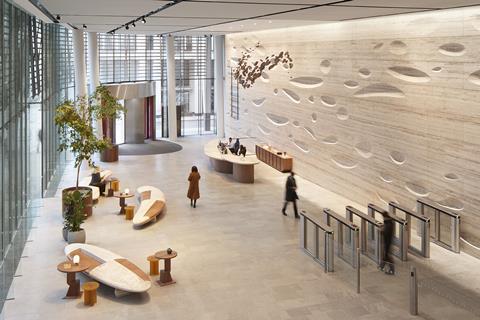
We felt able to do this because we feel we understand the market and its requirements: JRA has been working in the City for over 30 years. As the home of leading financial institutions, Gresham Street called for strong, confident design that would stand out in the competitive market. A key concept behind our treatment of the reception was the idea of the entrance as an art gallery. Its vast volume lent itself to inviting visitors to engage with functional artworks that also foster a welcoming environment and encourage occupants to dwell.
Travertine wall
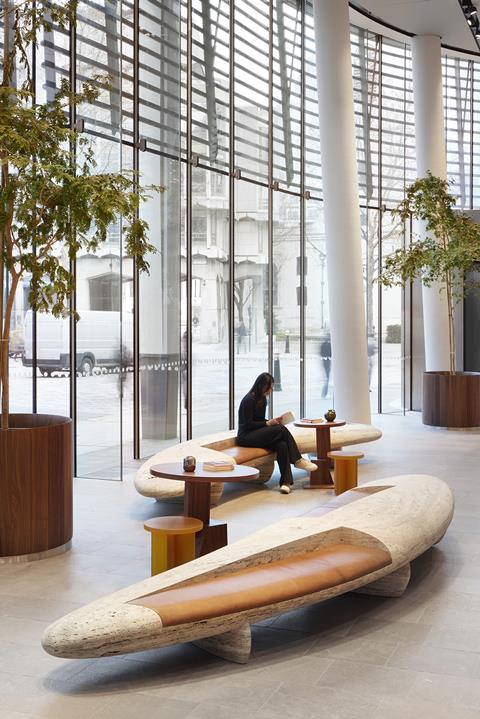
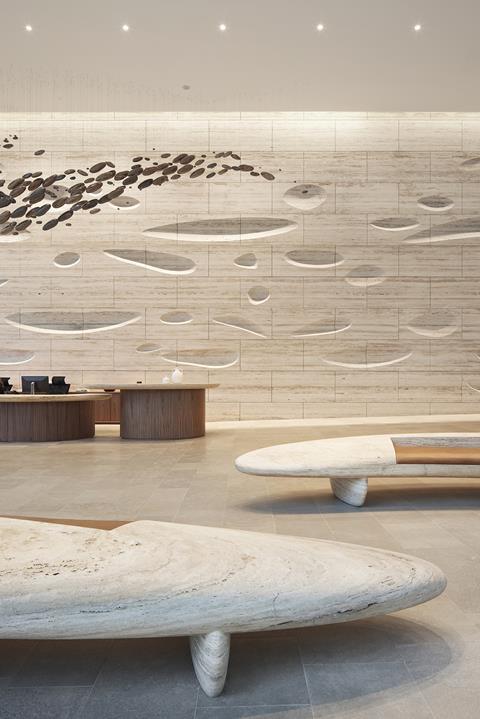
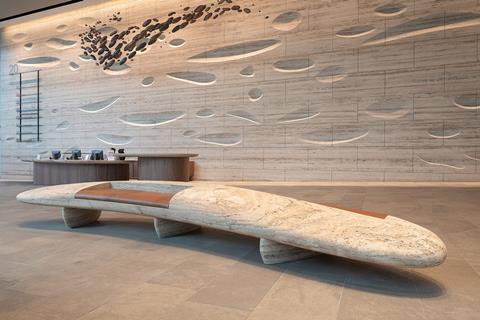
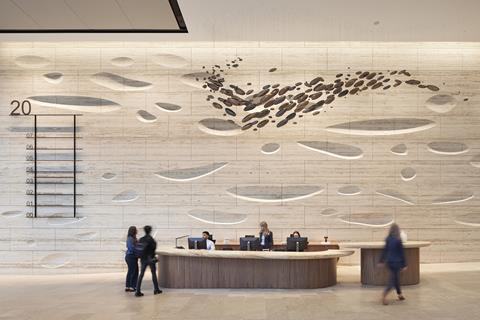
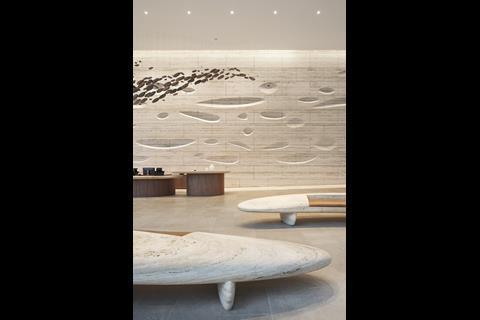
A key feature of the existing entrance hall is a dramatic travertine wall. The building is close to one of the most important Roman sites in London, and the wall references this aspect of the site’s history. So, we decided to carry this historic reference into the new proposals. Artistic additions were an integral part of our initial design concept, and these have taken shape in the form of sculptural benches designed by British artist David Worthington, and a hanging mobile installation by Acrylicize – both inspired by the material qualities and features of the travertine wall.
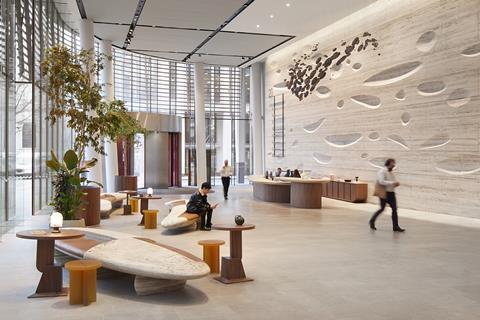
The space, with its sloping floor, is now conceived of as a river, populated by a series of pebble-like objects – a new bespoke reception desk, the sculptural benches, and the suspended artwork above the desk. Travertine in its natural environment and the natural forms of pebbles and fossils found in riverbeds were points of inspiration for the pieces.
David Worthington benches
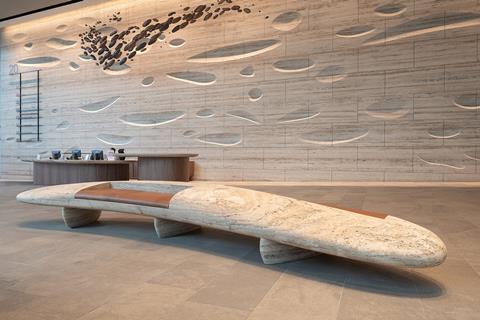
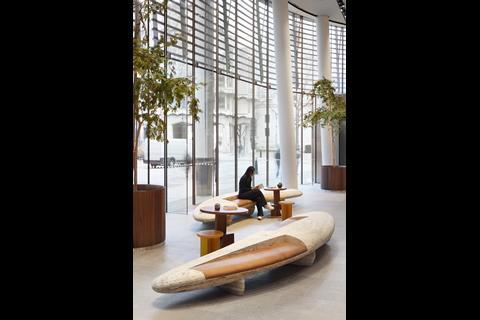
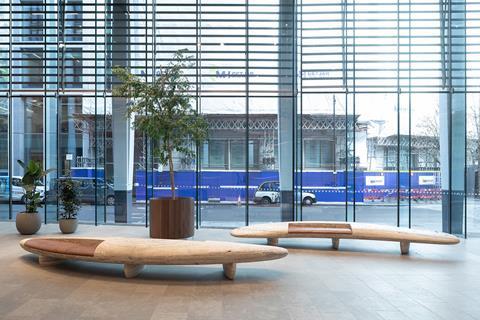
Worthington’s curved, sculptural benches developed in collaboration with Marble Projects are functional pieces of furniture – with seats by leather specialists Bill Amberg Studio – that also help elevate the space to create a gallery-like environment far removed from its previous incarnation. Up to 5m in length and weighing up to 2.5 tons they are cut from a single block of travertine from the SITI Travertino Toscano quarry in Tuscany.
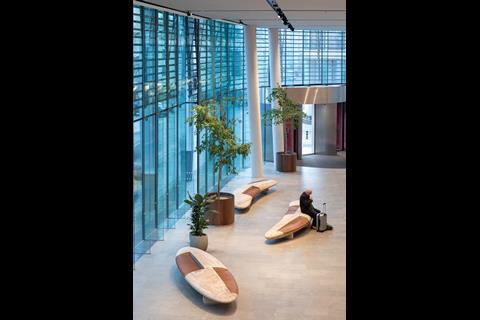
Building on JRA’s initial design concept and the riverbed metaphor, the “pebble” benches encourage spontaneous interactions between users, and introduce visual interest at a lower level. They are complemented by tall trees that provide a sense of scale and add an additional layer to the space.
Tactile material palette
JRA designed the reception desk and the furniture surrounding the benches to establish a strong, cohesive identity. Walnut tables introduce warmth, while resin stools add honeyed tones and a sense of transparency that works well in the light-filled space and contrasts nicely with the solid benches. The tactile timber, stone and leather inform the material palette for the rest of the building.
Conceived in collaboration with creative studio Acrylicize, the suspended mobile installation Cascade hangs over the reception desk. It is made of almost 200 asymmetric pebble-like forms suspended at varying angles to create a sense of perpetual movement. Small gold elements, symbolising prosperity and good fortune, are scattered among the other “pebbles”.
Acoustic challenges
One of the immediately apparent challenges of the existing hall was the poor acoustics. A vast space full of hard surfaces ensured that the sound of conversations, escalators and footsteps all reverberated, making even simple exchanges with the person next to you difficult and discouraging interaction. To address this, we introduced a new acoustic fabric panel ceiling system across the entire ceiling, incorporating metal service channels. This serves primarily to absorb noise but also creates a more tranquil and elegant hospitality-focused ambience.
The new ceiling also allowed us to add new lighting, addressing another aspect of the existing space that required attention. Working closely with specialist consultants Equation, the lighting integrated within the service channels provides a more balanced scheme for the overall space and allows for focused accent lighting. The latter has allowed the travertine wall to be lit more effectively to celebrate both its materiality and form.
A staircase down to the basement has also been introduced linking reception to the new end-of-trip facilities below.
Floor refurbs
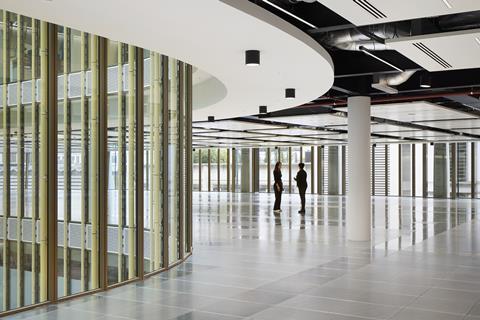
Our CAT A floor refurbishment also focused on reducing waste. The upgrade of 5,852m² of office accommodation implements targeted interventions with maximum spatial impact. The floorplates incorporate a flexible design that can accommodate cellular offices, smaller meeting rooms and zoning, allowing them to offer split tenancies. This approach allows future tenants CAT B layout flexibility, without the need for major alterations to the base build, reducing waste and supporting a sustainable, futureproof approach. Reuse of existing fittings was prioritised, and, wherever possible, these were integrated into the new scheme.
We see 20 Gresham Street’s reimagining as an example of how less can be more – and firmly believe the new arrival space is more connected and better integrated into the building than it would have been if the design had begun tabula rasa.
Project details
Principal designer JRA including CDM and Building Regs (pre-construction) Faithdean (post-construction)
Commissioning client 20 Gresham Street PropCo
Planning consultant DP9
Main contractor Faithdean
Project manager/Cost consultant Rider Levett Bucknall
Structural engineer Waterman
Sustainability and acoustics consultant Hilson Moran
Security consultant Hilson Moran
M&E/public health/electrical/services engineers consultant Hilson Moran
Fire engineering consultant Jensen Hughes
Access consultant David Bonnett Associates
Specialist lighting consultant Equation
Buildings regulation approver Sweco
Artwork Acrylicize
Sculptor David Worthington (in collaboration with JRA, Marble Projects and Bill Amberg Studio)



No comments yet