





As Levitt Bernstein completes the latest phase of works at St Luke’s – the London Symphony Orchestra’s home for performance, recording and education – we talk to Mark Lewis, the firm’s arts studio director, to hear more about the unique challenges of specifying the latest audio equipment in a Grade I-listed Hawksmoor church
Longstanding relationship
The £8 million project marks a new milestone in the practice’s longstanding relationship with both the building and the orchestra, following its original restoration of the former church in 2003.
The latest work has focused on adapting the historic building to make it a more accessible and inclusive space, as well as upgrading facilities to support the streaming and recording that are now essential aspects of its work – all while maintaining the character and integrity of the Grade I-listed landmark.
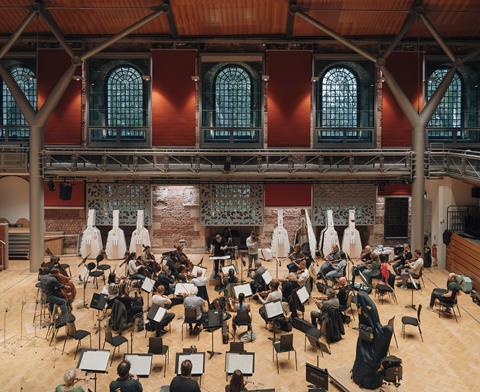
The new work builds on a relationship nurtured over more than 20 years. Levitt Bernstein’s original conversion brought the church back from a state of near ruin, creating a new home for the orchestra’s rehearsals and its pioneering education and community programme, LSO Discovery. The newly completed works continue this trajectory, preparing the building for the future with practical, people‑focused upgrades that improve the experience for musicians, staff, visitors and the surrounding community.
Acoustic and technical upgrades
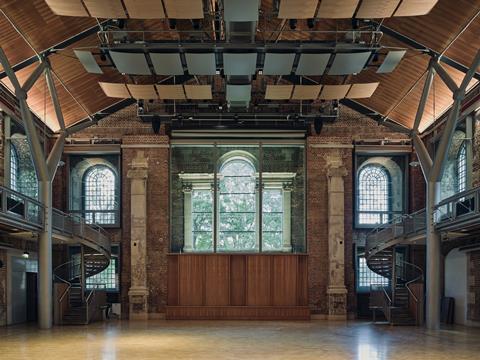
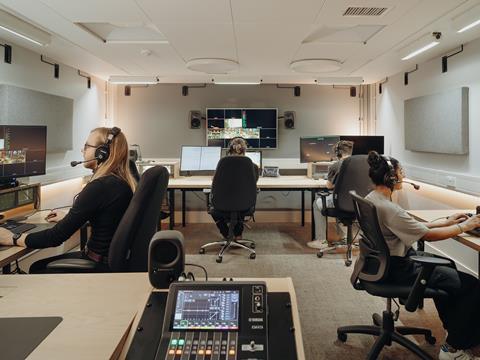
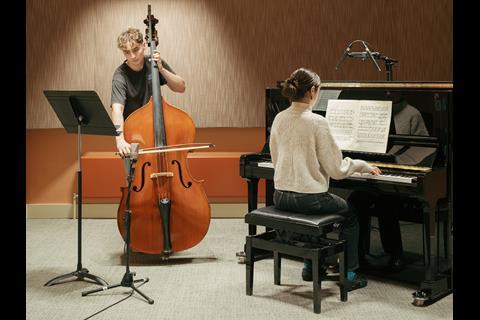
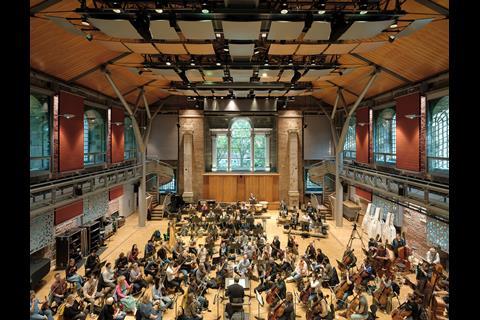
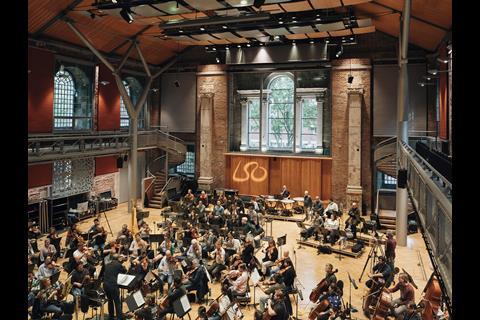
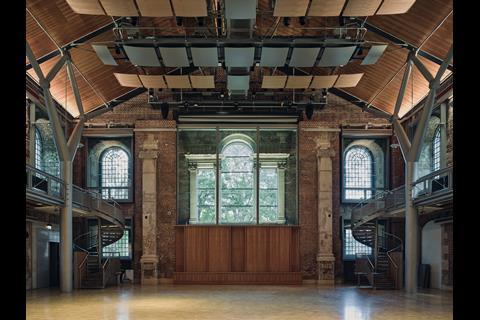
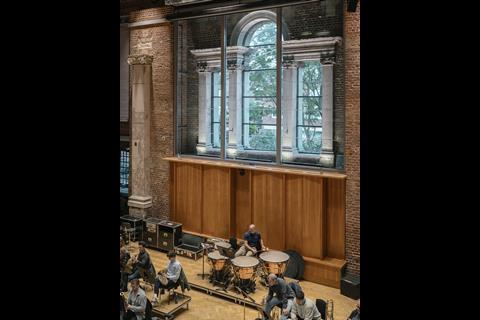
A key focus of the project has been the enhancement of Jerwood Hall, the building’s principal performance and rehearsal space. The hall underwent substantial acoustic improvements, now providing even better conditions for full orchestral rehearsal and recording. New digital recording and production facilities include a dedicated audio control room and master control room which enable rapid transitions between live performance, digital capture and editing, supporting the orchestra’s expanding broadcasting and streaming activity.
Hawksmoor Space
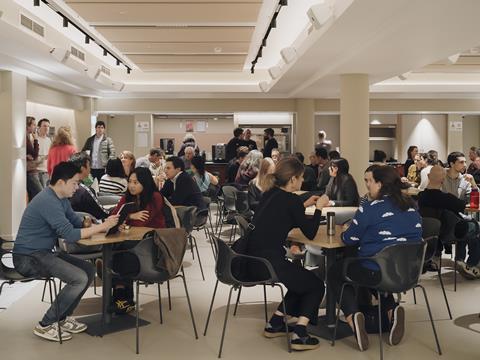
Across the building, internal layouts have been reconfigured to promote more flexible and concurrent use. The former café has been transformed into the Hawksmoor Space, a new adaptable venue for workshops, learning activities and community programmes. Front‑of‑house areas have been rejuvenated to create a more welcoming and intuitive arrival experience, supported by improved hospitality facilities.
Improved accessibility
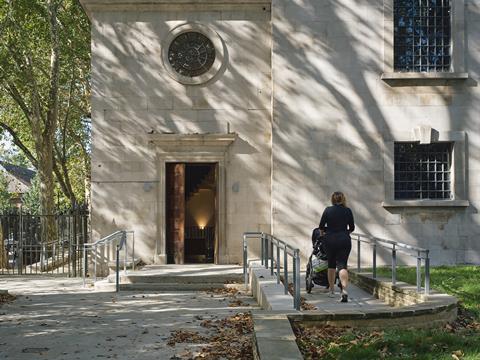
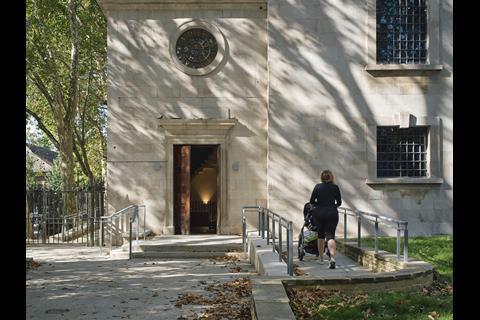
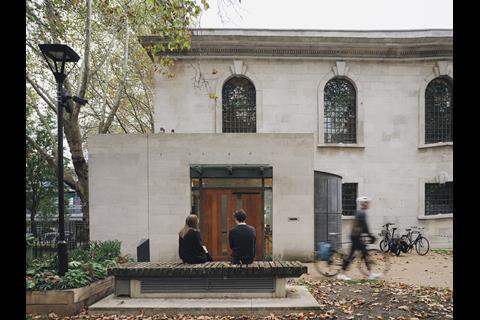
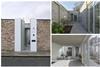
Accessibility has been significantly improved. A new step‑free entrance now leads directly from Old Street, connecting the building more clearly to its surroundings. Upgraded wayfinding, accessible drop‑off and pick‑up points, and a Changing Places facility ensure the venue is more inclusive and easier to navigate – improvements that reflect the LSO’s commitment to making St Luke’s an open and welcoming space for the widest range of users.
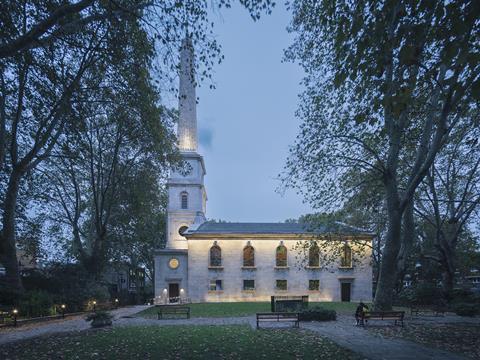
Externally, careful stonework conservation and a new architectural lighting scheme have strengthened the building’s presence within the streetscape, improving visibility and contributing to a safer, more inviting approach.
Low-carbon improvments
Environmental performance has been addressed through low‑carbon design measures, including energy‑efficient lighting, improved building management controls and the expanded use of the existing ground source heat pump. These interventions form part of a long‑term decarbonisation strategy and reduce operational energy demand, while respecting the building’s historic fabric.
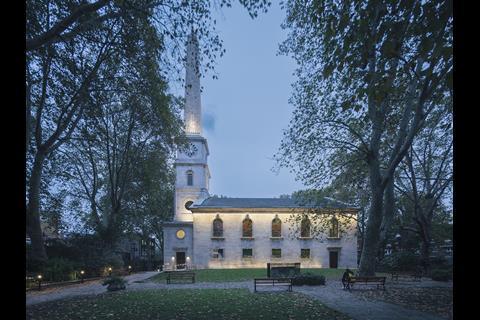
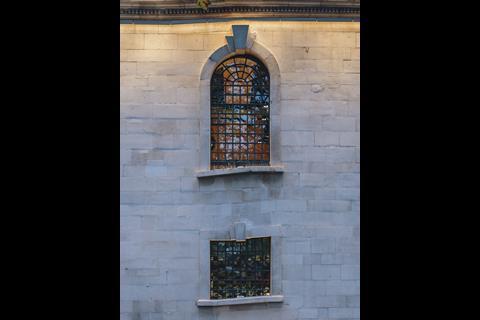
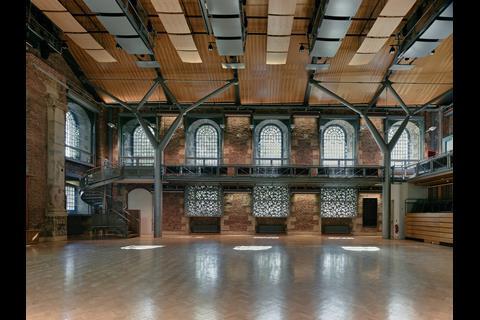
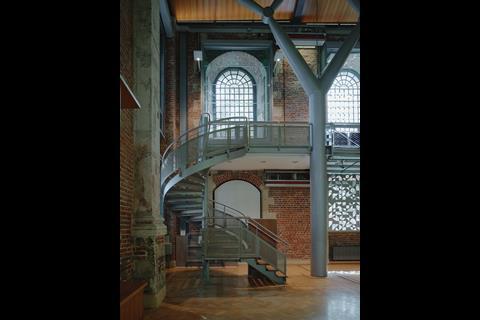
Throughout, the designers worked closely with Islington’s conservation officers, Historic England and conservation architects Thomas Ford & Partners to ensure the works were completed with minimal impact on the listed structure.
Mark, 23 years on, what aspects of the original conversion had proved most durable, and what had reached end of life?
The historic building fabric has proven remarkably resilient and has been well-maintained by the LSO over the years. Beyond minor cleaning, stone repairs, and redecoration, the original structure required little attention. The closure for works did however provide a valuable opportunity to undertake some longer-term and more challenging repairs - including using rope access within the hollow obelisk to address spalling internal stonework, and erecting a full scaffold to allow safe inspection and repair of the entire building envelope, including the weather vane.
The quality of our 2003 specification was equally evident throughout the interior. Steel acoustic and veneered fire doors, robust ironmongery, slate and oak floors, and high-quality sanitary and bar fittings had all stood the test of time and were largely retained.
The principal changes reflected the LSO’s evolving business model. The large commercial kitchen, originally needed for corporate entertainment income generation, had become redundant as the LSO developed its own music-related commercial activities. This space has now been transformed to house world-class digital audio and video recording control rooms – a change that reflects both the organisation’s growing ambition and the transformative impact of digitisation over two decades.
As would have been expected, all the theatre technology – sound systems, cameras, and lighting (production, architectural, emergency and general) – had reached end of life and was replaced with state-of-the-art equipment. Most other MEP systems were retained and reconfigured to suit the revised basement layout, with a single new air-handling unit replacing the former kitchen unit to serve the new recording suites.
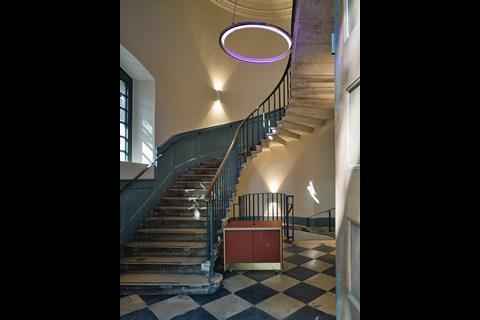
The two lifts were also upgraded: one with a new motor, and both converted for evacuation use with improved controls, diverse cable supplies, and back-up power, thereby improving accessibility and egress for the LSO’s many disabled user partners.
Where are the new audio and master control rooms sited?
Both control rooms are located in the basement. Extending above ground was not a viable option. The Grade I listing and the exceptional significance of the original Hawksmoor and James church, which sits intact within its churchyard setting, precluded any external additions.
The basement has in fact proven to be an ideal location. Permanent infrastructure and circulation connect the control rooms with the main Jerwood Hall and smaller practice and rehearsal rooms, allowing the orchestra and hirers to record at a variety of scales with considerable operational flexibility.
What were the key acoustic upgrades in the main space, the Jerwood Hall?
Four principal interventions were made:
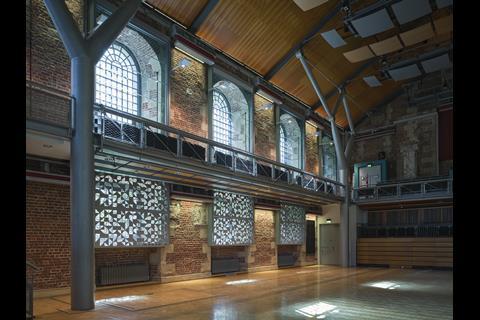
- Perforated PET felt window covers by Acoufelt were introduced at ground floor level. These soften reflections from the glazing to improve the warmth of sound, while entering into a visual dialogue with the room’s existing diagonal architectural elements. They preserve musicians’ views of the churchyard trees and allow daylight and sunlight to animate the space – a special quality that distinguishes the Jerwood Hall from most other venues.
- Shallow, dome‑shaped overhead reflectors were added and painted grey to retain the characteristic profile of the 2003 lighting bridges, with the Jerwood Hall interior conversion itself having been identified as of some significance in the independent assessment of significance. The reflectors positioned between the bridges are finished in cedar of Lebanon veneer. These new reflectors replace the former fabric swags, which had obscured views of the original cedar of Lebanon ceiling, and they lower the effective ceiling height to improve ensemble playing conditions for large‑scale orchestral rehearsals and recordings.
- Solid walnut grooved planks of varying widths were introduced in front of the 2003 canted cedar panels on the rear west wall, increasing sound diffusion and further improving warmth without distracting reflections.
- Variable fabric banners were re-incorporated above the reflectors for loudness control, offering flexibility across different performance and recording configurations.
What were the particular challenges of the project?
The LSO had a narrow and non-negotiable window in which the works had to be completed, making programme certainty critical from the outset. Delivering on time and on budget required early and continual investment in preparation.
We commenced the design process two years before going on site, allowing sufficient time to navigate a complex briefing, prioritisation, fund raising and listed building consent process. The contract was awarded four months ahead of start on site, commencing with a collaborative pre-construction period enabling the contractor to procure materials, carry out surveys, and complete their design packages well in advance.
Project manager Avison Young, contractor GPF Lewis, and the design team worked with real commitment to identify and eliminate pre-start risks, and that collective effort paid dividends throughout the construction stage.
Alterations to the existing basement ventilation ductwork proved challenging, as record drawings could not be fully relied upon, and pre-construction surveys were limited because the building remained in full use right up to the contractor taking possession of the site.
The revised fire strategy also required the introduction of modern fire dampers where the layout was changed, requiring careful coordination with existing services in a building now 23 years old – a level of technical complexity that did not exist at the time of the original conversion.
The work St Luke’s makes as a powerful argument for continuity in relationships between architects and top-tier cultural clients. At the highest levels of cultural work – where buildings must serve world-class artistic practice while honouring listed fabric of national significance – this kind of sustained partnership appears to be almost a precondition for the excellence in practice that is required. The result at St Luke’s is a Hawksmoor church moving forward into the streaming age in perfect harmony with the institution it has come to serve.
Project team
Project manager and contract administrator Avison Young
Quantity surveyor Bristow
Structural engineer Price & Myers
MEP engineer Max Fordham
Lighting designer Max Fordham
Theatre consultant Theatre Projects
Acoustician Threshold Acoustics
Fire engineer The Fire Surgery
Access consultant HADA
Postscript
All photos Tim Crocker


No comments yet