








In an exclusive interview, the architect behind the Stirling Prize-shortlisted Wraxall Yard talks to Tom Lowe about why architects often complete their training with few technical skills, working with Witherford Watson Mann on the refurbishment of the Royal College of Art’s Darwin Building and the experiences which inspired her to pursue a career in architecture
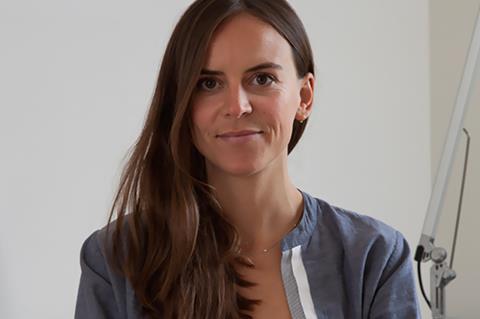
“We would arrive at site and unload the baby bouncer, unload the buggy, unload the toys,” recalls Clementine Blakemore. She is recounting the story of Wraxhall Yard, her then-fledgling practice’s first large-scale commission.
Apart from the aid of one part-time employee, Blakemore designed the project in rural Dorset almost single-handedly, while pregnant, with a toddler in tow, and through multiple covid lockdowns. It was, she admits, “intense”.
So concerned was the scheme’s contractor that Blakemore would catch covid that they attempted, unsuccessfully, to ban her from the site. Then, halfway through the project, she had her second child with her husband, Feilden Fowles co-founder Edmund Fowles.
While she had planned to hire another architect to take over, her practice, Clementine Blakemore Architects, had been strapped for cash. In the end, she “didn’t really take the maternity leave” and pressed on. “All I can say is, ‘thank God for grandmas’.”
Completed in 2022, Wraxall Yard proved to be a triumph, winning two RIBA regional awards, one RIBA national award, the RIBA Stephen Lawrence Prize for early career architects and was shortlisted for the 2024 Stirling Prize.
What is Wraxall Yard?
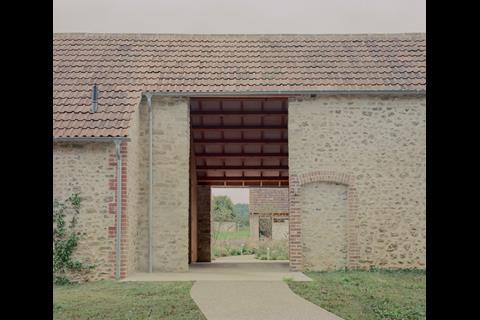
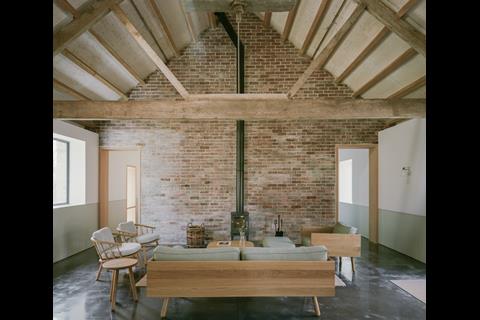
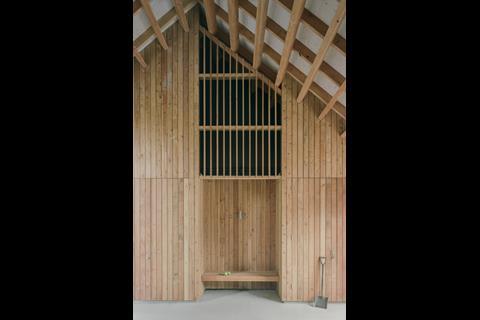
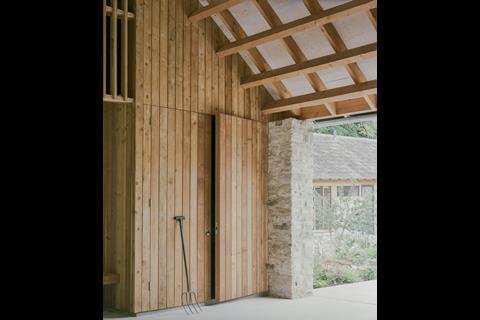
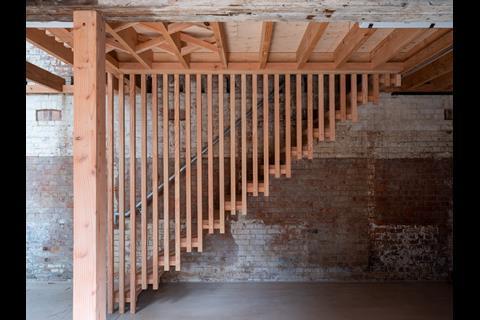
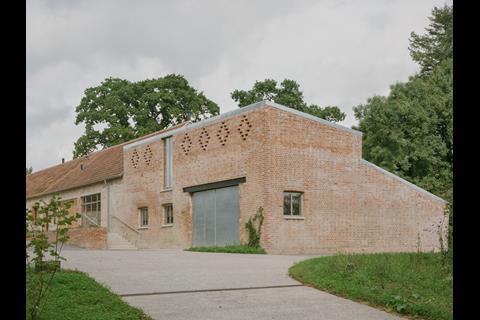
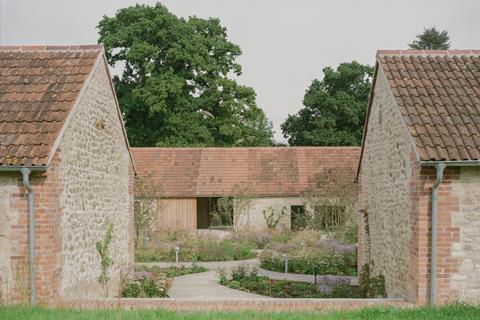
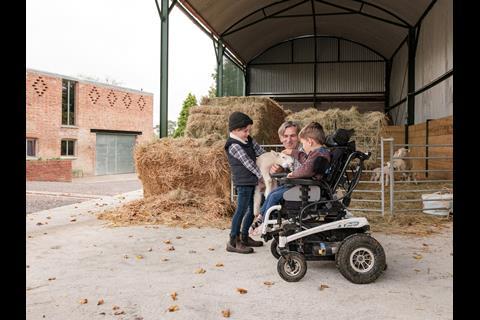
Wraxall Yard is a formerly dilapidated dairy farm in Lower Wraxall, a small village in the heart of the Dorset Area of Outstanding Natural Beauty in the West Country. Its seven 19th-century barn buildings have been refurbished and transformed into self-catered holiday accommodation. Accessibility for disabled people was at the core of client Nick Read’s brief for the scheme, which has been designed to provide peace and privacy for guests.
The project has delivered five cottages surrounding a shared courtyard garden. The farmyard has been restored to enable guests to take part in farming activities and to meet the farm’s animals, with facilities for guests also including a shared kitchen and community space for meetings and workshops.
Read, who acquired the buildings in 2018, runs Wraxall Yard as a not-for-profit company with his daughter Katie. The pair have said their motivation for the scheme was to provide better experiences for disabled people in rural settings, which often have poor levels of accessibility, and to provide a range of activities including caring for animals and enjoying the site’s environment and wildlife.
It has made Blakemore’s name as one of London’s most promising up-and-coming architects. Her practice is now working with Witherford Waterson Mann, the firm behind both the 2025 Stirling Prize winning Appleby Blue Almshouse and the 2013 winner Astley Castle, on a £90m transformation of the Royal College of Art’s (RCA) Darwin Building in Kensington, which includes the RCA’s school of architecture.
The project is something of a homecoming for Blakemore, who took part of her architectural training in the building, although her journey to get there had been circuitous. Indeed, she nearly missed the architecture boat entirely.
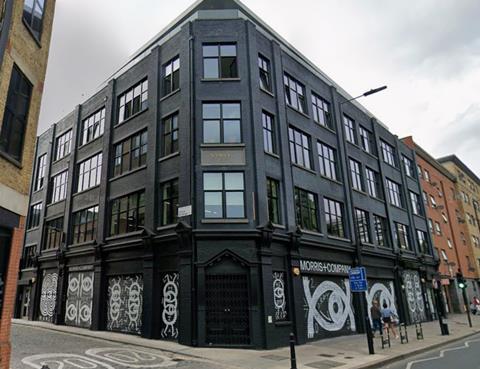
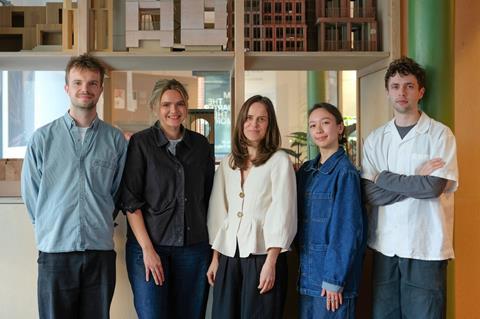
Building Design meets Blakemore at her firm’s workspace in London Fields, Hackney, where her team shares an office with Morris + Company. The latter’s models fill the ground floor, and the two practices share a model-making studio in the basement – along with the occasional water-cooler moment in the building’s ground floor cafe.
Blakemore’s team has grown a bit since Wraxhall Yard, although not by much – it still numbers just five. She says she prefers it that way, having a small team focused on just a handful of projects, as it allows her to fully engage with what the firm is working on.
“My ambitions aren’t to have a particularly big practice, but just to produce really, really excellent work,” she says. “Essentially, I am beginning to learn that I can’t mentally keep in my head or actually physically do the work of more than four or five projects at one time – and even that’s a stretch.”
Blakemore grew up in Belsize Park in north London, raised by two parents who worked in theatre. She had considered studying architecture but ended up opting for a fine art degree at the Ruskin School of Art under Richard Wentworth, and focused on sculpture.
After graduating, she spent two years working as a production assistant for the film-maker Michael Winterbottom, who is known for his work with Steve Coogan including the films 24 Hour Party People and the TV series The Trip. Her job included research for two of Winterbottom’s films, the 2009 documentary The Shock Doctrine, based on the book by Naomi Klein, and The Killer Inside Me, a crime drama set in the 1950s starring Casey Affleck.
It was a lecture from then Architectural Association (AA) tutor Anderson Inge which Blakemore attended during this period that led her to take a handbrake turn in her career. Inge also taught on the Rural Studio programme in Alabama in the US, a one-year design and build course which sees students construct small community projects in the rural Hale County. Run by Auburn University, it focuses on the ethics of architecture while providing students with hands-on technical learning, training what it terms “citizen architects”.
Blakemore, who was in her mid 20s by this point, was curious, but joining the programme would mean sidelining – or at least pausing – a promising career trajectory in film production. “I was a bit hesitant about going back to studying architecture so late,” she admits. “But I think the idea of building something tangible, rather than going back to theoretical grounding, was really appealing.”
She took the plunge, travelling to Hale County and joining a project on the programme called the $20k house, which involved designing and building a timber-frame home for the eponymous sum over the course of nine months. “The challenge was, can we build something with dignity, with very simple construction methods that a local builder can make with things that are off the shelf from the equivalent of B&Q,” she recalls.
The course, which became her first year of architectural education, partnered international postgraduate students with fifth-year architecture trainees and graduates, and, while she admits to feeling initially “very out of [her] depth”, the immersive nature of the programme allowed her to get up to speed rapidly.
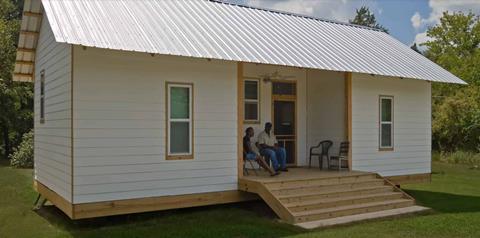
The promise of hands-on learning also quickly delivered – within days of arriving, Blakemore was crawling underneath a previous year’s house with a staple gun to fix underfloor insulation, pipes and cladding.
“It was just an incredibly direct way of learning about buildings, and there is no equivalent programme in the UK.” When she eventually came back to the UK to start her second year at the AA she initially felt frustrated at how abstract and technical the course was in comparison to what she had experienced in Alabama.
In contrast to her first year, her second year at the AA was “not just theoretical, it was quite hard to design or talk about design”, she remembers. “There was a sort of sense that it wasn’t interesting enough or something, that you had to be interested in other things. So I never really felt like I got technical training or design training.”
Blakemore remembers being subjected to endless discussions about the meanings of project briefs and a pervading sense that the technical role of an architect was less important than the culture of the profession. There was, she says, a sense that you almost did not have to become an architect at the end of the course.
“You could go off and become an animator or a film-maker. And I guess, having come from a sculpture and film background, I was like, I definitely want to be an architect!”
At the end of the year, she left the AA and continued her education at the RCA, which at the time was pursuing the reintroduction of the culture of construction into architectural education, which was exactly she had been looking for.
There are far too many people leaving after five years of education without having the technical knowledge or design skills
Blakemore eventually completed her part III and is now a registered architect. While she is a believer in the importance of registration, she thinks the lack of protection of function under the current model is “insane”.
How does it feel to spend the years getting registered only to get undercut by unregistered designers who are effectively doing the same job?
“It doesn’t annoy me from a job perspective, I think it annoys me how much terrible stuff is built,” she says with a slightly wry laugh. But the core of the problem, she believes, is not with the regulatory system but with the way architects are trained.
“If I was going to make one comment on the state of the profession, I would just say, there are far too many people leaving after five years of education without having the technical knowledge or design skills.
“And that’s the bit I felt most let down by, just not being a really competent designer and not having technical knowledge.”
For Blakemore, the lack of technical training is the “root of so many issues” in the profession, from low salaries to the drain of project roles which had previously been within the remit of architects being handed to other consultants. “It means you’re just paying people who are in their late 20s fairly low salaries because basically you have the burden of teaching them that stuff. That’s a fundamental problem.”
She blames a surprisingly dismissive culture towards the profession in educational institutions for limiting the future skills of architects in training. “There’s a sort of idea that, ‘oh, enjoy it while you can, do something else while you can, because you’ll only be a CAD monkey,” she says. “Rather than, ‘the building is the project’, you know?
“It’s such a privilege to see something built. You learn so much working through the details. It’s a beautiful process. There’s not enough geeking out about details or interest in details.”
If taught well, the technical side of the profession can be “so inspiring”, she says. “And the satisfaction of it being beautiful and working and being functional – that is the fun bit of being an architect.”
During her final years of education, Blakemore completed a series of small community projects including a music pavilion for a local primary school which she built with Steve Webb, co-founder of engineer Webb Yates. She drew heavily on her influence from Alabama, designing a simple timber-frame structure with donated materials and building it during a two-week workshop with international students.
The project was inspired by the Rural Studio ethos of barn-raising, community collaboration and an approach to construction which is ”quite celebratory and quick,” Blakemore says.
Other projects during these early years included a residency at the Design Museum, which saw her build a temporary pavilion outside the museum with a group of students. It was around this time that Blakemore, who had been working with Duggan Morris, founded her own practice and also had her first baby.
Then Blakemore had the chance meeting that would change her career. A furniture maker who she had worked with on a series of visiting school projects invited a local client to a public lecture that Blakemore was running. The client, Nick Read, had just acquired a set of barns in Dorset and was looking for an architect to turn them into holiday lets.
Read was impressed with Blakemore’s work and appointed her to lead his project, which became Wraxall Yard. “I’m always amazed that he had a leap of faith to employ someone with not very much experience and a tiny baby, but there you go,” she jokes.
It was a leap of faith for Blakemore too. While her previous small projects had been an exercise in honing a specific approach, Wraxall Yard felt “very much more professional and unknown”.
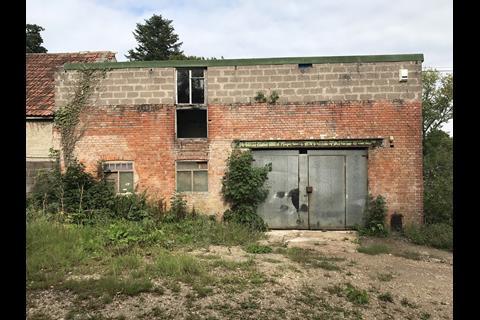
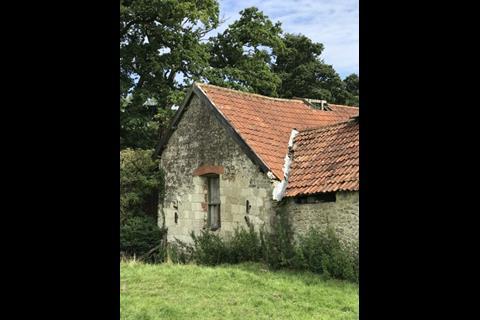
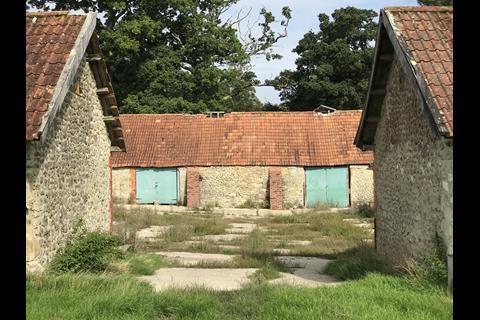
Having a nine-month-old baby in tow did not make it any easier, nor did Blakemore’s second pregnancy and neither did the covid pandemic, which struck halfway through the project. It involved wearing masks while travelling up and down on the train with morning sickness, being banned from climbing ladders and, when her second baby arrived, having to make regular trips from the site office to her family’s accommodation to breastfeed.
“It was kind of crazy, but actually, I have no regrets,” she says. And despite the stress of managing two young kids while running what was, at that point, the largest project of her career, she says the greater challenge was “just that there was so much learning to do on the job”.
But she says she had a sense that this was “something that was worth making sacrifices for”, partly because Read and the rest of the consultant team were so invested in the project.
Fowles, her husband, was running his own practice and did not take his paternity leave, while Blakemore jettisoned much of her maternity leave in order to focus on the project. It was not an easy decision.
“You feel a responsibility as a woman with a practice, which is still ridiculously rare… Obviously I believe in maternity leave, and everyone should have maternity leave. But for me in that context and that phase, for me in life, it was great.”
The recognition which the scheme received after it was completed was “unbelievable”, she says. “I was delighted to win the regional award, kind of amazed to win the national and was completely shocked at the Stirling prize.”
While she was overjoyed for Read, she was most struck by how such a small project could be taken so seriously. It was a “real motivation to think that whatever project you are working on, it can have an impact, whatever scale, whatever typology”.
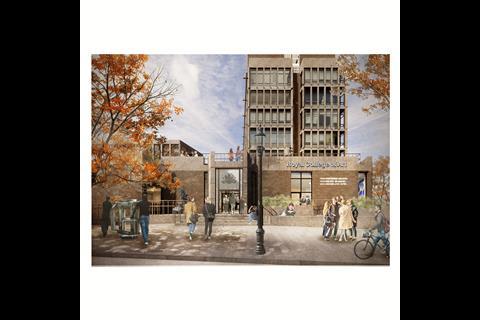
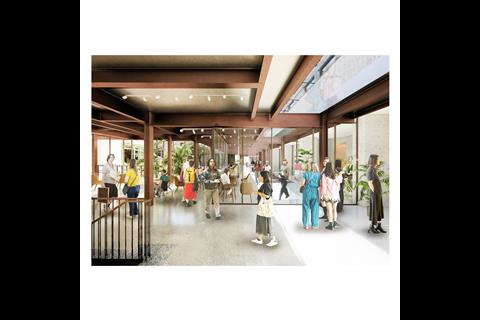
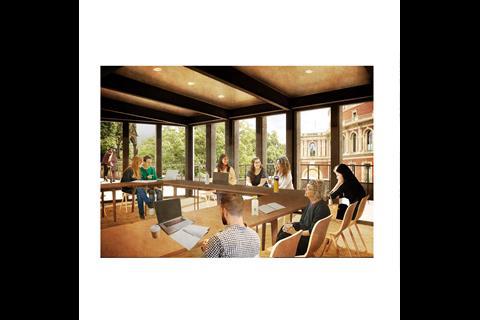
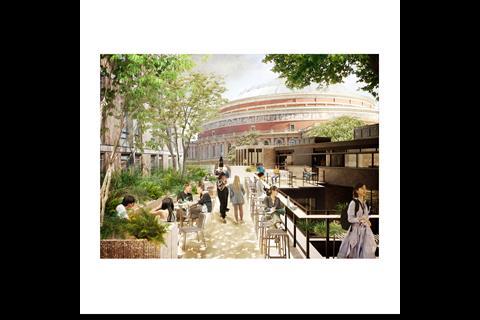
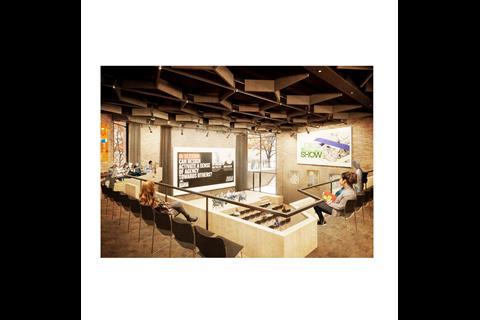
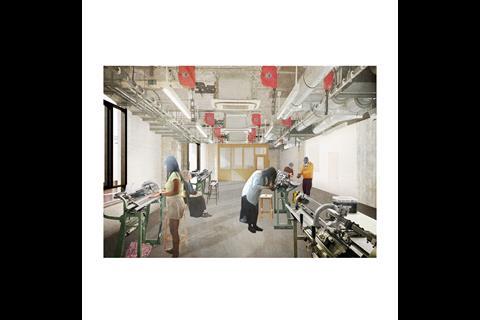
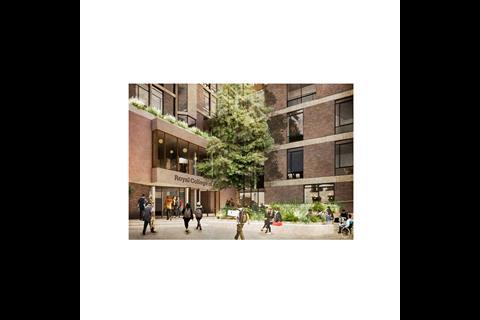
Her practice is now moving forward with other projects, including the restoration of a series of historic farm buildings in the Somerset Levels into a hub for scientists researching how to protect the area’s peatlands. But the firm’s largest, and by far the most high-profile, job to date is the proposed renovation of the RCA’s Kensington campus which it secured last year through a competition with Witherford Watson Mann (WWM). William Mann had seen Wraxall Yard before it was shortlisted for the Stirling and had approached Blakemore to ask if she would like to collaborate on the competition entry.
Winning the competition was “another of these sort of moments – getting Wraxall Yard was one of them, that project (the RCA) was another – where you think it’s just a pivotal moment in not getting stuck in residential … that’s always the fear for a small practice.”
Does she see the two-time Stirling Prize-winners as, in a way, mentors? “You do have these little snippets of conversation,” she says. “Partly just through osmosis, and sometimes through discussions just on the Tube or something, you are getting advice and getting a sense of mentoring, which is really lovely.”
I’m not sure I could ever really bring myself to do a project which was just a money-maker that I didn’t kind of believe in
She was taken on a tour of WWM’s Appleby Blue Almshouse before it won last year’s Stirling, and describes it as “quite a moving experience, seeing how the quality of that project has really transformed people’s lives”.
For Blakemore, the future of her business is not about harvesting industry recognition or building a commercial empire, but staying true to her values. “I would be as proud of Wraxall as I am without the Stirling Prize. I think it’s in, you know, whether you’re proud of the design and whether it’s having a good, positive impact on people. Those are my measures of success.”
And, while she says she is open to branching out into infrastructure or even a large office scheme, it would always, in the end, depend on the client. The trade-offs involved in accepting bigger schemes is a question she and her team have often asked themselves. “If we were to do a commercial project, would that free us to do other types of work? But I’m not sure I could ever really bring myself to do a project which was just a money-maker, that I didn’t kind of believe in.
“It’s so hard in so many ways, architecture. But, unless you really think you are contributing to something really valuable, I’m not sure I could do it.”







No comments yet