

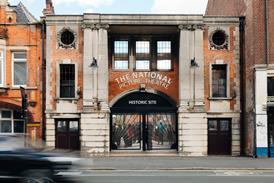

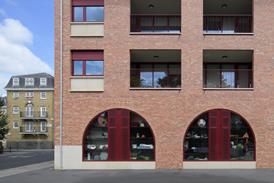
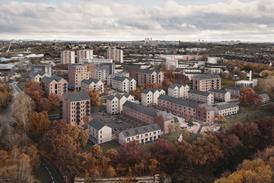




Nicholas de Klerk discusses a new book by Piers Taylor that invites us to re-examine our own principles and intentions with regards to where and how we practise
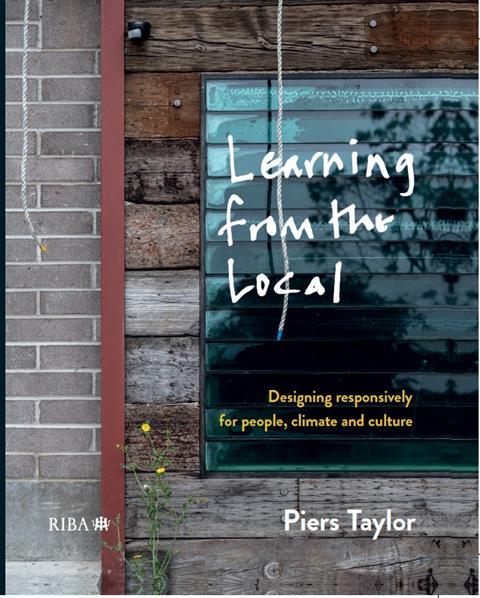
For those of us who remember the polemical launch of Piers Taylor’s Invisible Studio over a decade ago, his new book, Learning from the Local, has been a long time in coming. Tapping into what you might have called a professional malaise – an industry-wide fatigue with pointless regulation, fee-gouging, procurement and corporatism – Taylor’s new venture was both a critique of the status quo, as he experienced it, and an implicit manifesto for a different way of practising set against this experience.
It was a return to first principles, if you will, but one quite focused on specific aspects of architectural practice in the UK, doubtless with implications for practice in other parts of the world.
The book reads as a development of the response to all those themes and, in some respects, must also be read as a reflection on that first decade and more in practice. It also would appear to be, at least on the face of it, a logical development of the notion of critical regionalism, although we are now more than 30 years after the publication of Kenneth Frampton’s seminal paper Towards a Critical Regionalism: Six Points for an Architecture of Resistance, and two decades on from Liane Lefaivre and Alexander Tzonis’ book on the subject published in 2003, having coined the term in their paper The Grid and the Pathway in 1981.
Confirming that the concept is not yet one ready to be consigned to history, Dutch journal OASE published Critical Regionalism Revisited in 2018 (Issue 103), more than five years into Invisible Studio’s tenure.
This tension between the local and the global is threaded throughout the book and the buildings it studies, and remains comfortably unresolved, instead identifying it as a source of creative potential in thinking, designing and making
Taylor does not draw the connections that I have set out here, and as a practitioner is more concerned with the practical limitations and creative potential of reframing architecture as a practice focused on the local in the context of an ever more globalised world. Indeed, some of the questions set out in the introduction concern international supply chains, which we have seen become highly politicised and less reliable as a consequence of increasing geo-political instability.
Taylor makes a case for the demonstrable impact of these supply chains on the carbon cost of building, on skills and identity, and argues instead for an architecture that is “both low carbon and a true reflection of the circumstances of its production”. This tension between the local and the global is threaded throughout the book and the buildings it studies, and remains comfortably unresolved, instead identifying it as a source of creative potential in thinking, designing and making.
Taylor resists both a parochial return to pre-industrial origins and proto-nationalist conceptions of identity as well as the apparently easy answers of a globalised culture that “allows us to build anything, anywhere, with anybody”.
The book is structured into eight chapters, bookended by an introduction and conclusion. Each of the chapters is individually titled and includes four case studies of individual buildings prefaced by a section introduction.
Chapter titles include Where Are We Now?, Local Cultural Identity, Ecological Locality and Architecture of Accrual. The selection of projects appears highly personal and the thinking behind each of the chapters genuinely seems to have been developed through observations drawn from the buildings, as opposed to the buildings being selected and shoehorned into chapters to fit a predetermined narrative. This is important because the book feels personal and has the urgency and authenticity of a manifesto.
Taylor is unafraid to level critiques against buildings which fail to challenge the systems within which they are built, or indeed whose gestures to context are disappointingly superficial. He is also brave enough to include examples of his own work, which yet again underscores the personal nature of the project.
Each of the buildings is discussed in detail, both in relation to the overarching theme of the book and to each other, and analysed in terms of their design process and how each decision about use, context or materials has been instrumentalised in service of a distinct philosophy of place. This philosophy, more often than not, emerges from within the project as opposed to dictating its form from without.
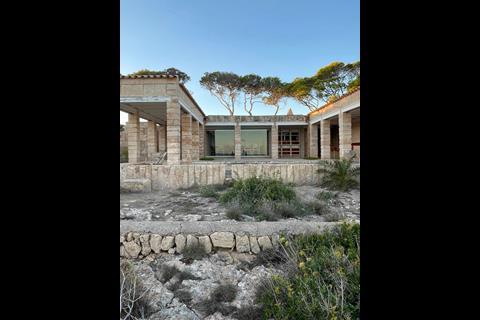
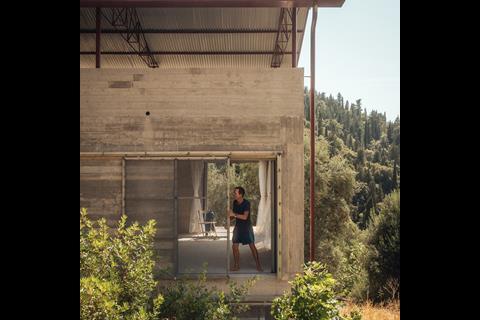

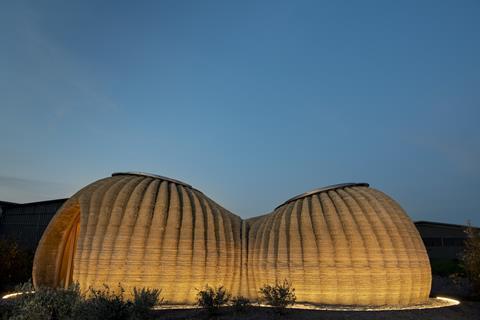
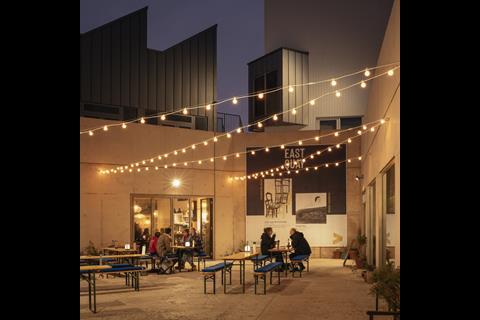

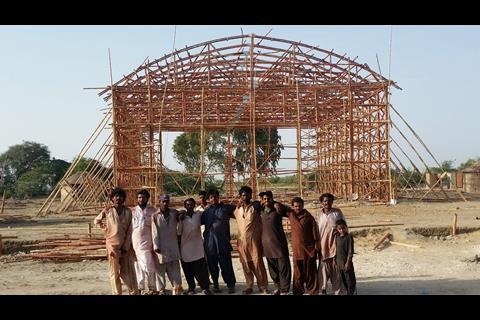
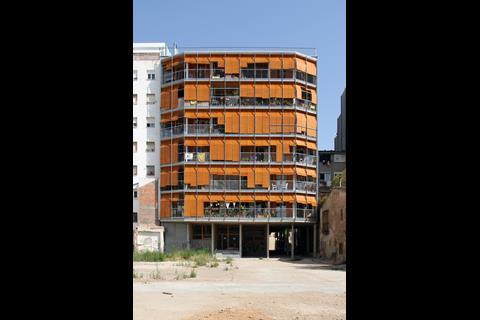
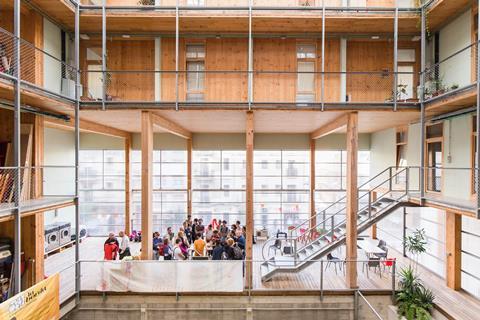

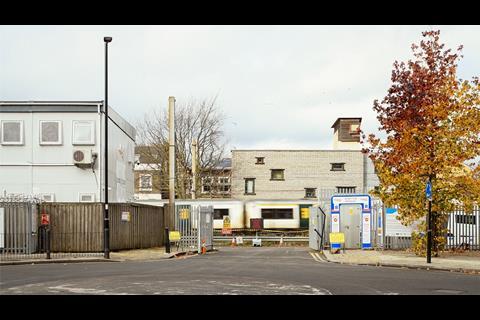
I use the word “philosophy” where Taylor rarely does, as this speaks to the development of an approach rather than a style; an approach which, accounting for local climate and material scarcity, generates buildings that are at once consistent and radically different from one another.
Despite rejecting the “certainty of a … closed system” such as a style or “ism”, the arguments that Taylor makes have much common cause with Frampton’s thesis. A tectonic response to local context determines how buildings deal with gravity and form enclosure, which is inevitably connected to the availability of local materials and how these are manipulated to achieve these outcomes.
Puncturing a building envelope, creating openings or screens which deal with light, shade and views in and out of a building, mediates the relationship between the building’s interior and exterior and will inevitably reflect local culture in the way that people use buildings and the spaces around them. Less discussed is the impact of international capital, which is highly mobile and also has a significant impact on the way in which buildings are designed, procured and made.
There is a further connection which I wish to draw, and it is in the conflation of practice, philosophy and media. More than a decade ago, I wrote for this publication about the work of Maxwell Fry and Jane Drew, who looked outward to the environment in which they lived and worked and campaigned on pertinent issues as a way of building their practice – a kind of “entrepreneurial advocacy” as I termed it then.
Taylor too, through his work at Hooke Park, his television work and now this book, takes this discussion out of the studio and beyond its projects into a wider public sphere. This suggests implicitly that an outward-looking, publicly engaged mode of practice – still a rare exception in the UK – is one way to move the practice of architecture on from the status quo that once frustrated him.
A note of caution from history, again courtesy of Fry and Drew. Their work deployed modernist principles, as does much of the architecture in this book, while also incorporating materials and elements which gestured to the vernacular – prefiguring a locally inflected mode of practice decades before this approach had a name. Their work, however, also betrayed a “deeply ingrained paternalism towards local history, traditions and politics”. These issues, so critical to the idea of the local, which we see evidenced repeatedly in Taylor’s book, were only fully engaged in Fry and Drew’s work where it aligned with their modernist impulse.
The ambiguity which this created in their work presents something of an intellectual and ethical trap, easily walked into, even and perhaps especially in today’s increasingly globalised society. This book also asks that we re-examine our own principles and intentions as regards to where and how we practise, and how, indeed, we learn from the local.
Postscript
Nicholas de Klerk is an associate partner and head of hospitality at Purcell Architecture. Learning from the Local: Designing responsively for people, climate and culture was published by RIBA Books in October 2025







1 Readers' comment