

Winner of the Retail and Leisure Architect of the Year Award 2025, Howells guides us through the specification challenges present at Eden Dock
Howells’ body of work impressed the judges at last year’s AYAs, as the practice was named a finalist for two awards and took home the trophy for Retail and Leisure Architect of the Year.
In this series, we take a look at one of the team’s entry projects and ask the firm’s partner, David Henderson, to break down some of the biggest specification challenges that needed to be overcome.
What were the key requirements of the client’s brief? How did you meet these both through design and specification?
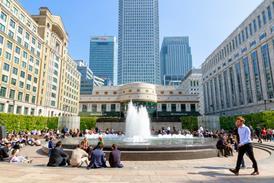
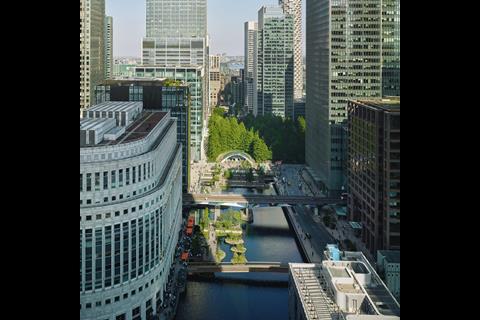
Canary Wharf’s original masterplan created a business district with much of its footfall concentrated within internal streets and shopping malls. However, the estate is now rapidly evolving into a more balanced, mixed-use community – with thousands of new residents and a growing civic life.
Our client, Canary Wharf Group, was determined that the public realm should be reimagined for health, wellbeing and ecological richness not only to retain and attract commercial occupiers but to serve the needs of the wider community of residents and visitors.
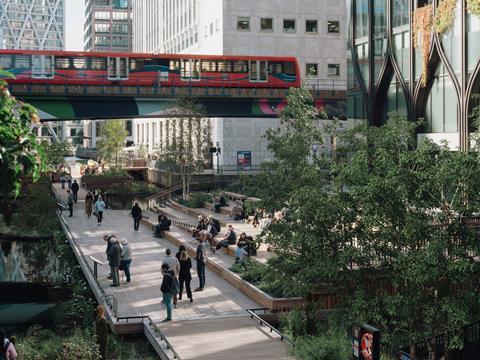
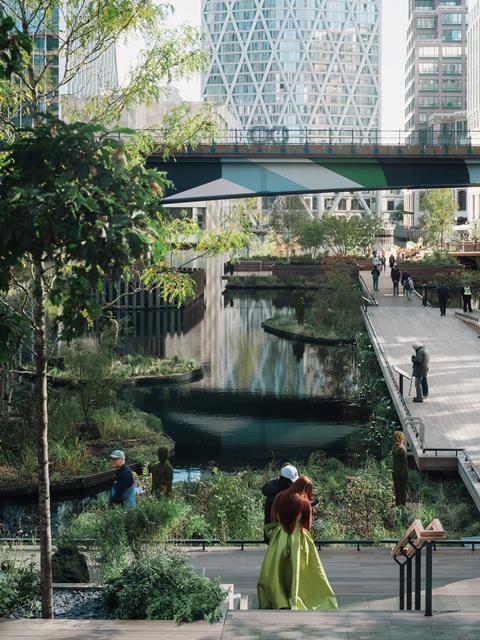
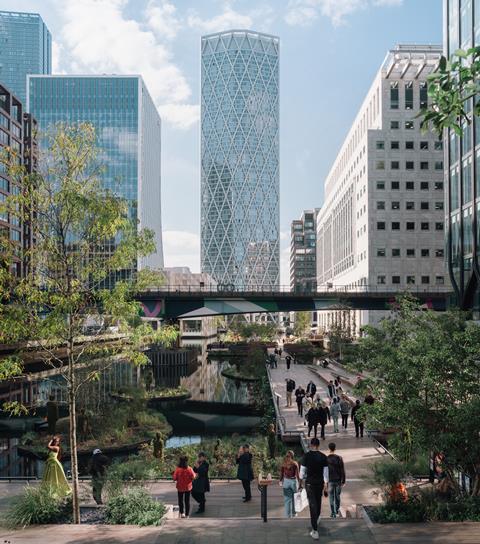
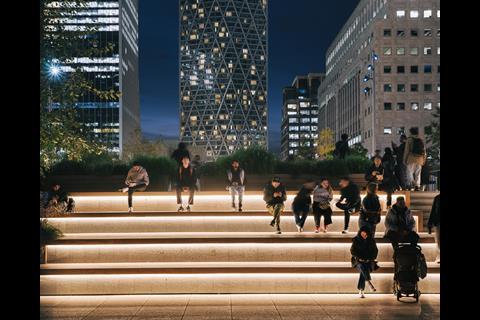
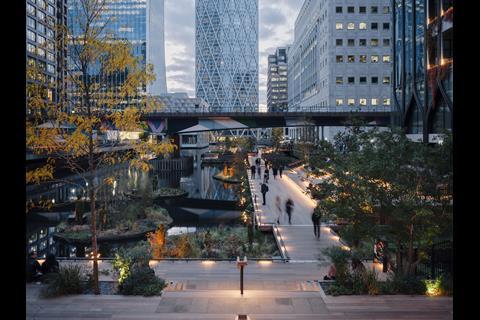
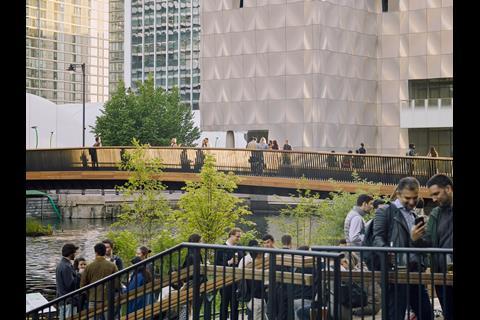
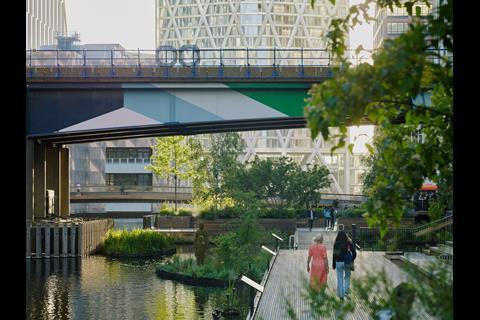
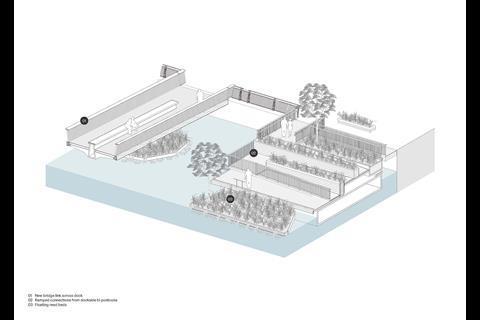
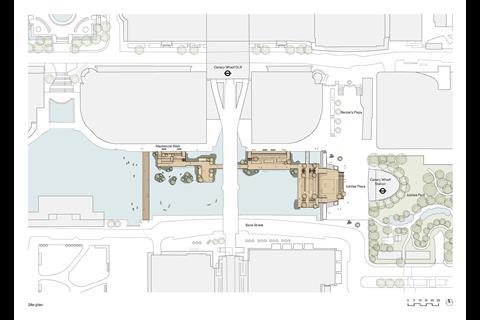
The original masterplan left its grade I-listed docks underused and largely inaccessible with little activity. Therefore, a key strategy for us was to devise ways to bring people closer to the water, provide spaces for sitting out, create new walkways connecting along and across the dock and to introduce intensive greening and trees of scale. We also significantly enhanced biodiversity and water quality with better environments for birds and fish.
What were the biggest specification challenges on the project and how were these overcome?
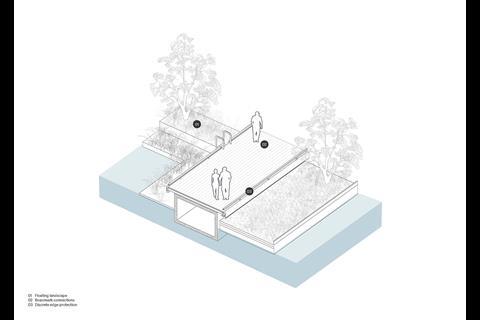
Building directly on water poses numerous challenges. The water level can fluctuate, are subject to restrictions on navigation and as we were located directly above the Jubilee underground tube tunnels, fixing all of the floating infrastructure in place had to be designed with minimal substructure.
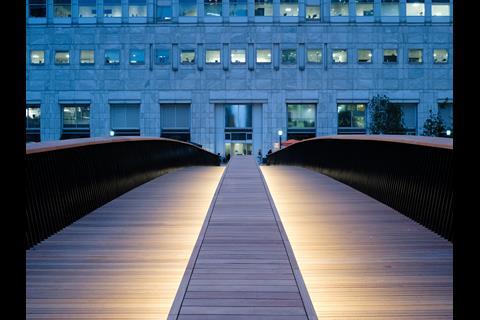
In the completed project, only the bridge required discrete piling at two locations. This proved to be significantly more material efficient than conventional construction and, importantly, the long life and virtually maintenance free design of the floating pontoons ensures that they could be readily redeployed elsewhere in future.
We also needed to ensure that the project was fully inclusive and accessible. This created many detail complexities around the link bridge connections by which the pontoons are accessed as the tidal range would lead to significant changes in gradient. By studying location and length of link bridges, we were able to ensure that an acceptable means of access is always available, regardless of water level.
What are the three biggest specification considerations for the project type? How did these specifically apply to your project?
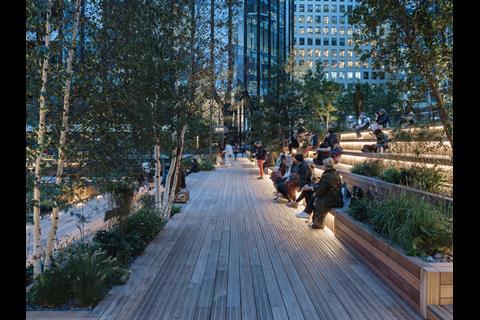
It was important for us that the project should not be perceived as a temporary or pop-up installation but as a piece of long term public realm infrastructure. As such, we wanted to ensure exceptional durability in our materials and achieve real intensity in the greenery with trees of proper scale so that people could immerse themselves in the landscape and enjoy being close to the water.
We also wanted to ensure that the project would be genuinely sustainable and so great focus was placed on ensuring that material sourcing was properly certified, that recycled content was as high as possible, that long life was prioritised and that all elements can be dismantled and reused.
Do you have a favourite product or material that was specified on the project?
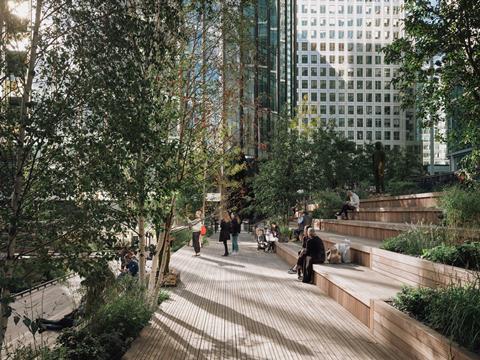
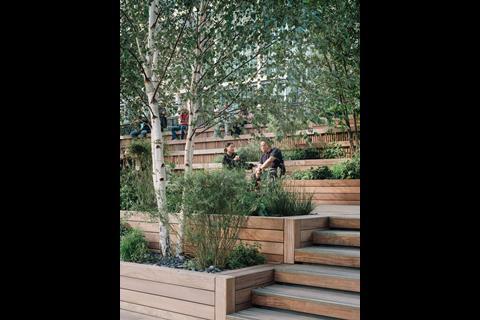
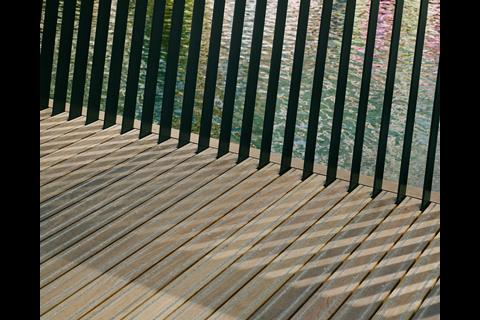
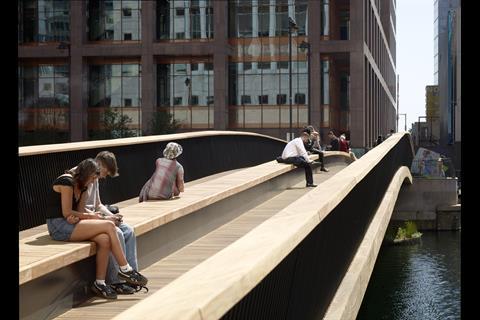
We made extensive use of Cumaru timber, not just as decking but also for bespoke seating, stairs and handrails. It is an exceptionally hard and durable South American timber, readily available, and fully FSC certified. We wanted to ensure that the project would have real robustness and so working with Cumaru allowed us to develop details with substantial edge thickness imparting a sense of solidity and tactile enjoyment.
It weathers well and should remain attractive looking with minimal maintenance for many years.
Are there any suppliers you collaborated with on the project that contributed significantly? And what was the most valuable service that they offered?
The majority of the work was carried out by four subcontractors who all had a significant input into the detailed design development of the project. Each brought a great amount of knowledge to the project and the level of collaboration they all had with the design team was exceptional.
The floating concrete pontoons were designed and installed by Clement Systems, dealing with the complex dynamics of load distribution to achieve stability and buoyancy. They were preassembled adjacent to site and floated into place with much of the seating and planting already installed.
Superstructure, decking, seating and planting was all carried out by Willerby Landscapes who closely collaborated with the design team in prototyping, developing constructing and installing work of exceptional quality and highly crafted detail.
Steelwork for the 56m long footbridge was expertly fabricated and installed by Victor Buyck. It was made offsite in two sections, welded together adjacent to the site and floated into position by barge.
Finally, the floating green ecosystems were created by Boimatrix Water who have committed an exceptional amount of knowledge and research towards the significant improvements in habitat creation, water quality and overall perception of the dock as an attractive, enjoyable and sustainable environment.
What did you think was the biggest success on the project?
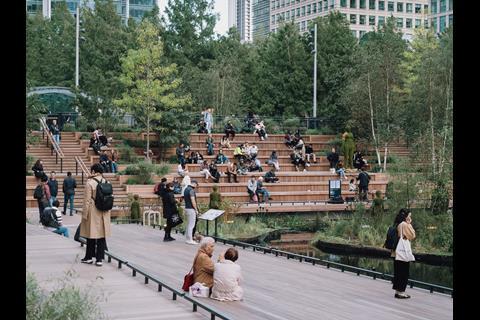
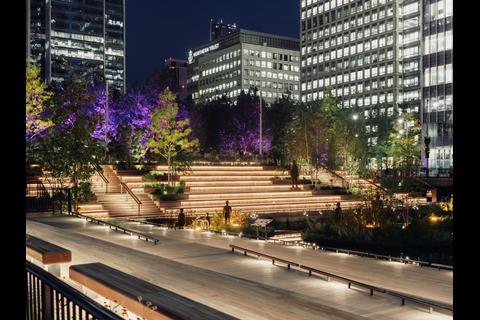
We feel that Eden Dock has genuinely changed the outward perception of Canary Wharf from a place purely of business to somewhere that attracts people from all walks of life. It is now a place that people want to visit, hang out in and enjoy the water and natural environment. That this is evident during most weekends is testament to its adoption by the wider community as a genuine piece of public realm, accessible to all and free to use.



Project details
Architect Howells
Landscape design HTA Design
Engineer Arup
Consultants Eden Project, Canal and River Trust
Developer Canary Wharf Group
Our “What made this project” series highlights the outstanding work of our Architect of the Year finalists. To keep up-to-date with all the latest from the Architect of the Year Awards visit here.

2 Readers' comments