







Branson Coates’ building was vacated by Sheffield Hallam’s student union last year
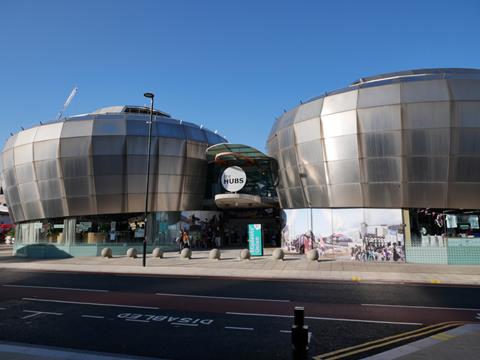
SAVE Britain’s Heritage is the latest campaign group to add Branson Coates’ National Centre for Popular Music to its Buildings at Risk Register.
The 1999 building, designed by Nigel Coates and Doug Branson, was occupued by Sheffield Hallam University’s student union but was vacated last year, partially due to high operating costs.
It has already been added to the Twentieth Century Society’s Risk List and to the South Yorkshire Local Heritage List following a failed listing bid by the former which was rejected by Historic England in 2024.
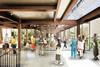
The building, consisting of a central atrium surrounded by four stainless steel drums, each topped with a rotating ventilation ‘nozzle’, was originally conceived as a museum and was one of many government-backed projects built to celebrate the turn of the Millennium.
But it quickly gained notoriety as a high-profile failure of the Millennium programme when it closed just a year after its opening due to lower than expected visitor numbers.
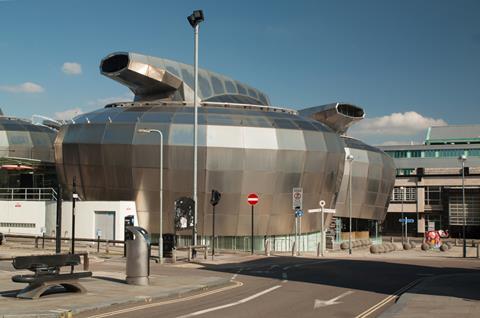
It was purchased by Sheffield Hallam University two years later as the base of its student union, The HUBS, and remained in this use until late 2025.
SAVE Britain’s Heritage said the building is currently in a “vulnerable condition as it sits vacant with no clear plans regarding its future”.
It is the most recently built new entry of more than 200 buildings from across the UK added to SAVE’s Buildings at Risk Register following a nomination process by members of the public, conservation professionals and local authorities.
The latest additions, which bring the total number of at-risk buildings on the list up to a record 1,500, include a 1960s ambulance service building in Glasgow, a 400-year-old inn building in Warwick that has been closed since the pandemic and the last bank in England with permission to print its own notes.
Telephone exchanges, pubs, churches, cinemas, shops, houses, mills, warehouses and collieries, ranging in age from the Middle Ages to the Millennium, also feature among this year’s new additions to the register.
SAVE director Henrietta Billings said: “At a time when local authority budgets are increasingly under pressure, and construction costs are going up, there has never been a more important time to publish this snapshot of threatened buildings across the UK.
“These places are central to the identity and character of places we love. Instead of lying empty and neglected, they should be repurposed and contributing to good growth now and for future generations.”
The North of England has by far the most new entries, at 69 sites, followed by 42 in Scotland and 40 in the Midlands and East Anglia. The oldest new entry is the 12th century Church of St Mary Magdalene in Leintwardine, Herefordshire.





No comments yet