








Tom Lowe flies to Prague to speak to Marek Dospiva, co-founder of one of central Europe’s biggest companies, and to hear about the firm’s plans to become a major developer in the UK capital
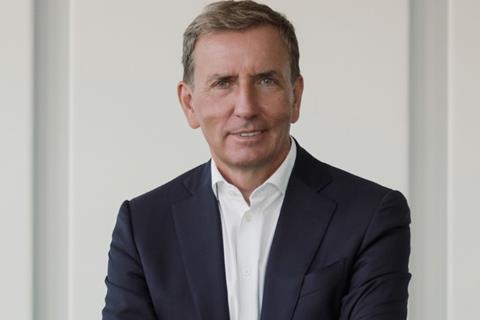
Halfway through our interview with the Czech entrepreneur Marek Dospiva, a besuited colleague pokes his head into the room. “We have an update for one of our potential London acquisitions, and you need to catch a flight,” Dospiva is informed.
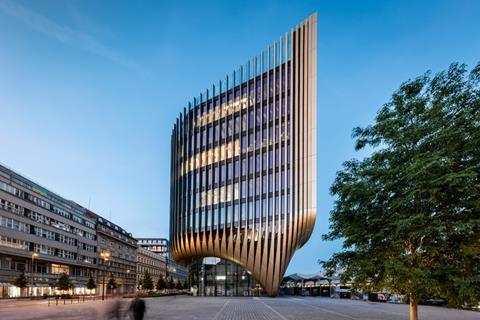
The deal in question could be related to the central London office scheme which Dospiva, co-founder of Penta Investments, had earlier said he had just secured a handshake on – promising it would be the “crème de la crème, like this”, with a gesture at his firm’s huge Zaha Hadid-designed headquarters in Prague, in which we are currently sitting.
Or it could be any one of the 10 sites in London which Penta’s UK team is visiting each week in search of sole development opportunities or joint venture deals.
“I don’t do much sightseeing in London,” Stepan Pergler, senior project manager at the firm’s real estate division, had said the previous night over dinner in Prague’s historic Municipal House Restaurant. “It’s normally site visit, Tube, site visit, Tube.”
In the group’s home city, in which Penta’s development business is utterly dominant – currently working on major redevelopments of two of the capital’s biggest train stations simultaneously, along with several other large schemes across the city – it is normally 10 site visits a year, not a month, Pergler says.
Penta Investments is one of the largest companies in the Czech Republic, turning over €12.1 bn (£10.45bn) last year and netting a record €714m (£616m) in profit. It employs more than 60,000 people through its subsidiaries, which include Dr Max, the second largest pharmacy chain in Europe with more than 3,200 locations in 18 countries.
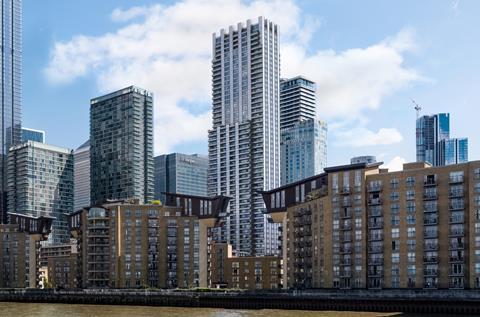
It is now making a big move into the London real estate market with the firm signing two 50/50 joint venture deals with Ballymore last year. The first, Cuba Street, is a 52-storey residential tower in Canary Wharf designed by Morris & Co, which will contain 434 homes. The second is The Capston, a 247-home luxury development designed by Hal Architects and located next to the US Embassy in Nine Elms.
The company is seeing these JVs as a means to secure a foothold in the London market and to learn the ins and outs of development in the capital through working in partnerships. It has long-term ambitions – last year it made an offer to buy the UK housebuilder formerly known as Regal but was outbid by Emirati developer Arada.
A major acquisition sooner or later seems likely since its greater goal is to become a major sole developer, primarily on high-end schemes spanning residential, mixed-use and commercial. The firm is deploying a relatively modest £150m in London this year and up to £600m with third-party finance, but is planning a pipeline of five to 10 projects over the next two years.
The obvious question is, why London? The capital’s development market has hardly seemed like a booming sector over the past few years, with private housebuilding falling by 84% over the past decade and almost halving in 2025 to just 5,500, according to consultant Molior.
The impact of rising construction costs, higher interest rates, a housing market slump and, most recently, the debacle of the Building Safety Regulator’s gateway 2 process, has all-but flattened investment confidence in housing. Offices have not fared much better, with starts tumbling by more than a third over the past year to their lowest level in more than a decade, according to Deloitte.
But for Dospiva, London’s development downturn is part of its appeal. “We are not afraid that something is going a little bit down,” he says with a shrug. “The economic downturn, it’s created an opportunity for us.”
Penta is an old hand at moving into markets on a low ebb. It was the strategy which allowed Dr Max, by far the group’s highest earning division, to expand across much of eastern Europe during leaner times for the region, including in Poland, now one of the continent’s fastest growing economies.
Falling land values in London and an undersupply of housing in the city have given the firm greater leverage in site acquisitions and partnership agreements, according to its London team. But it is also the size of the market, and London’s pro-business and lower tax business ecosystem compared to other European cities which have attracted Penta.
Penta Investments at a glance
- Founded: 1994
- Group turnover: €12.1bn (£10bn)
- Net profit: €714m (£616m)
- Employees: 60,000+
- Sectors: retail, healthcare, real estate, financial services, manufacturing, media
- London budget for 2026: £150m
- Target London pipeline: 5–10 projects in two years
- Current London JVs: 2 (Cuba Street and The Capston)
- Cuba Street development: 52 storeys / 434 homes
- The Capston development: 247 homes
Its analysts spent two years gathering data on three candidates for real estate investment – London, Warsaw and a group of cities in Germany. London won. “Why? Because London is very pro business,” Dospiva says.
“That nonsense, by exiting from [the] EU that London is dead? No, no, no. It’s rubbish. Some of them went to Frankfurt, and then they came back.”
Germany, meanwhile, though a bigger market overall and closer to Penta’s heartlands, is weighed down by bureacracy, Dospiva believes. “For 40 years we had socialism here [the Czech Republic, formerly Czechoslovakia]. Now we have a functioning free market economy, a highly developed industry, being very competitive, and having OK-level standard of living.”
There are places in Europe which are much worse. Much less transparent, much worse legislation, much longer terms. London is a rose garden
Dospiva’s uninhibited distaste for the communist regime, which he sees as having kept his native country in shackles for 41 years, is – as will become clear below – deeply personal.
Another appeal of London, which may surprise some built environment professionals in the city, is the pace of the capital’s planning system. Planning delays are frequently cited in the UK as an endemic and chronic drag on business confidence, but Dospiva claims Brits “are the lucky ones”.
This is a sore point. “There are places in Europe which are much worse,” he says. “Much less transparent, much worse legislation, much longer terms. London is a rose garden.”

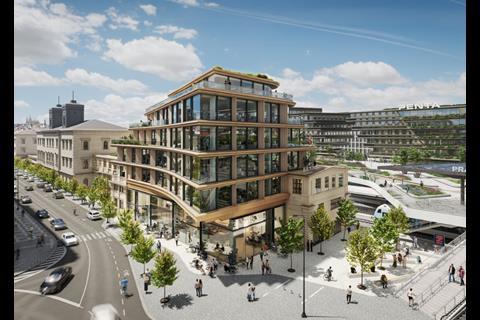
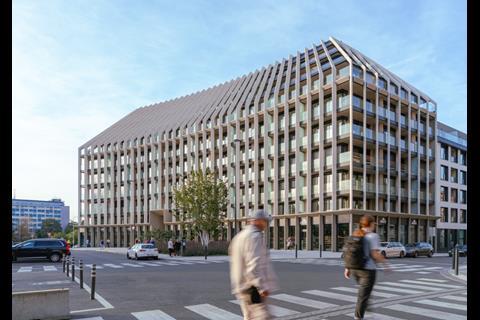

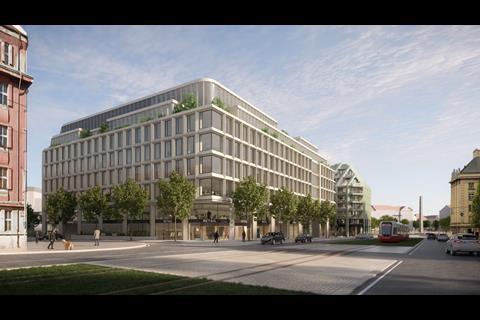
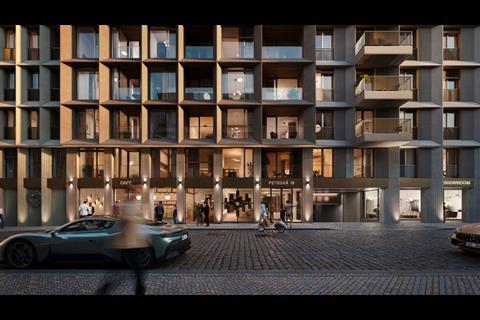
The story of Penta’s headquarters is a case in point and one which is well known in Prague real estate circles. It took 10 years to get planning permission for the 10-storey groundscraper, located on the edge of the city centre next to Masaryčka station – one of the stations which Penta is redeveloping.
Its design was personally led by Zaha Hadid, who had to submit no fewer than six design revisions to the planning authorities to get it signed off. “She was a really tough lady,” says Dospiva, who was introduced to the late architect through the practice’s now leader Patrik Schumacher.
“It’s a tough negotiation here. Zaha was told it was not good enough for Prague. So we went [a] second time, third time, fourth time, fifth time, sixth time. They were looking at us as crazy, but sixth time Zaha said, ‘It’s good for Prague?’ They said, ‘OK, good, go’, and we did.”
With a thumbs-up secured, Penta arranged a press conference with Hadid to unveil the scheme. A week before the event, in March 2016, she died of a heart attack in Miami.
The Masaryčka building, eventually completed in 2023, was arguably her final project. “I have the last painting from Picasso,” Dospiva says.
Does he see Penta building something like this in London? “Yes,” he says, without hesitation. “We will build […] and definitely the best-in-class architecture, and high-end”.
He had insisted on Hadid personally designing Masaryčka, “not some copyist from her office”. He describes the finished product as Penta’s “masterpiece”.
Dospiva’s outlook on the world and his attitude to business has been informed by a life lived in the shadow of Czechoslovakia’s communist regime. Born in 1969, a year after the USSR sent half a million troops into the country to reverse the brief window of liberalisation known as the Prague Spring, he grew up during the following two decades of tightening censorship, state surveillance and economic stagnation which the Soviets called “normalisation”.
One of his grandfathers had been an entrepreneur before the communist takeover in 1948, and another grandfather had been a senior manager at a major shoe manufacturer. Because of these perceived capitalist links, Dospiva’s father had not been allowed to study in higher education. “It was a terrible system, I’m telling you,” Dospiva says.
In 1987, at the age of 18, he was assessing his options for the future and looking for a ticket out. There were few signs at the time that the country, and the entire Eastern Bloc, was just two years away from revolution.
“I was thinking, ‘What the hell. Will I stay in this place? Or will I emigrate?’ ” he recalls.
He had been learning Japanese in high school and heard from a friend that one means of escape was studying at a diplomatic academy in Moscow which trained students in foreign languages before assigning them posts in foreign embassies. Dospiva managed to secure a place, although instead of Japanese he was given a course in Mandarin – which he suspects was meant as a petty form of punishment for his family’s capitalist background.
After two years at the academy, he was sent to Beijing University. Meanwhile, in November 1989, the Berlin Wall fell and everything in eastern Europe was about to change beyond recognition.
Dospiva found himself, in the early 1990s, studying in China, one of the world’s manufacturing behemoths, at a time of exploding opportunities in his home country. His first business venture was inspired by an unlikely source – the violet waistcoats made fashionable by the singer Karel Gott, who Dospiva describes as a kind of “Czech Rod Stewart”.
Making use of his Mandarin, Dispova and a fellow student – Jaroslav Haščák – bought the fabric from local manufacturers and imported it to Czechoslovakia, selling it to wholesalers at a 200% margin. This is how the pair made their first million.
“And, as young students, we didn’t spend it on alcohol, parties and cars, but we kept it,” he says.
In 1994, the pair used this money to set up an investment outfit – Penta Investments – and started buying and selling small companies, firstly in Slovakia and then expanding to neighbouring countries. Within a year that original million koruna had become10 million, through a strategy of buying multiple similar businesses within one sector and selling them to large foreign brands seeking to expand into the newly up-for-grabs eastern European market.
Then Penta started to build its own portfolio. The Dr Max pharmacy chain – the group’s biggest division with €6.5bn (£5.6bn) turnover last year – was launched in 2004, the Fortuna sports betting service in 2005 and its real estate business in the same year. It also owns more than 30 private hospitals in the Czech Republic, Slovakia and Poland, an aluminium manufacturer, several media companies and two banks.
Two days before our interview, Dospiva was giving a speech to a group of investors. He said Penta’s businesses were like his children, but there was one child he loved more than the others, and that was real estate. Why?
“Look, Dr Max is definitely the biggest contributor,” he says. “But, when there is a report, what do I see? I see just numbers. I see 20 years of numbers. In real estate, I see changing environment.”
He recounts a story of when he was growing up in the communist regime, and his mother had asked him to mow the grass in the park which neighboured the family’s garden. “So I had to cut the grass of the municipal park on the other side of our fence, which was full of dog poo that sprayed on my leg. But I cut the grass and I took great satisfaction in improving our local environment for the greater good.”
He says he receives the greatest satisfaction in his work from seeing dilapidated and unloved urban sites transformed into places where people can build a happy life. “You come there, it’s a wasteland. And after 10 years, it’s a beautiful living area where people tell you that we bought apartment here, and we will never sell it.
“We will live here, we are happy here. So, this is the best words that you can hear. It’s very satisfying.”
So what types of development is Penta likely to build in the UK? The firm’s real estate brand is focused on the higher end of the market, on big, flashy placemaking schemes designed by high-profile architects, typically appointed through international competitions. The team is fond of mixing a few newer names into the shortlists for these competitions, which has in the past included Chybik + Kristof, the Czech practice behind plans unveiled last month for a 25,000-seat indoor arena at Queen Elizabeth Olympic Park in Stratford.
We want to be distinguished by the quality that we deliver
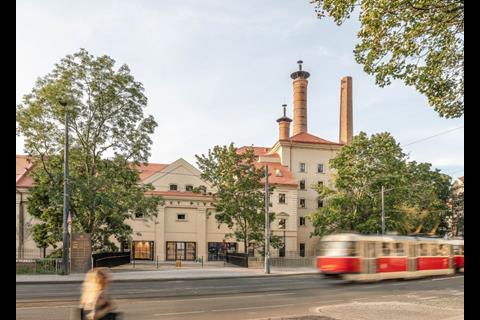
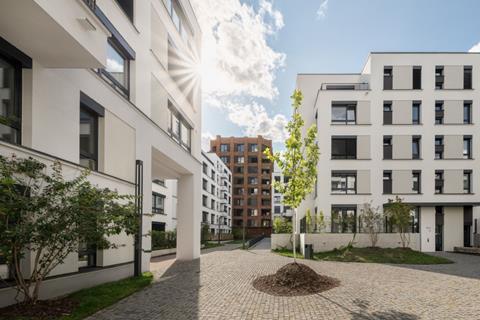
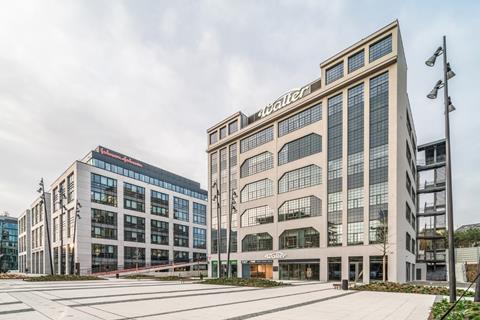
The practice’s first major job was designing Penta’s €1bn (£863m) Waltrovka development in Prague, a 17ha mixed-use scheme containing more than 1,000 homes and a large office complex.
For London, Penta’s high-end brand means new-builds, initially starting with mid-sized schemes up to a GDV of £300m, rather than refurbishments.

“We want to be seen as a developer, not as somebody who’s just like polishing, refurbishing, you know, repainting the reception,” says Pavel Streblov, the head of Penta’s London team. “It’s not our style.
“We want to be seen as really delivering value and, as you probably have noticed, we like architecture a lot. So we want to be distinguished by the quality that we deliver.”
It is also likely to mean plenty of high-rise schemes, which Penta has been unable to build in its home city because of Prague’s strict planning laws on protecting heritage. To date, the firm has only built one high-rise scheme, the Zaha Hadid Architects-designed Sky Park development in Bratislava, consisting of four 31-storey residential towers.
While it is likely to build any commercial schemes as sole developer, it is looking at joint ventures for residential, at least at first. Streblov says the firm is not convinced by the margins offered by purpose-built student accommodation (PBSA) and co-living schemes, and is focusing on build-to-sell and build-to-rent.
The firm is looking to buy a developer with a large land bank, preferably a housebuilder but potentially an office developer, potentially within the next year.
Dospiva believes Penta has a lot to offer. “I think we have this unique know-how which we can bring to London,” he says.
But,with the capital’s development market in the state that it is, it could be that the most welcome gift Penta has to offer the city is not the firm’s expertise, nor even its deep pockets. Rather, it could be its confidence.







No comments yet