




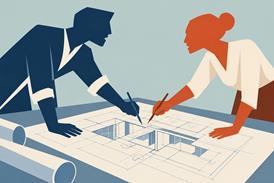
Dr Stephen Hamil argues that AI’s true value lies in liberating architects from administrative tasks, allowing them to focus on creative problem-solving while machines handle technical groundwork and compliance checking

All across the media, headlines talk about AI stealing jobs, but walk into any progressive architecture practice and you will experience something different. Behind the noise about AI automation, a quiet revolution is unfolding; one where AI does not replace the skills and real-world experience of seasoned professionals, but instead amplifies their capabilities, helping them achieve their best.
The human + machine future
Rather than viewing AI as a threat, forward-thinking practices are discovering its true potential as the ultimate collaborative partner. The most successful AI implementations in construction follow a simple formula: Human + machine = better outcomes.
This is not about robots designing buildings. It is about liberating architects, engineers and specifiers from the administrative burden that consumes too much of their time. When AI handles the technical groundwork, checking compliance, managing vast databases of product information, professionals can focus on what they do best; creative problem-solving, strategic thinking and delivering exceptional client outcomes.
Real-world impact
The numbers tell a compelling story. Recent research for the NBS 2025 Digital Construction Report reveals that 42.5% of construction professionals already use AI tools, with another 37.7% planning implementation within five years. Their most common applications? Technical information search (71.1%), text drafting and review (63.8%), and data analysis (61.8%).
Early adopters report tangible benefits: faster project delivery, fewer errors and better overall outcomes. At NBS, we have seen this transformation firsthand.
Our AI systems process enormous volumes of technical information from manufacturer product data, auto-classifying and structuring it according to standardised schemas. But crucially, human technical colleagues review and verify every piece of content before publication.
This partnership model works because it plays to each party’s strengths. AI excels at pattern recognition, data processing and consistency checking. Skilled human practitioners bring contextual understanding, real-world experience, creativity and ethical judgment. Together, it’s a formidable combination.
Beyond efficiency: The sustainability imperative
The collaboration becomes even more vital when considering construction’s environmental challenge. According to the Green Building Council, 25% of UK emissions stem from the built environment, meaning our industry faces unprecedented pressure to deliver sustainable, circular solutions.
AI can analyse product data, check compliance with environmental standards and model lifecycle impacts at scale. But human professionals set the vision, weigh complex trade-offs and ensure sustainability principles are embedded throughout the design process. This partnership is essential for achieving net-zero targets while maintaining design excellence.
Consider specification writing; traditionally a time-consuming, error-prone process. AI can support with the research when developing the specification. It can then assist with the quality control of the final documentation, checking the editorial style and assisting with cross reference checking. When professionals are researching product specification options, AI can align and compare technical characteristics across products to help with decision making. But AI is an assistant, it is the professional who applies their judgment and expertise.
Addressing the concerns
Some worry that AI will commoditise design or erode professional judgment. The evidence suggests otherwise. When professionals spend less time on administrative tasks, they invest more in creative exploration and strategic thinking. AI becomes their research assistant, data analyst and compliance checker; roles which enhance rather than replace human expertise.
The tools are evolving rapidly too. Modern AI systems understand context better; they can integrate with existing workflows and provide transparency in their decision-making processes. They are designed to support professional judgment, not to substitute it.
The competitive advantage
Forward-thinking practices are already seeing AI as a competitive differentiator. Used judiciously, AI can help them to deliver projects faster, with greater accuracy and enhanced sustainability credentials. They can help to explore more design options, validate performance earlier and provide clients with better-informed decisions.
This is not about replacing human intuition with algorithmic thinking. It is about augmenting human capabilities with machine efficiency. The result? Professionals who can focus on high-value activities while AI handles the routine tasks that previously consumed their time.
Looking Ahead
The construction industry’s future belongs to those who embrace this collaborative approach. With NBS research showing that 85% of professionals believe that AI will have a positive impact and 88.8% expect significant change, the question is not whether AI will transform construction, it is how quickly practices will adapt to harness its potential.
The most successful firms will be those that view AI as an enabler: a tool to deliver better outcomes, raise standards and create space for the important work that only humans can do. They will use AI to amplify their strengths, streamline their processes and focus on what truly matters: creating exceptional buildings that serve people and the environment.
The future is not human vs machine. It’s human + machine, working together to build a better world. The practices which understand this will lead the industry’s next chapter.
Postscript
Dr Stephen Hamil is innovation director at NBS (part of Hubexo)







1 Readers' comment