





Judging this year’s UK Design Capital of the Year award has reminded Martyn Evans that the greatest act of civic design is not designing a building at all — it is deciding what kind of city you want to become
I have spent much of my working life involved in regeneration, and one thing has become increasingly clear to me: the most valuable design commission a city can make is not necessarily a building. It’s a vision.
Reading the nominations, as one of the judges, for this year’s UK Design Capital of the Year award – Bradford, Cardiff, Plymouth and York – reinforced that conviction. The award deliberately looks beyond individual buildings towards strategic vision, leadership, placemaking, delivery, social impact and economic transformation (the overall winner will be announced at the Architect of the Year Awards on 7 October)..
That matters because cities are not collections of development sites – they are complicated organisms in which housing, streets, transport, culture, heritage, landscape, work and civic life constantly interact.
Yet we still have a development system remarkably good at considering these things separately. We develop housing strategies, transport strategies, economic strategies and cultural strategies. We developers assemble sites and produce masterplans. Infrastructure bodies plan infrastructure. Heritage bodies set the guidelines for protecting heritage.
We all hope that somehow it will all add up. Often it doesn’t.
A great city vision does something fundamentally different. It starts by asking what kind of place we are trying to create? That deceptively simple question changes everything.
Take Bradford. Twenty five years ago, that would have been the set-up line for a 1970s comedian’s joke with the punchline, “I wish someone would…”. But then Will Alsop came along.
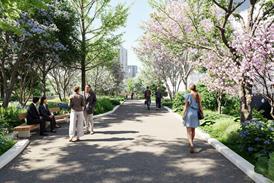
His extraordinary 2003 masterplan was never delivered as he drew it (in fact, some of its proposals were regarded as wildly unrealistic at the time). But his vision survived and his central idea of removing hostile infrastructure around City Hall and introducing water eventually evolved into Gillespies’ wonderful City Park, completed almost a decade later. Last year Norfolk Gardens, close by, was completed, creating one of the most beautiful green arrivals in any city centre in the UK.
That is an important lesson about visionary plans. We judge them too often by whether everything in them gets built. But that isn’t their purpose.
Their purpose is to establish a direction of travel sufficiently compelling that hundreds of subsequent decisions can move broadly towards the same destination with an ever-growing body of inspiration and precedent.
The grand vision and the small interventions are not opposites. The vision is what makes the small interventions work
Bradford today describes its approach as “incremental, pragmatic urbanism”. I like that description a lot. The grand vision and the small interventions are not opposites. The vision is what makes the small interventions work.
So a park, a market, a street sign system, a restored music venue, housing and transport infrastructure all start to tell the same story. Bradford’s new public realm has replaced a dangerous dual carriageway with a 10,000sq m park, while its wider 2025-35 plan connects culture, infrastructure, skills and sustainable development. That is placemaking in the proper sense of the word.
Cardiff demonstrates something similar at a different scale. Its reinvention began decades ago, following massive WWII bomb damage, with a fundamental decision that an industrial city needed to become somewhere people actively wanted to live, work and visit.
The contemporary expression of that idea is the compact city: density, walkability, activity and better streets generating both economic value and urban life. That kind of vision can create enormous confidence.
My company, Landsec, owners of the vast St David’s Centre at the heart of the city, is currently in the process of demolishing a former Debenhams store and turning it into a new public park in keeping with the city’s family liveability vision.
The city’s Central Square is a good example. A 2014 Foster + Partners masterplan helped to attract the BBC to the city centre, creating a step change that turned the previous arrival point out of the capital’s main railway station – a fume-belching, knackered bus station – into something approaching a statement of intent for the city. As Andrew Gregory, Cardiff’s assistant director of planning, describes the philosophy: “world-class architects, placemaking plans, great public spaces”.
But Central Square also demonstrates that a strong city vision does not always deliver an unqualified design success. Central Square has undoubtedly generated economic confidence and substantial commercial investment around the station, but as a place it still feels surprisingly bleak: hard, open and lacking the intimacy and greenery that make you want to linger.
A design vision can clearly articulate an ambition to make places that work brilliantly – and feel wonderful too
There is a reason – the square has to cope safely with the enormous crowds generated by events at the 72,000-capacity Principality Stadium right next door. That makes it an interesting design dilemma rather than simply a design failure. How do you design for the exceptional day without diminishing the experience of the ordinary one?
That is precisely why cities need great design thinking. Practical constraints should not be an excuse for places we don’t enjoy. A design vision can clearly articulate an ambition to make places that work brilliantly – and feel wonderful too.
I have written before about how great design can become economic infrastructure. We readily accept spending billions on railways, roads and utilities because they facilitate economic activity. But the quality and identity of the places those systems serve are economic infrastructure too.
Investors decide whether somewhere feels like a place with a future when people decide to live there, when businesses decide to locate there and when graduates decide to stay. Great design delivers confidence.
Plymouth makes this argument particularly fascinating because it already possesses one of Britain’s most dramatic examples of comprehensive city planning. Abercrombie’s post-war plan gave Plymouth its extraordinary civic structure, but also left a legacy of zoning, low density and brutal highways which separated communities from the centre.
Now the city is contemplating a new vision – WSP, Howells and Mae Architects are effectively retrofitting a 10,000-home new town into the existing city centre, driven partly by the enormous economic opportunity associated with renewed government investment at Devonport.
We have become far too comfortable with a development culture in which each generation erases the mistakes of the last
The emerging approach isn’t “Abercrombie was wrong, demolish it”. It’s an attempt to understand what worked, repair what didn’t and adapt the city for a new age.
That idea has legs. We have become far too comfortable with a development culture in which each generation erases the mistakes of the last. The most sustainable building is often the one we already have, the most sustainable city is certainly the one we already have.
Which brings us to York. Few cities demonstrate more clearly that heritage and progress are not opponents. York’s recent projects combine a 2,000-year city centre inheritance with a huge new project at York Central. Its new local plan – amazingly its first since the 1950s – attempts simultaneously to protect the medieval street pattern, skyline and important views while giving investors certainty about where growth should happen.
This is exactly how we should think about heritage – not as something that prevents the future, but as something that gives the future its distinctiveness. I have long believed that successful regeneration begins with understanding what is already valuable about a place.
Heritage, landscape, culture, memory, communities, eccentricities – these aren’t inconveniences to be cleared before development begins. They are the raw material from which value is created.
There is another reason why city visions matter. It is because they allow us to think beyond political and market cycles.
Buildings take years to realise, neighbourhoods take decades and cities take generations. During that time, political administrations change, property markets collapse and recover, funding programmes appear and disappear and individual planners and developers come and go. A sufficiently powerful civic vision, however, can survive all that.
And perhaps that is the most interesting thing the four shortlisted cities have in common. They are not simply building things. They are each, in different ways, trying to construct a narrative about their future: Bradford as a confident, connected cultural city; Cardiff as a dense, connected and walkable destination; Plymouth as a maritime city reinventing its remarkable post-war centre; York demonstrating that a historic city can embrace change precisely because it understands what makes it special.
The best city visions do something wonderful. They allow people to imagine the future of a place before it gets built. That imagination gives politicians permission to be ambitious, communities something to debate and own and it gives architects a framework within which their creativity can contribute to something larger.
Finally, importantly, it gives investors confidence that the projects they are funding are not isolated buildings, but parts of a bigger, beautiful jigsaw.
We spend enormous amounts of money building cities. We should spend rather more than we currently do deciding what we want them to become.
Postscript
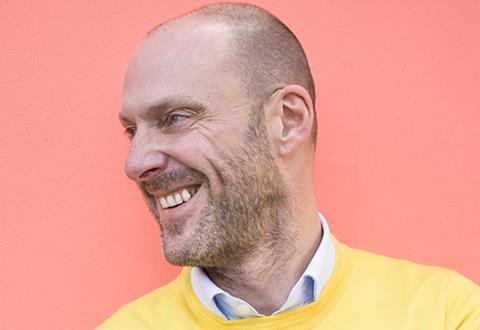
Martyn Evans is creative director of Landsec and chair of the London Festival of Architecture







No comments yet