




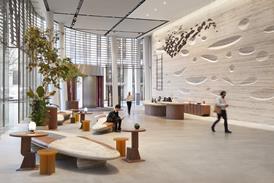




Foster & Partners, Renzo Piano, Selldorf and Farshid Moussavi among finalists for project envisaged as biggest transformation in gallery’s 200-year history
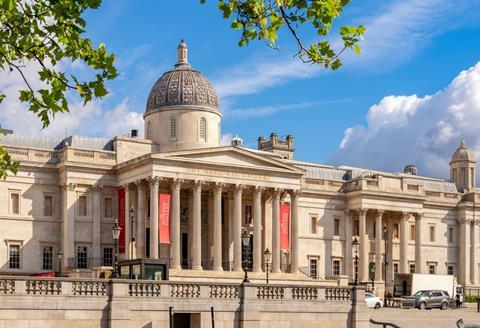
The National Gallery has shortlisted six architect teams in a contest to design a new £375m wing which it has described as the most significant expansion in its 200-year history.
Foster & Partners and Renzo Piano Building Workshop with Adamson Associates have made it onto the second stage of the international competition alongside Farshid Moussavi with Piercy & Company and Kengo Kuma with BDP.
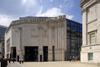
Selldorf, the US practice which designed the gallery’s controversial Sainsbury Wing overhaul, has been shortlisted with partner Purcell, with the finalists rounded off by Studio Seilern Architect, a medium-sized UK practice founded by Christina Seilern, the founding director of Rafael Vinoly Architects’ London office.
The teams have been selected by a jury including RIBA Gold Medal winner and 2025 Building Design Lifetime Achievement Award winner Patty Hopkins, former Imperial War Museum director Diana Lees and artist Céline Condorelli.
The panel was chaired by National Gallery board of trustees chair John Booth, and also included the board’s deputy chair John Kingman, National Gallery director Gabriele Finaldi and National Gallery Masterplan Committee chair David Marks.
The shortlisted teams will now further develop their proposals with the final architect and wider technical design team set to be appointed by April 2026.
The project, one of the most prestigious cultural commissions in recent years, has been funded by two of the largest private donations ever received by a museum or gallery anywhere in the world.
Crankstart, a charity founded by billionaire venture capitalist Michael Moritz and his wife Harriet Heyman, and the Julia Rausing Trust have each donated £150m towards the new wing, with the National Gallery Trust contributing a further £75m.
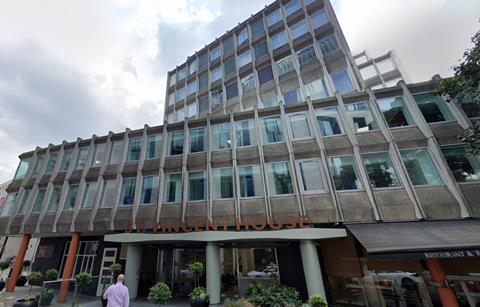
The scheme will be built to the north of the Sainsbury Wing on the last remaining part of the gallery’s current campus, a 1960s hotel building called St Vincent House which the gallery acquired 30 years ago as part of a long-term expansion strategy.
The new wing is itself part of a wider £750m expansion programme called Project Domani, which is aiming to make the gallery the “only place in the world where visitors can view the entire history of painting in the Western tradition”.
The money will be used to build an acquisition fund for modern artworks, part of a strategy to broaden the gallery’s traditionally pre-1900 collection, and to secure the gallery’s long-term financial stability.
Booth said the ambition of the programme “demands a space that not only preserves and displays the collection, but also elevates the visitor experience, enhancing the Gallery’s reputation as one of the most visited and stimulating museums in the world.”
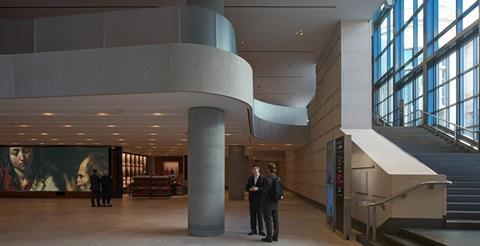
He added: “We look forward to finding the right architectural partner to join us on this once-in-a-lifetime journey to create a landmark of local and international significance: creatively ambitious, technologically innovative and environmentally sensitive.”
Finaldi has previously said the gallery is “looking to the future” with Project Domani following the bicentenary which it celebrated last year with Selldorf’s transformation of the Sainsbury Wing. ‘Domani’ is Italian for tomorrow, the label being inspired by the gallery’s original conception as a place to house Italian renaissance painting.
The announcement of the expansion followed the agreement in principle of a partnership between the gallery and Tate, which will loan artworks to the National Gallery and provide curatorial and conservational expertise for the new displays.


No comments yet