








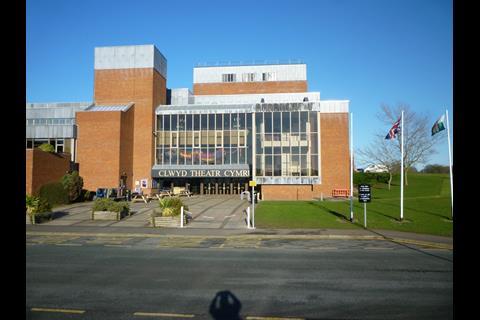
Grade II-listed arts venue Theatr Clwyd was designed by North Wales’ county architect in the 70s
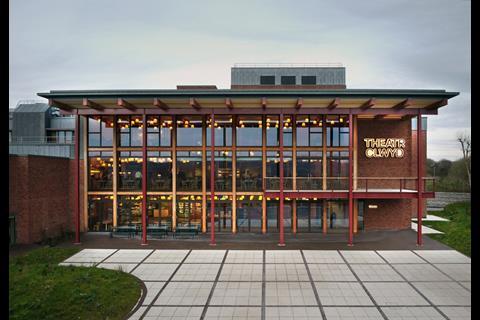
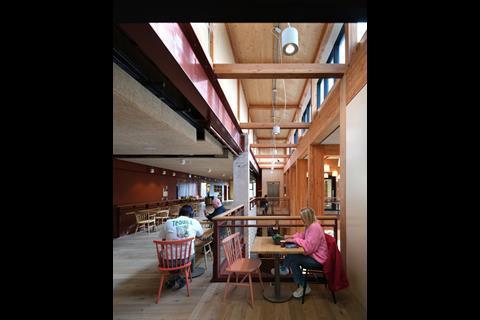
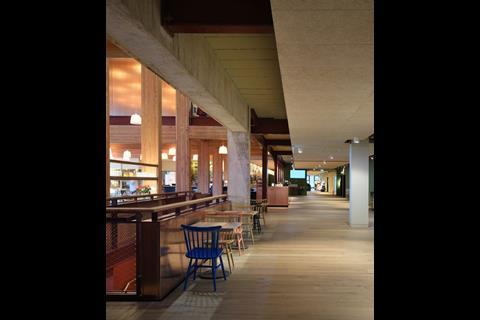
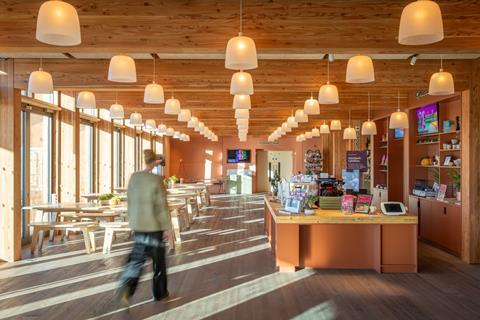
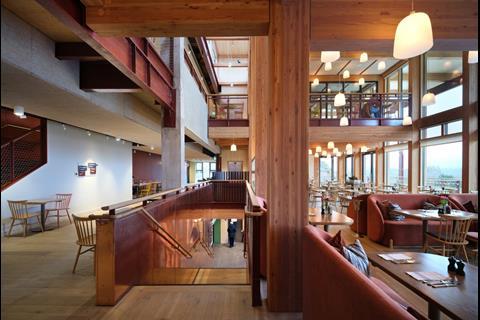
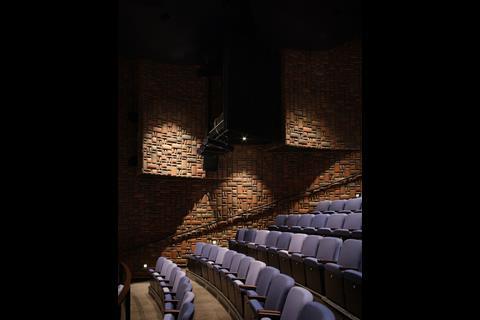
Haworth Tompkins has completed the redevelopment of Theatr Clwyd, Wales’ largest producing theatre.
The Grade II-listed venue sits on a hillside above the town of Mold, North Wales and will support professional productions and education.
It was originally designed by R.W. Harvey, the county architect for Flintshire as a regional arts centre to provide cultural opportunities for people living in North Wales. It was opened as ‘Clwyd Theatre and Educational Technology Centre’ in 1976 by Queen Elizabeth II.
Haworth Tompkins, the 2014 winner of the RIBA Stirling Prize, was appointed in 2017 to upgrade and expand the 10,000 sqm complex with new mechanical and electrical services and improved access to its public spaces through new lifts, step-free routes and a Changing Places toilet.
The architecture firm said its approach was to “open the building up to its extraordinary rural landscape setting and enable a more technically sophisticated and adaptable environment for contemporary theatre.”
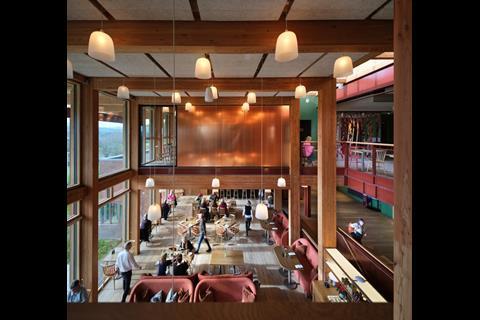
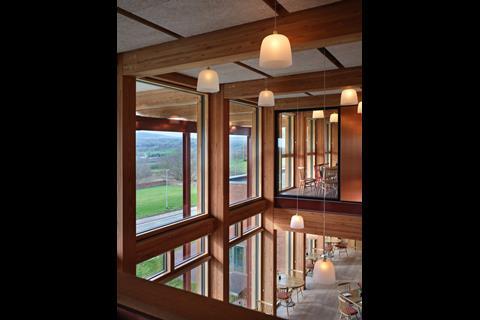
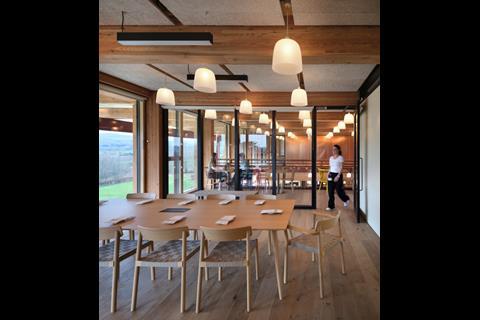
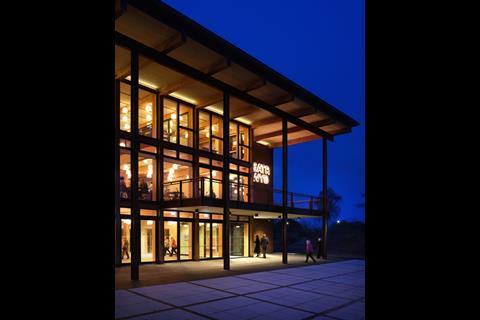
A new south-west facing, three-storey foyer extension serves as the venue’s entrance, providing a reception, café, restaurant and countryside views.
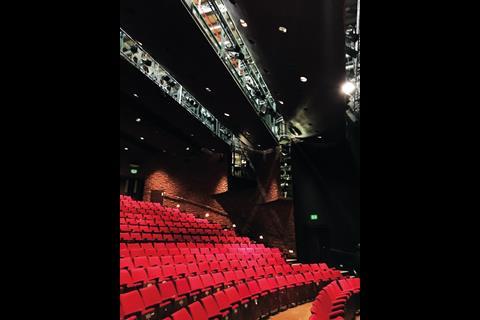
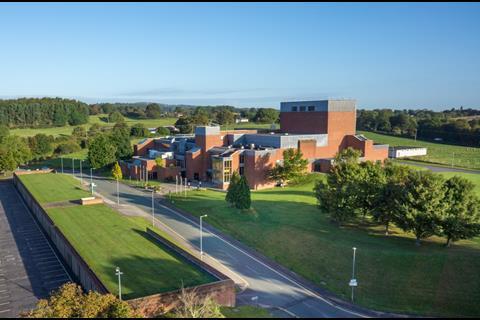
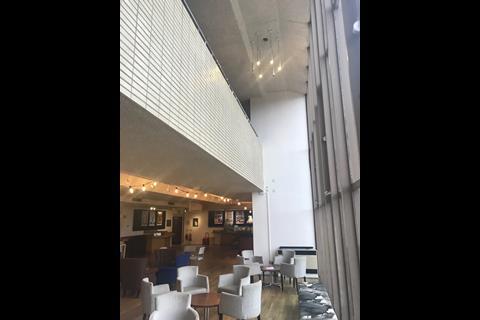
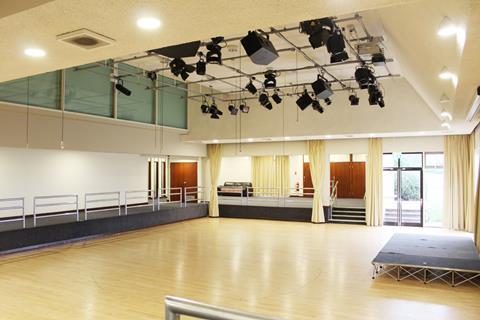
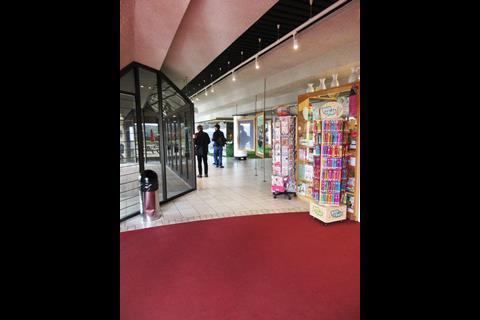
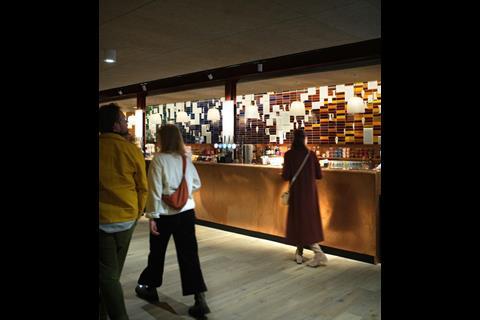
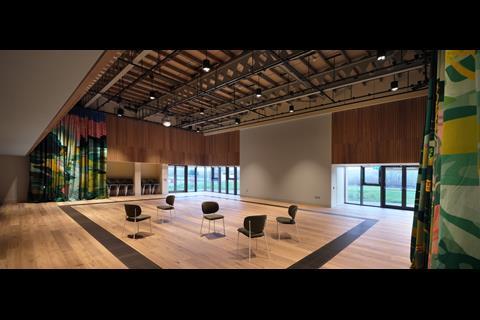
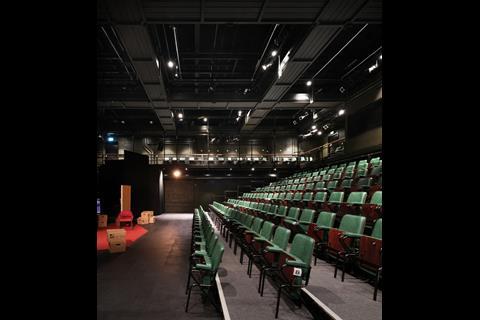
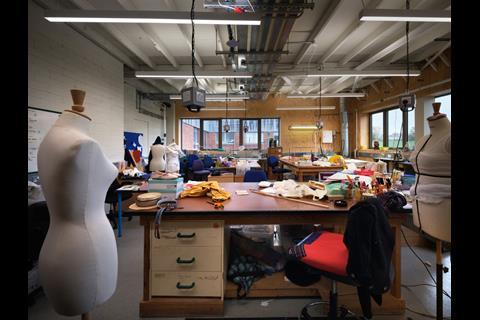
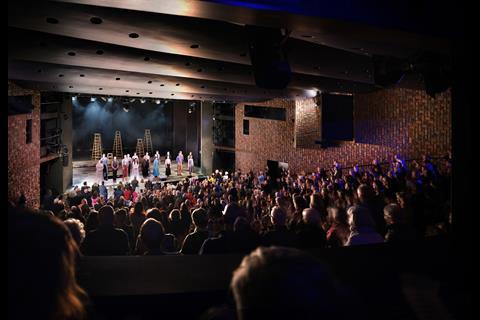
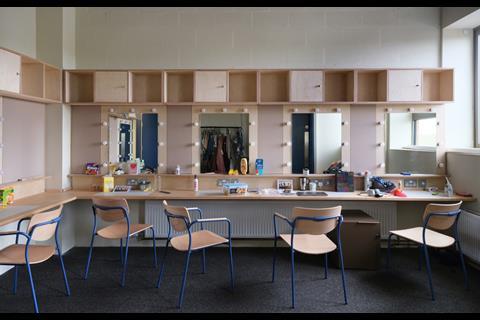
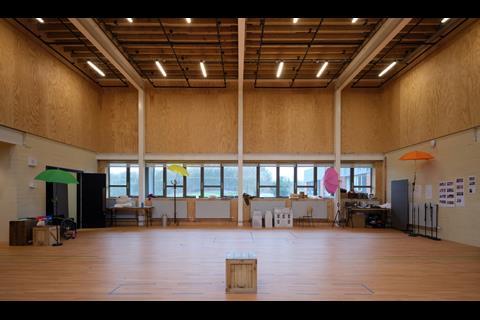
Alongside three performance spaces, an events room and a cinema, the building now includes rehearsal rooms, studios, making workshops, artist spaces, a restaurant and bar.
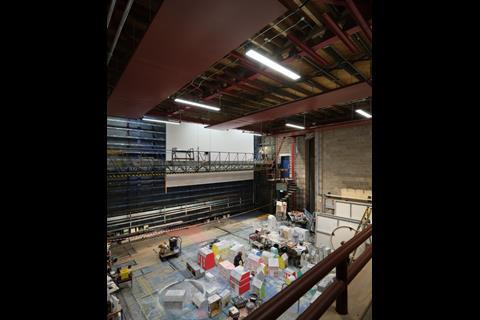
Meanwhile, a new scenic workshop extension allows all the production teams to work together on site for the first time.
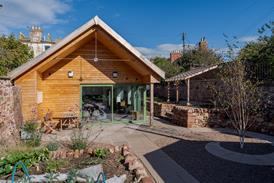
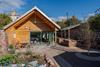
There are also dedicated community spaces, play areas and sensory gardens.
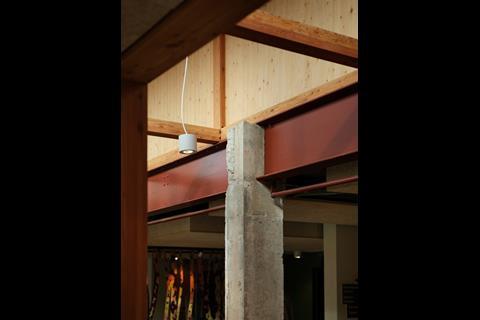
Haworth Tompkins’ retrofit strategy retained the majority of the existing concrete structure and brick envelop while minimising embodied carbon.
The project received more than 22,000 survey responses during the consultation period and was completed as Theatre Clwyd turns 50 this year.
Postscript
All photographs are credited to Philip Vile




1 Readers' comment