






Sponsored by ROCKWOOL®, this module explains how rainscreen cladding systems work, and the benefits of retrofitting rainscreen systems and insulation to extend the life of existing buildings. It also sets out best practice for specification and installation systems such as heat pumps. Retrofitted insulation can also improve resilience to the more extreme temperatures associated with climate change
Deadline for completion Friday 1 January 2027
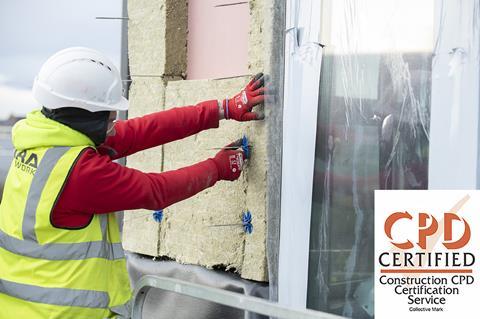
A rainscreen cladding system is an external layer that protects a building from the weather while allowing moisture to drain and air to circulate within a cavity behind the outer rainscreen facade. Combined with a layer of insulation, such systems can enhance thermal performance, improve energy efficiency, reduce condensation and, potentially, extend the lifespan of the structure beneath. Depending on material selection, they can also deliver further performance benefits such as sound insulation, and contribute to the fire resilience of the structure.
Learning objectives
- Recognise the benefits of retrofitting insulation.
- Understand the principles and advantages of insulated rainscreen cladding systems.
- Know key considerations when designing and planning retrofit rainscreen insulation projects.
Retrofitting rainscreen cladding
Retrofitting is a key tool in the decarbonisation of construction. RIBA, RICS and the Chartered Institution of Building Services Engineers all promote refurbishment and reuse over demolition and rebuild. By upgrading rather than replacing, the embodied carbon already invested in a building is preserved, which aligns with circular economy principles and national sustainability goals.
It is worth remembering that construction, demolition and excavation account for around 60% of the UK’s total waste by weight. Retrofitting existing buildings can reduce this material demand and associated emissions. While new buildings are usually more energy-efficient in operation, their construction still locks in significant embodied carbon – in some highly efficient modern buildings it may represent over half of lifetime emissions.
The pathway to net zero
Fabric performance improvements are important when the UK built environment accounts for around 25% of total greenhouse gas emissions, and around 8 million homes in England remain below energy performance certificate (EPC) band C.
Improving thermal performance of fabric is one of the most effective ways to reduce operational energy demand and enable low-carbon heating systems such as heat pumps. Retrofitted insulation can also improve resilience to the more extreme temperatures associated with climate change.
Regulations in this area have changed frequently. Under the UK’s Minimum Energy Efficiency Standards (MEES), privately rented domestic and non-domestic properties are currently required to achieve a minimum EPC rating of E. However, government policy is moving towards substantially higher minimum standards. Current policy proposals indicate that privately rented homes will be required to achieve the equivalent of EPC C by around 2030. For commercial rented buildings, proposals suggest EPC C by around 2027 and EPC B by around 2030.
Tackling fuel poverty
Beyond carbon savings, insulation upgrades have a direct impact on household energy costs.
Homes with poor fabric performance typically face significantly higher bills than comparable well-insulated ones, often several hundred pounds a year more. In England, most fuel-poor households live in homes with energy efficiency ratings below EPC band C, typically in bands D and E, and government policy aims to ensure that as many of these as is reasonably practicable achieve a band C by 2030. From October 2026, reformed EPCs will separate fabric performance from heating-system efficiency, making it clearer than ever that a home’s running costs are driven as much by how well it retains heat as by what produces that heat.
Retrofitting rainscreen insulation can be one way to reduce heat loss and lower energy consumption, supporting efforts to make homes comfortable and more affordable to heat – something that is especially critical at a time when energy prices are high and household incomes are already stretched.
Large-scale energy efficiency upgrades could deliver significant economic benefits. Evidence cited in UK parliament retrofit reports indicates that upgrading homes to EPC band C could deliver around £24bn in consumer energy bill savings by 2030 as part of wider economic benefits estimated at around £40bn.
Beyond this, cold, poorly insulated homes are associated with a range of health risks, including excess winter deaths, cardiovascular disease, respiratory illness and poor mental health. Fuel poverty can also force households to reduce spending on food to pay for heating, sometimes referred to as the “heat or eat” dilemma. Improving the energy efficiency of homes is therefore widely recognised not only as a climate and energy policy issue but also as a public health intervention.
Additional performance gains
Retrofitting insulation alone can deliver significant gains, but combining it with a properly designed rainscreen cladding system can help to elevate performance even further.
At the heart of an insulated rainscreen system is the ventilated cavity between the cladding and the backing wall. This cavity acts as a protective zone, providing a capillary break, allowing water that penetrates the outer layer to drain away, and promoting drying through ventilation. Continuous airflow reduces the risk of trapped moisture, interstitial condensation and long-term deterioration of the building fabric.
Some systems are designed as pressure-equalised rainscreens, in which the cavity is compartmented and ventilated so that internal cavity pressure equalises with external air pressure. This reduces the pressure differential that would otherwise draw wind-driven rain through joints.
Rainscreen systems are based on the principle that some rainwater will penetrate the outer cladding layer. Rather than relying on a fully waterproof facade, the system manages moisture through a drained and ventilated cavity. Water drains down the rear face of the cladding and exits at the base, while openings at the top and bottom allow air to circulate and promote evaporation. This approach aligns with the moisture management principles set out in BS 5250 Management of moisture in buildings – Code of practice.
Updates to this standard have placed greater emphasis on assessing moisture risk in retrofit projects, particularly where insulation is added to existing walls. If not properly designed, this can increase the risk of interstitial condensation, trapped moisture, mould growth and long-term deterioration of the building fabric. BS 5250 encourages designers to move beyond simple steady-state condensation risk calculations and instead consider moisture movement, drying potential, ventilation and air leakage as part of a whole-building moisture strategy.
Designers need to consider the condition and permeability of the existing wall, the position of insulation, vapour control layers, airtightness and ventilation paths to ensure the wall can continue to manage moisture safely over its service life. This approach aligns with retrofit guidance in PAS 2035, which emphasises moisture risk assessment and whole-building retrofit strategies. Ventilated rainscreen systems can support moisture cavity helps reduce the risk of trapped moisture and can improve the durability of both the insulation and the backing wall.
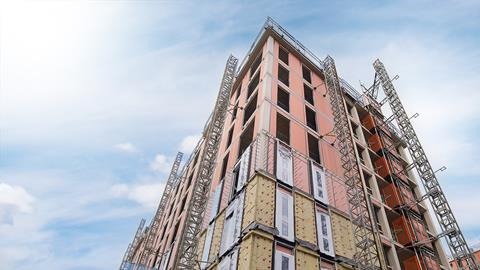
Comfort in all seasons
Because insulated rainscreen cladding places the insulation outside the structure, it creates a continuous external thermal layer that can reduce thermal bridging. External insulation also keeps the structural wall warmer, which reduces the risk of interstitial condensation compared with internal wall insulation, where the existing wall can become colder.
External insulation systems, including insulated rainscreen cladding, can also improve thermal comfort because they keep the existing structure inside the insulated envelope where it can act as thermal mass. Masonry and concrete walls can absorb heat during the day and release it gradually as temperatures fall, helping to moderate internal temperature swings and cut the risk of overheating. This approach can reduce reliance on mechanical cooling and support low-temperature heating systems such as heat pumps.
To summarise: in warm weather the ventilated cavity behind the cladding helps remove heat through ventilation and convective air movement, reducing heat gain through the wall and lowering cooling demand; in cold weather, the external insulation layer reduces heat loss and helps maintain more stable internal temperatures.
Together, these effects can reduce overall energy demand, improve thermal comfort and increase the resilience of the building envelope to both winter cold and summer overheating.
Acoustic performance
Another potential benefit of a rainscreen cladding system is its ability to incorporate insulation with acoustic properties. This is important when we know that noise pollution affects much of the UK population and that long-term exposure to elevated environmental noise has been linked to stress, sleep disturbance, reduced productivity, and increased risk of cardiovascular disease.
Although performance varies depending on the base wall construction, improvements of several decibels are possible, and reductions of around 10dB which are achieved in some cases can be perceived as roughly halving the level of external noise, offering real gains in occupant comfort and wellbeing.
Transforming building identity
Beyond its technical benefits, insulated rainscreen cladding also reshapes the appearance of a building. With a vast choice of finishes, textures and colours, this type of retrofit can dramatically improve kerb appeal and resident satisfaction.
On a larger scale, facade upgrades can contribute to neighbourhood regeneration, creating streetscapes that feel safer, more welcoming and more aligned with modern architectural standards.
Groundwork for a successful retrofit
Even the best-designed system can underperform if the existing building fabric or project management is not up to standard. Here are five steps to ensure the success of a retrofit:
-
Ensuring the building is retrofit ready
A thorough assessment of the building’s existing condition is the foundation of any successful retrofit. Defects such as structural deterioration, drainage problems, damp, failing masonry, cavity issues and asbestos must be identified and addressed before new materials are installed. Installing a new facade over unresolved defects can trap moisture, conceal structural problems and reduce the lifespan of the new system.
Surveys should assess the condition and loadbearing capacity of the existing wall construction and confirm that the substrate can safely support the additional loads from insulation, support rails and cladding panels. Pull-out testing may be required to confirm fixing performance. Moisture surveys and condition surveys can also identify hidden water ingress, damp or condensation risks that must be resolved before installation.
Addressing these issues at an early stage reduces the risk of system failure, moisture problems and costly remedial work later, and ensures the building is suitable to support the additional loads and performance requirements of the new rainscreen system.
Existing fire performance and compartmentation should also be reviewed to ensure the retrofit system can be safely integrated with appropriate cavity barriers and fire stopping.
-
Navigating financial support
Funding opportunities can make or break the feasibility of a rainscreen project. For remediation of unsafe cladding on existing buildings, the Cladding Safety Scheme is the primary route for new applications on eligible residential buildings over 11m in England, alongside the Building Safety Fund, which continues to operate for existing applications and, in Greater London, for buildings over 18m.
For broader social-housing retrofit, the Warm Homes: Social Housing Fund (Wave 3) and Warm Homes: Local Grants programme fund external wall insulation and other envelope measures as part of whole-home retrofit. Both are area-based with more than £1bn committed across the two schemes over the current delivery period to 2028, and further rounds anticipated. Government investment in fabric-first retrofit is being consolidated under the new Warm Homes Plan, which commits up to £15bn over the parliament.
-
Ensuring quality and accountability
PAS 2035 sets out the specification and guidance for domestic retrofit in the UK and provides a framework for a whole-house retrofit approach. Compliance with PAS 2035 is required for most government-funded domestic retrofit programmes.
The standard establishes a structured retrofit process covering assessment, design, installation and evaluation, aimed at reducing the performance gap between predicted and actual performance and avoiding unintended consequences such as moisture, condensation and ventilation problems.
PAS 2035 defines key roles including retrofit adviser, assessor, co-ordinator, designer, installer and evaluator, each with defined responsibilities. This multidisciplinary approach is intended to ensure retrofit measures are properly designed and installed, and delivered to a consistent quality.
The importance of the framework has been reinforced by the 2025 National Audit Office (NAO) report which found that most solid wall insulation installed under the ECO4 and Great British Insulation Scheme programmes had defects requiring remediation. The NAO attributed the failures not to the insulation products or to the principle of solid wall insulation, but to weaknesses in how the schemes were designed and overseen. An updated standard, PAS 2035/2030:2023, which became the sole valid version from 30 March 2025, has strengthened the regime further – introducing mandatory site-inspection requirements for key insulation measures and raising qualification standards for retrofit designers.
-
Getting the specification right
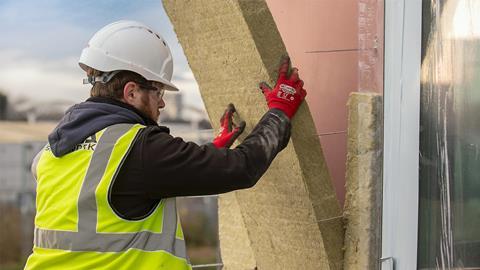
Every building is different, which makes bespoke design essential for rainscreen retrofit projects. A detailed design package should address issues such as uneven substrates, tolerances, thermal bridging through support brackets, cavity barrier locations and fire-stopping requirements. Poorly fitted insulation can allow air movement through or behind the insulation – sometimes referred to as wind washing – which can significantly reduce thermal performance.
Specifying resilient or semi-rigid insulation that can accommodate irregular substrates helps maintain continuous thermal performance and minimise gaps. Higher-density or dual-density insulation products are often specified for tall or exposed buildings where wind pressures are higher and greater dimensional stability and pull-through resistance are required. Careful detailing around corners, fixings, openings and junctions is essential to minimise gaps and maintain the continuity of thermal insulation, cavity barriers and fire stopping.
-
Fire safety
Compliance with building regulations is central to any retrofit project. In England, fire safety for external walls and cladding systems is governed by Part B of Schedule 1 to the Building Regulations 2010, with statutory guidance provided in Approved Document B (ADB). Guidance on external-wall fire spread is set out in section 10 of volume 1 of ADB and section 12 of volume 2.
A key part of the guidance is the European reaction-to-fire classification system set out in BS EN 13501 1. This classifies materials by their contribution to fire, with additional ratings for smoke production and flaming droplets. The highest-performing, non-combustible materials are classified A1 or A2-s1,d0. The older national classes – including the class 0 designation – have been removed from ADB and should no longer be used as the basis for demonstrating compliance.
In England, regulation 7(2) applies to residential and institutional buildings with a storey 18m or more above ground level. In these buildings, materials forming part of the external wall and specified attachments must achieve Euroclass A1 or A2-s1,d0 – meaning they must be non-combustible – in accordance with BS EN 13501-1, unless specifically exempted under Regulation 7(3).
The ban on combustible materials in external wall systems has been introduced progressively across the UK, with each nation adopting slightly different rules.
Different rules in the devolved nations
England introduced its combustible materials ban in 2018. The initial scope covered residential buildings, hospitals, care homes, student accommodation, sheltered housing and boarding school dormitories above 18m. This was later extended to include hotels, hostels and boarding houses with the same height threshold.
Wales introduced an 18m ban on combustible materials in 2020 covering residential buildings (flats, student accommodation, care homes) and hospitals. Wales is now consulting on whether to align its scope more closely with England’s extended list.
In 2022 Northern Ireland introduced an 18m ban with a scope mirroring the original English ban – residential and similar buildings – with hotels and hostels currently not included.
Scotland introduced an 11m ban in 2022 covering domestic and other higher-risk buildings such as care homes and hospitals, but excluding hotels, boarding houses and hostels. The Scottish government is reviewing whether to extend the ban to include them.
Large-scale fire testing
In England, for buildings where regulation 7(2) does not apply, compliance of external walls is demonstrated in accordance with ADB. Technically this can still be achieved either by following the prescriptive guidance in ADB relating to external surfaces, materials, cavities and cavity barriers, or by demonstrating that the external wall system meets the performance criteria of BR 135 following a BS 8414 large-scale fire test.
However, a BS 8414 test does not offer the same reliability as a non-combustible material construction. In practice, BS 8414 is often not considered a reliable or sufficient test for assessing facade fire performance, as it does not provide assurance of real-world behaviour. Test results are system-specific and not readily transferable, because performance is highly sensitive to installation details.
BS 9414 is the standard that sets out how results from a BS 8414 large-scale test can be extended to cover systems similar to the one actually tested. This may also be problematic because it allows the results of one large-scale fire test to be extended, through similarity assessments, to cover multiple system variants without re-testing – a process that can overlook small differences in fixings, cavities, interfaces and workmanship that will materially affect real-world fire performance. Following the Grenfell Inquiry, the government has accepted the recommendation that BS 9414 should be approached with caution and not used as a substitute for assessment by a suitably qualified fire engineer. BS 9414 is due to be reviewed in 2026.
Given all this, in many cases, the use of non-combustible materials throughout the external wall build-up is the lower-risk and more future-resilient approach.
Non-combustible insulation materials such as stone wool are commonly used in rainscreen systems because of their fire performance, dimensional stability, durable thermal and acoustic performance, and ability to accommodate uneven substrates. They are available in single- and dual-density formats to suit different structural, acoustic and wind-load requirements.
Horizontal and vertical cavity barriers and fire stops should be specified for rainscreen systems in accordance with building height, cavity dimensions and ADB guidance. Cavity barriers are installed both horizontally and vertically to subdivide the cavity and restrict fire and smoke spread, and their location and specification must be carefully co-ordinated with cavity ventilation requirements.
The Building Safety Act
The regulatory landscape for external wall systems has changed significantly following the Building Safety Act 2022 (BSA). This legislation established the Building Safety Regulator (BSR), which is now the building control authority for higher-risk building work in England, and introduced new dutyholder responsibilities across design and construction.
For the design and construction regime, higher-risk buildings are those that are at least 18m high or seven storeys and contain at least two residential units, or are hospitals or care homes.
The BSA applies not only to new high-rise residential buildings but also to existing higher-risk buildings, including those that are undergoing refurbishment or recladding. Retrofit projects on higher-risk buildings must therefore comply with the dutyholder, competence and building control requirements overseen by the BSR.
A key concept introduced by the act is the “golden thread” of information: a digital record that must be created, maintained and handed over so that those responsible for the building have the information needed to manage building safety risks. For retrofit projects, this means clear documentation of products, design assumptions, fire and structural performance, installation details and maintenance information.
The BSA also places greater emphasis on competence and accountability. Those appointed to the work must be able to demonstrate the appropriate skills, knowledge, experience and behaviours for their role. In practice, this has increased the importance of robust specifications, verified product performance data and clear design co-ordination on retrofit projects.
Practical solutions
A range of established rainscreen cladding and insulation systems are available to suit different building types, budgets and performance requirements. Engaging with system manufacturers or specialist designers early in the process can provide access to technical guidance, test data and installation support, helping ensure the as-built facade matches the performance specified at design stage and that appropriate documentation is available for building owners and regulators.
As every retrofit project is different, flexibility in installation is essential. Adjustable bracket systems, support rails and prefabricated panelised options can help accommodate existing structures and reduce on-site disruption.
Final thoughts
Retrofitting external walls is not simply about adding insulation or cladding, but about understanding how the building performs as a system over time. Fire safety, moisture risk, movement, thermal performance and documentation must all be considered together.
Good design takes a whole-building approach, recognising that fire safety depends on the combined performance of all elements, including the materials specified. It recognises that some materials and systems are inherently more tolerant of on-site variations in construction and workmanship than others, and therefore incorporate a degree of headroom to accommodate inevitable construction variability.
Projects that take a whole-building approach and focus on long-term performance rather than minimum compliance are far more likely to deliver safe, durable and effective retrofit outcomes.
Please fill out the form below to complete the module and receive your certificate.