






Sponsored by ROCKWOOL®, this module explores the regulatory context and functional fire performance of roofs, highlighting the influence of specification decisions and looking at the fire safety implications when flat roofs are used as amenity space and to house photovoltaics
Deadline for completing this module Friday 16 October 2026

Learning objectives
- Increase awareness of the implications of material choice on fire performance of roofs.
- Understand the role of flat roofs in fire strategy.
- Learn about the fire safety issues related to the siting of solar panels on roofs.
- Gain insight into the importance of early-stage specification to mitigate rooftop fire risk.
The roof plays a critical role in building performance – including in fire prevention. While regulatory focus post-Grenfell has largely centred on the use of non-combustible materials in facades, the role of roofs in fire development has received comparatively less regulatory attention. Yet in numerous fire incidents, the roof has played a central role in the spread and severity of the blaze.
For example, at the 2019 fire at Notre-Dame cathedral in Paris, the timber roof structure became rapidly involved in the blaze, contributing to extensive damage to the building’s upper structure. And the 1992 fire at Windsor Castle spread through roof voids, greatly increasing the scale of the incident. Cases such as these demonstrate that roof structures and roof voids can significantly influence fire behaviour and outcomes, underscoring the need for greater attention to fire safety in roof design, specification and installation.
Reframing the roof
Traditionally, roofs were protective coverings designed to shield buildings and their occupants from the elements and shed rainwater effectively. While these essential functions remain, the roof’s role has evolved significantly in modern building design – particularly in response to tightening regulations around sustainability and fire safety.
Today, the roof must be considered a fully integrated part of the building envelope. In addition to contributing to thermal and acoustic performance, roof design and specification can influence fire development and fire spread. As a result, roof assemblies require the same level of technical scrutiny as other parts of the building envelope.
Fire safety legislation
Key fire safety requirements in England are set out in Part B of Schedule 1 to the Building Regulations 2010, with guidance on how to meet these requirements provided in Approved Document B.
Requirement B4 on external fire spread addresses the potential for fire to spread across the outside of a building or to neighbouring buildings. It covers both roofs and external walls, although the way the requirement is applied in practice differs between the two. Requirement B4(1) states that a roof must adequately resist the spread of fire over its surface and from one building to another.
Fire resistance ratings
The fire resistance of a construction element describes its ability to maintain specified performance when exposed to fire for a defined period. Fire resistance classifications are defined in BS EN 13501-2 and are based on the results of standard fire resistance tests.
An element may be required to perform in one or more of the following ways:
- Loadbearing capacity (R) – the ability of a loadbearing element to maintain its structural stability and continue to support loads when exposed to fire.
- Integrity (E) – the ability of an element to prevent the passage of flames and hot gases from one side to the other.
- Insulation (I) – the ability of an element to limit the temperature rise on the unexposed side, thereby reducing heat transfer through the construction.
Fire resistance ratings are expressed using combinations of these letters followed by a time period in minutes. So, for example:
- REI 60 – loadbearing capacity, integrity and insulation maintained for 60 minutes
- EI 30 – integrity and insulation maintained for 30 minutes
- R 90 – loadbearing capacity maintained for 90 minutes
The number indicates the duration, in minutes, that the element maintains the required performance under standard test conditions.
Reaction to fire classifications
While fire resistance measures how well a system can prevent fire from spreading or penetrating through it, reaction to fire testing assesses how a material behaves when exposed to fire – particularly during the early stages of a fire. typically used for regulatory compliance, which is
Materials and products are classified into seven Euroclasses based on their reaction to fire, as defined in BS EN 13501-1. Through a series of laboratory tests, the system evaluates how a product behaves when exposed to fire, including factors such as:
- Contribution to fire growth
- Heat release
- Smoke production
- Flaming droplets or particles.
Products are classified from A1 to F. Classes A1 and A2 represent materials that make no or very limited contribution to fire, while classes B, C, D and E represent materials with increasing potential to contribute to fire growth. Class F indicates that the product fails to meet the criteria for class E. Materials not meeting a classification are determined “NPD” (no performance determined).
For classifications from A2 to E, additional suffixes describe the amount of smoke production and flaming droplets produced by the material. Smoke ratings (s1, s2 or s3) indicate the level of smoke generated during fire exposure, with s1 representing the lowest smoke production and s3 the highest. Droplet ratings (d0, d1 or d2) describe whether flaming droplets or particles are produced as the material burns. This is significant because burning droplets can spread fire and pose risks to occupants and firefighters.
Taken together, these designations provide a fuller picture of a material’s fire performance. So, for example, a material classified B-s1,d0 to BS EN 13501-1 contributes to fire growth but produces little smoke and no flaming droplets. Materials below this threshold are typically treated as combustible, and restricted under the ban on combustible materials in external walls.
Fire performance of roof elements
Since 2 March 2025, Approved Document B (England) no longer recognises BS 476 classifications for reaction to fire or roofs. From 2 September 2029, there will be a full transition to European (EN) test standards for determining the fire resistance of construction products with the performance classified to BS EN 13501-2. This means BS 476 fire resistance test standards will be removed from England’s Approved Document B as a method for showing compliance with fire resistance requirements. Under BS EN 13501-5, the reaction to fire of roof systems is classified using the following ratings:
- B Roof (t4) – highest performance
- C Roof (t4)
- D Roof (t4)
- E Roof (t4)
- F Roof (t4) – lowest performance.
These classifications are based on test methods defined in BS EN 1187, which sets out four different external fire test procedures. In the UK, test 4 is reflected in the “(t4)” suffix. Test 4 simulates external fire exposure involving burning brands, wind and radiant heat, and evaluates flame spread across the roof surface and fire penetration through the roof covering from outside. However, the test only assesses exposure to external fire; it does not assess fire acting from beneath the roof. The latter can be particularly dangerous because it can involve high-intensity heat directly attacking the roof structure. Flames and hot gases can enter the roof build-up via service penetrations or spread in cavities, or combustible insulation layers. Equally, the test does not determine the combustibility classification of individual materials within the roof build-up, including the underlying insulation and other roof components. Roofs incorporating insulation with a Euroclass F rating may still achieve B Roof(t4), as the test does not assess fire behaviour within the build-up or from below.
Flat roofs and fire safety
Flat roofs have a long history, particularly in warmer and drier climates. In Europe and North America, however, their widespread use developed mainly during the 20th century, driven by modern construction techniques, new waterproofing technologies and changing architectural fashions. Today, flat roofs remain common across many building types, with a growing range of performance and use requirements continuing to influence their design and specification.
In dense urban environments in particular, where space is at a premium, flat roofs are often used for additional functions, such as accommodating plant, terraces or amenity space. In such cases – where roofs are accessible or support occupied uses – there are implications for fire safety and possibly also for regulatory compliance.
Where a roof is accessible, occupied, or forms part of the building’s internal layout, designers must also consider Building Regulation Section B3, which relates to internal fire spread and compartmentation.
In particular, extra attention is required where:
- The roof forms part of a means of escape
- The roof is used as an occupied or accessible area
- There are junctions with upstands, balconies or terraces
- The roof construction crosses or abuts a compartment wall.
In these situations, careful detailing and appropriate fire resistance performance are vital to ensure the roof design does not undermine compartmentation or fire spread objectives.
Compartmentation at roof level
At the junction of a compartment wall with a roof, statutory guidance in ADB indicates that the compartment wall should continue up to the underside of the roof covering or deck, with appropriate fire stopping to maintain continuity of fire resistance, and should be extended across any eaves.
Where a compartment wall meets the roof, additional protection is needed to stop fire bypassing the wall via the roof. The guidance recommends a 1.5m zone on each side of the wall where there is a roof covering meeting B Roof(t4) and underlying deck is made of materials of Euroclass A2-s1, d0 or better.
As stated, fire resistance is commonly expressed using the REI classification. For designers, fire resistance is a key factor in maintaining compartmentation, protecting escape routes and ensuring structural stability for sufficient time to allow safe evacuation and firefighting operations.
Approved Document B provides statutory guidance on minimum periods of fire resistance for structural building elements. Requirements vary according to building height, use and occupancy. Structural elements forming part of protected escape routes or supporting critical building compartments may be required to achieve fire resistance periods of 30 minutes or more, depending on their role within the building.
Where roofs are accessible or regularly occupied – for example as roof terraces or amenity spaces – the consequences of fire may increase, particularly in relation to evacuation routes and occupant load. In such situations, designers should consider how the roof forms part of the wider fire strategy, including the protection of escape routes and the structural stability of the building below.
Current legislation does not require the use of non-combustible materials based on use for plant, PV or amenity. However, designers may choose to exceed minimum guidance as part of a risk-based approach to fire safety.
As roof use increases, there may therefore be a strong case for specifying non-combustible materials instead as part of a robust fire strategy, even where not explicitly mandated by regulation.
Additional rooftop features
Roofs are increasingly used to accommodate building services and plant. With the growing specification of heat pumps, mechanical ventilation and solar technologies, alongside increasing pressure on internal space in many UK cities, roof space has become a valuable and highly utilised part of the building.
Statutory fire safety guidance, including ADB, sets out provisions that apply where roofs support additional functions or contain building services, and indicates recognised routes to compliance in these situations. Examples include:
- Plant rooms – Rooftop plant installations often introduce additional ignition sources and fire load, including electrical equipment and mechanical services. Guidance in Approved Document B (volume 2) recognises that plant rooms and other high-risk areas should be adequately separated from the rest of the building, and may therefore require a higher level of fire resistance than surrounding elements, depending on their fire risk and function. This represents an exception to the general principle that supporting elements should match the fire resistance of the elements they support, reflecting the increased fire risk associated with plant installations. Roof-level plant rooms may require fire resisting enclosure and enhanced fire separation to prevent fire spreading across the roof or into the building below.
- Rooflights – specific guidance is given on the fire performance of rooflights, including circumstances in which they may be assessed using Euroclass reaction to fire classifications or considered as part of a roof covering achieving a B Roof(t4) classification. The appropriate approach depends on the roof construction, location and function of the rooflight.
- Penetrations – roofs frequently accommodate service penetrations associated with plant, ventilation or drainage systems. Penetrations associated with rooftop solar PV can present particular risks (see below), as DC cabling can remain live during a fire and electrical faults may occur near the roof surface. Combined with the number and complexity of cable penetrations, this can create pathways for fire to enter and spread within the roof build-up – something not assessed by B Roof(t4), which considers only fire acting on the roof surface. Where penetrations pass through fire-resisting elements, appropriate fire stopping and detailing are required to maintain the fire performance of the roof structure and prevent fire or smoke spread between compartments.
Solar panels and fire risk
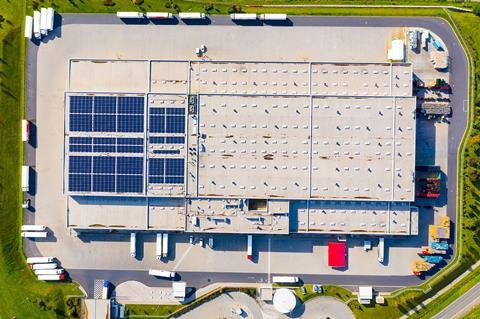
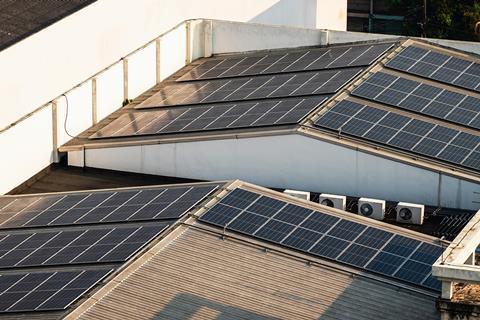
Solar panel deployment in the UK has accelerated in recent years. By the end of 2025, total installed solar capacity had reached around 21.6GW, with approximately 2.6GW of new capacity added during the year, including strong growth in small-scale installations such as rooftop systems. Industry and government ambitions envisage further significant expansion by 2030, with plans to increase total UK solar capacity to around 45GW in support of net zero and energy security objectives.
Under the newly announced Future Homes and Buildings Standards (FHBS), rooftop solar panels are expected to become a common feature of many new buildings in England.
The FHBS does not significantly tighten fabric standards; instead, the major changes are a shift towards electrified heating, typically heat pumps, combined with more stringent primary energy and carbon targets. Because electric heating increases a building’s calculated electricity demand, many buildings are likely to need to incorporate solar panels to reduce calculated carbon emissions and primary energy use and therefore achieve compliance. The new rules are expected to come into effect in 2027, with a year’s transitional period.
This is an area where statutory fire safety guidance has not necessarily kept up with practice, as research studies and insurer risk assessments indicate that rooftop PV installations can introduce additional ignition pathways and complicate firefighting on flat roofs. One well-documented ignition mechanism is electrical arcing, where current bridges a gap (for example at damaged cables or poor DC connections), producing high local temperatures that can ignite nearby materials.
Across insurer guidance and research reviews, recurring rooftop PV fire risk factors commonly highlighted include:
- DC-side faults and arcing, often associated with connectors/isolators and installation quality
- Ageing and weathering of exposed components, increasing the likelihood of faults over time (hence the emphasis on inspection/maintenance)
- Changes to roof fire dynamics and local heat build-up beneath arrays, with evidence (including large-scale testing on pitched roofs) suggesting PV geometry and spacing can, in some cases, worsen fire spread conditions compared with an equivalent roof without PV
- Higher consequences where PV is installed above combustible roof build-ups, increasing potential for rapid fire spread and loss severity
- Restricted access for inspection and firefighting, and persistent electrical hazards because PV can remain energised under daylight even when other supplies are isolated.
These findings underline the importance of integrating PV system layout, isolation strategy and roof build-up selection into the overall fire strategy, rather than treating PV as a late-stage add-on.
Solar installations should not create routes for fire to bypass compartmentation or otherwise support the spread of fire across the roof. One potential source of fire risk that is not always fully considered at the design and installation stage is the cabling and roof penetrations associated with PV systems. Specification and installation guidance – including that relating to waterproofing membrane warranties – often focuses on weatherproofing penetrations, but may not fully address the fire performance of the roof system as a whole. Many PV installations rely on DC and AC cables passing through the roof build-up, and it is essential that these penetrations are appropriately fire-resisting and do not compromise compartmentation or fire resistance at roof level.
None of this is to suggest that rooftop solar installations are inherently unsafe, nor that the risks outweigh their environmental and operational benefits. Rather, it simply highlights the importance of early, co-ordinated design decisions and the need for stakeholders to consider whether specifying non-combustible materials – improving on minimum legislative requirements – represents a prudent and proportionate response when integrating solar technology into roof designs.
Fire risk attenuation can be supported through a combination of design and material specification measures, including appropriate separation from compartment walls and roof edges, provision for firefighter access, careful routing and isolation of electrical components, and the use of non-combustible roof build-ups beneath PV arrays.
Approved Document B does not yet provide detailed, system-specific provisions for the installation of solar PV panels on roofs. While the guidance addresses aspects of roof fire performance and fire resistance of structural elements, it does not offer a comprehensive framework for managing the specific fire risks associated with rooftop PV systems.
The guidance set out in Approved Document B – and any gaps within it – should be considered in the context of the Building Safety Act 2022, which strengthens accountability throughout the building lifecycle and broadens the range of parties that may be held liable for defective or unsafe work. The legislation increases the importance of demonstrating that fire risks have been appropriately considered and managed at the design and specification stage.
As rooftop solar installations become more common, it is essential that project stakeholders understand the associated fire risks and address them proactively during the design process, rather than relying solely on minimum or generic guidance.

Rooftop PV and insurance
The insurance industry has become increasingly focused on the fire risks associated with rooftop solar PV installations, and several major insurers have published guidance addressing these concerns. Guidance issued by AXA Property Risk Consulting advises caution where PV systems are installed above combustible roof constructions, while Aviva Loss Prevention Standards similarly highlight the increased fire risk where PV systems are installed above combustible roofing systems.
This guidance does not imply that insurers will refuse to cover buildings with rooftop PV installations. However, it points to a recognition that specifying non-combustible roof build-ups can play an important role in managing fire risk and limiting potential loss.
This position is reinforced by guidance published by the Fire Protection Association through its RISC Authority research programme. RISC Authority is a UK insurer-supported body that develops and promotes best practice for protecting people, property, businesses and the environment from loss due to fire and other risks.
In its 2023 Joint Code of Practice, RC62: Recommendations for fire safety with PV panel installations, RISC Authority recommends that PV systems are installed on non-combustible roofs achieving class A1 or A2-s1,d0 to BS EN 13501-1, where practicable. The guidance highlights that fires involving combustible roof constructions can spread rapidly, potentially bypassing internal protection measures and increasing the risk to adjacent or nearby buildings.
Recent insurer risk engineering guidance and commentary indicate that fire risk in rooftop PV systems is not static but actively monitored and managed by major underwriters. For example, AXA UK has updated its risk guidance to stress reputable installers and regular maintenance to reduce fire incidents, Allianz Engineering has launched inspection services focused on PV defects, and QBE has highlighted a rising trend in PV-related fire calls based on fire service data. At the same time, industry bodies are engaging with and proposing revisions to existing insurer-aligned guidance such as RISC Authority’s RC62 to ensure it reflects whole-system performance and practical test data.
Although approved documents do not currently provide system-specific guidance for rooftop PV installations, there is a strong and growing body of insurer and industry guidance indicating that non-combustible roof specifications represent the most prudent and defensible approach where PV is incorporated. Current consultation proposals on Approved Document B also include more explicit references to rooftop PV, reflecting growing recognition of the associated fire risks. Insurer guidance also commonly recommends maintaining clear access routes across the roof and around PV arrays to allow inspection, maintenance and safe firefighter access in the event of an incident.
Final thoughts
Designing for fire safety must begin at the earliest stages of a project. One effective approach to mitigating fire risk is to prioritise the use of non-combustible materials from the outset. Some insurers and risk engineering guidance recommend prioritising non-combustible roof constructions, in some cases favouring non-combustible insulation across the entire flat roof as a means of reducing complexity and limiting fire spread risk.
This approach can deliver multiple benefits: simplifying specification, supporting consistent installation quality and reducing the risk of errors on site, such as the placement of combustible versus non-combustible insulation on different roof zones. Most importantly, it provides an additional layer of resilience against fire spread across the roof build-up.
As legislation such as the BSA strengthens accountability across the design and construction process, relying solely on minimum regulatory compliance may not be sufficient to manage long-term risk. Designers, manufacturers and specifiers are increasingly expected to consider how buildings will perform over time and how future standards may evolve, making forward-thinking, whole-system design both a practical and professional imperative.
Please fill out the form below to complete the module and receive your certificate.