





This 24‑home scheme for Phoenix Community Housing in Lewisham brings contemporary low‑energy design to the Bellingham Estate, echoing its Arts & Crafts origins while meeting today’s demands for family housing
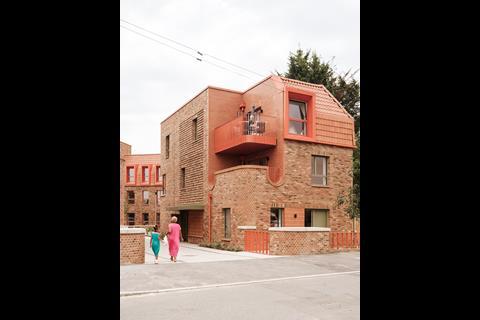
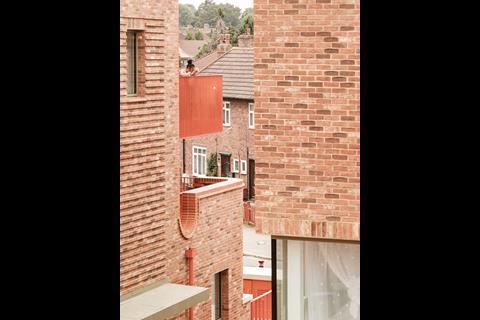
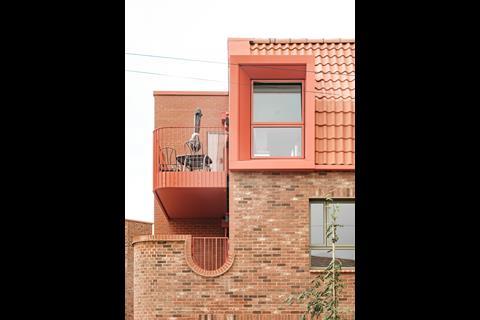

“Phoenix Community Housing has an initiative where they commandeer a local green and a supplier with a van, and residents get a free chippy tea if they engage with the design team behind a project,” says Tom Mitchell, partner at architect Metropolitan Workshop. “You get a carnival atmosphere – people bring out their deck chairs, have a drink and relax.”
He recalls the conversations at these events in 2019, which helped to shape the affordable housing scheme his practice has recently completed on the Bellingham Estate, a 1920s development in the London borough of Lewisham built in the Arts & Crafts style and influenced by the Garden City Movement. “The major concern from local residents was that they didn’t want to see something bulky and generic – they wanted something that reflected the local vernacular.”
Metropolitan Workshop’s answer was to design with reference to the scale, density and material palette of the surroundings, from the brick detailing and low-rise buildings to the communal gardens and spacious, geometric layout. “It’s the first time we have ever done anything symmetrical,” Mitchell says.
“Architects normally steer away from that because it starts to dictate everything you do, but there’s so much symmetry across the wider estate that we felt we had to respond to it.”
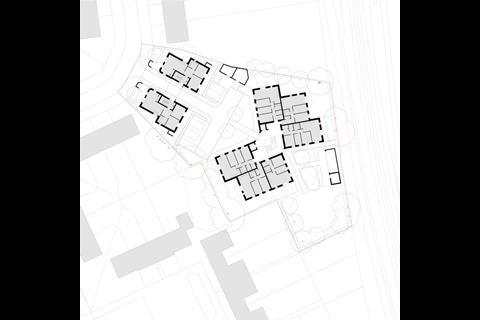
The gatehouses take the place of the original terrace on the site, and then the butterfly block at the back reflects the angles of the surrounding buildings
Tom Mitchell, partner at architect Metropolitan Workshop
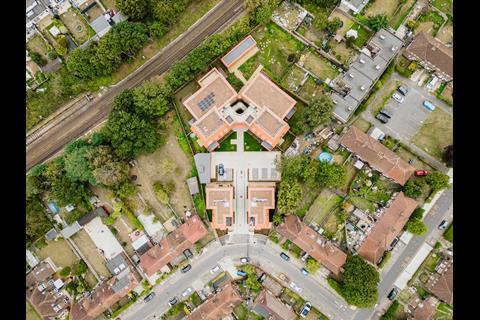
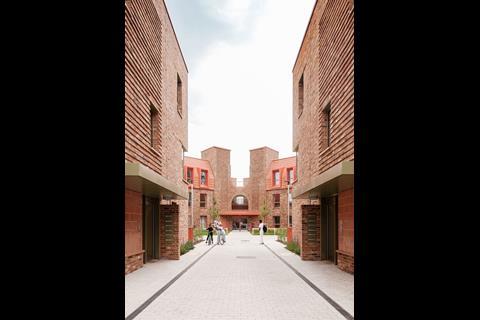
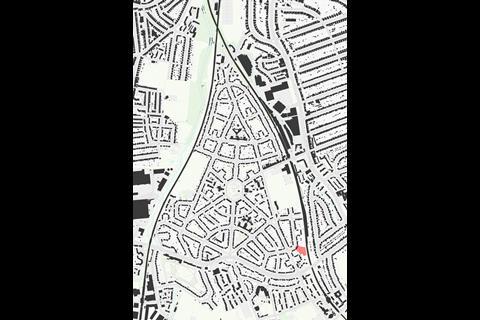
Viewed from above, he adds, the development on Farmstead Road – to the south of the estate – sits comfortably with its original plan. “The gatehouses take the place of the original terrace on the site, and then the butterfly block at the back reflects the angles of the surrounding buildings on either side. You wouldn’t know it was a new intervention.”
Lewisham has a notable history of pioneering social housing. The 2,600-home Bellingham Estate was built by the London County Council after the First World War to accommodate a growing population and to ease overcrowding in central London – alongside the nearby Grove Park and Downham estates. The borough suffered extensive bombing during the Second World War, prompting a wave of reconstruction and the development of several architecturally significant housing projects.
These ranged from towers such as the 1960s Pepys Estate in Deptford, to grade II-listed Passfields estate in Catford by modernist architects Jane Drew and Maxwell Fry.
Later, Lewisham council became the first council to fund a self-build development under the method of pioneering architect Walter Segal, whose 1980s scheme Walter’s Way and Segal Close fulfilled his dream of homes built through “mutual help among members of a friendly society on leasehold land”. It was a result of a confluence of factors, including good timing: according to a report by Jon Broome, an architect and Segal’s collaborator, the council had recently bought a lot of land during an economic boom, but was then curtailed by government rules that controlled public spending on social housing; self-build provided an alternative solution. These schemes also paved the way in the 1990s way for Nubia Way by London’s first Black-led housing co-operative, Fusions Jameen.

More recently, the borough has continued to experiment with new models of housing provision. Projects include PLACE/Ladywell (2016), Rogers Stirk Harbour + Partners’ temporary modular housing for homeless families; Archio’s Citizens House (2023), an 11-home scheme on surplus council land that grew out of a grassroots campaign and became London’s first community land trust created by local residents; and 12 Church Grove (2024), described as London’s largest community-led self-build housing project.
Jonathan Lawn, assistant director for people services and communications at Phoenix, says that the influx of people into the area in the interwar period paved the way for this legacy of housing innovation. “Thousands of people moved into those homes in close succession – often from similar parts of east and south-east London. This, coupled with lifetime council and social tenancies, generated both a very strong sense of community and a sense of stewardship of the area, passed on through generations.”
At the same time, the local council has recently come under fire over some housing issues – the BBC reported that nearly a quarter of homes in the borough fell below the Decent Homes Standard as of September 2024, which is more than double the London average. In 2024, it was reported that the borough had created a housing delivery action plan after missing its government mandated housing delivery targets by 75%.
[Our model] means residents are heavily involved – they make up four members of our board, and we’re very interested in delivering homes for local needs
Anthony Kelly, senior project manager at Phoenix
In the spirit of its pioneering predecessors, Phoenix Community Housing, the housing association behind the Farmstead Road scheme, says it aims to place residents’ needs first across the 7,700 homes it manages across the borough – for example by running its own maintenance company. “We operate under a community gateway model, [a tenant-led approach to housing management] which means residents are heavily involved – they make up four members of our board, and we’re very interested in delivering homes for local needs,” says Anthony Kelly, senior project manager at Phoenix.
In 2018, the organisation saw an opportunity to meet one persistent need – affordable family housing – by demolishing and replacing a terrace of four houses with large back gardens. Like many London boroughs, Lewisham has a long waiting list for affordable and social homes, with the average waiting times for two bedroom homes at 1,907 days – the fourth highest in London – according to a 2022-23 report by the think tank Centre for London.
In 2025, the local council said there were more than 10,000 households on its housing register and fewer than 1,000 properties available for letting each year. Against this backdrop, the Farmstead Road project has delivered 24 homes in total: 18 two and three-bedroom units for rent, and six two and three-bedroom homes available through shared ownership.
The existing Bellingham Estate has a relatively consistent cottage-like architectural character across its 2,700 or so homes. According to Metropolitan Workshop’s research into the area, most of the dwellings were designed as two-storey houses with gardens, rather than flats – interspersed with open spaces, trees and wider than average streets – because there was plenty of land available to build on.
There are several basic building plans, including a mix of terraces, corner houses and flats with mansard, hip, gable or dormer roofs. The palette of materials and details includes brick detailing, arched ginnels and entrances, pronounced chimneys and decorative gables.
The colour palette is restrained – mostly red and brown brick and orange and red clay tiles. Like in Garden Cities, buildings were often placed diagonally across a corner to create a continuous line and clearer visibility of and from the buildings, while also protecting privacy in the rear gardens.
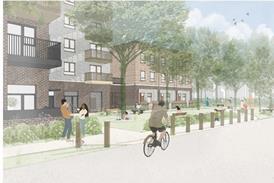
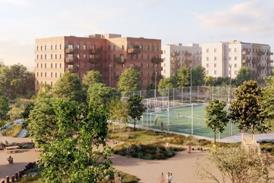
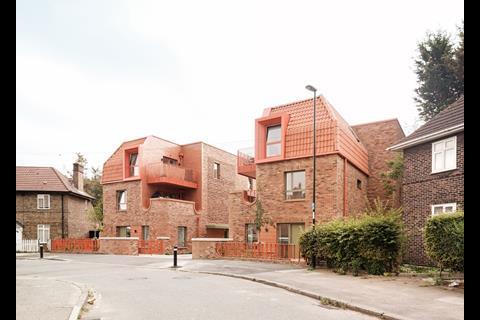
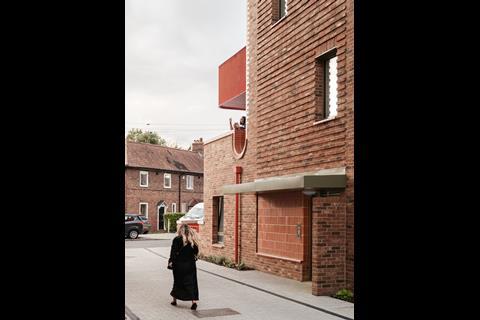
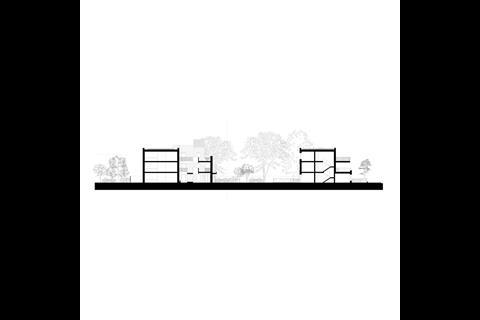
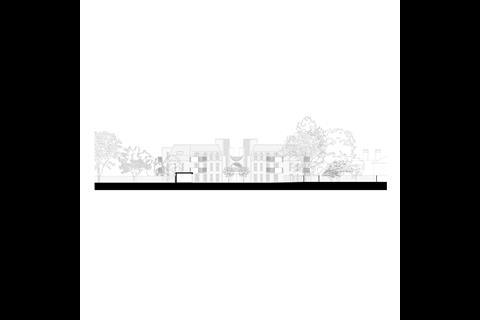
The new development echoes many of these features. From the street, it first appears as two gatehouse buildings framing a central courtyard and parking area, with additional homes arranged in a block at the rear of the site.
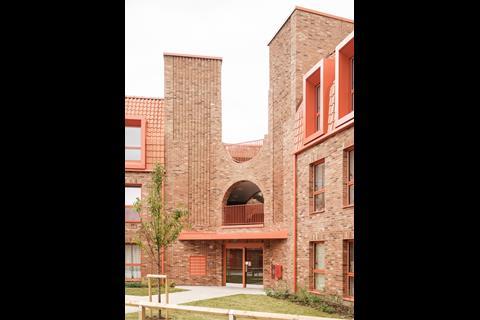
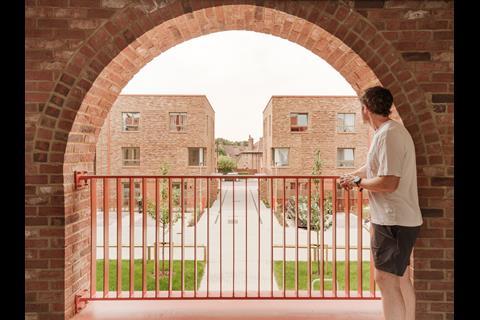
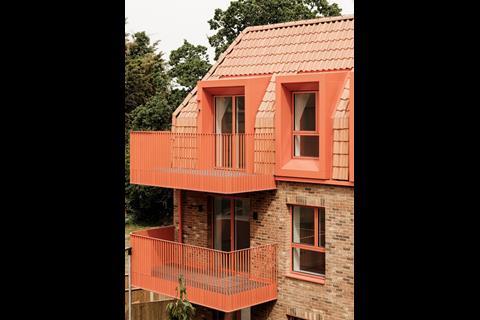
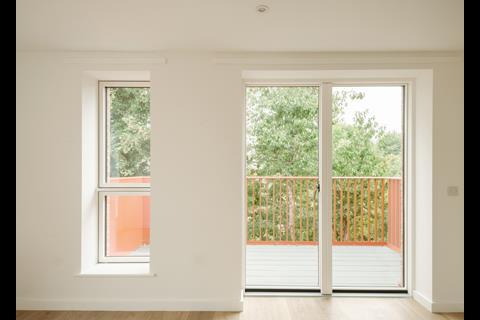
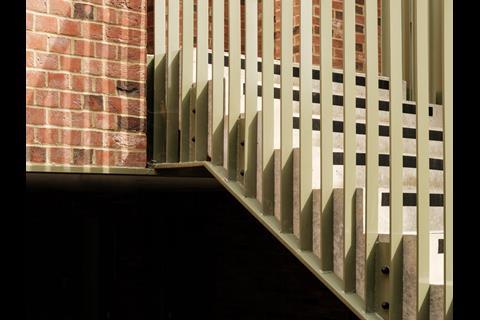
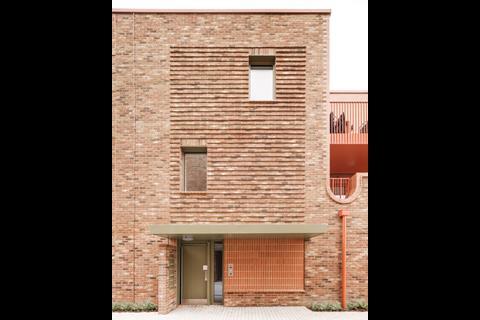
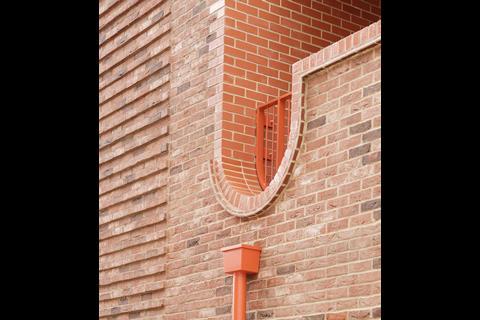
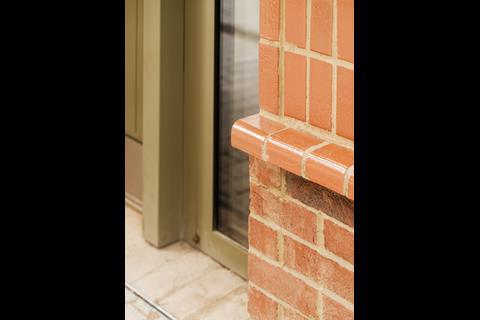
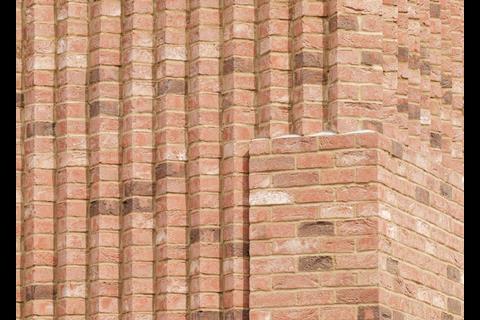
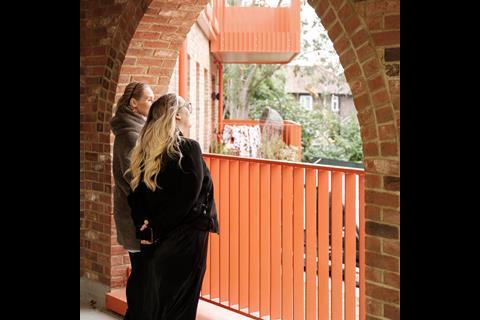
A consistent visual language inspired by the craft and character of the Art & Crafts movement runs throughout the scheme: brick arches, scalloped balustrades, patterned brick detailing that adds texture, bright orange paintwork and metalwork, and clay tiles on the mansard roofs. On the gatehouse buildings, glazed accent bricks were used to create a special entrance and in recessed balcony areas. Two oversized chimney forms with sawtooth brickwork crown the buildings, nodding to local architectural forms while discreetly housing a lift shaft and building services and acting as a focal point.
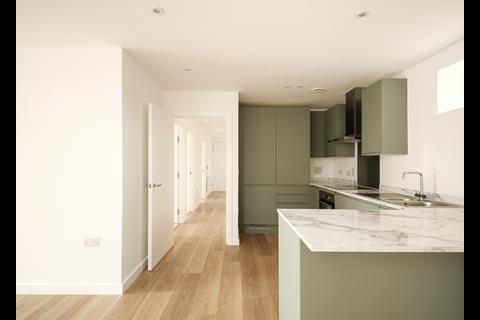

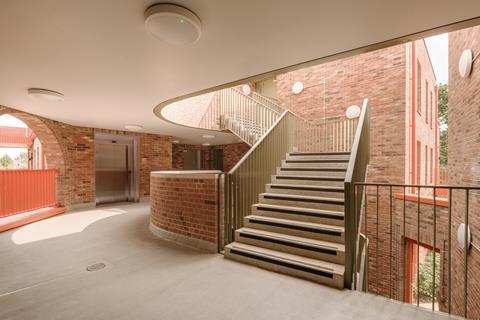
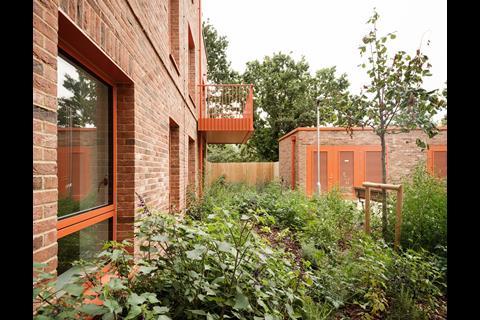
In the rear wing, a central stairwell is open to the elements above. The homes radiate from this shared circulation space, which is designed to encourage chance encounters and everyday interaction. A door from the stairwell leads out to bike sheds and a communal garden that backs onto a railway track.
The original homes on the site – like many in the area – had lengthy rear gardens of almost 80m, which the architect says were too large for most residents to maintain. “The residents only used the first 10m, and beyond that it was scrub and rubble,” Mitchell says. Now additional homes and outdoor space sit on the same site – some of which was claimed from the unused ends of neighbouring gardens.
Mitchell says that the original design that won Metropolitan Workshop the commission has remained largely unchanged since the competition stage, aside from modifications required after Phoenix introduced a company-wide policy that all new schemes should meet the Passivhaus low-energy standard, helping to future-proof its housing stock while reducing residents” energy costs.
A 2022 report by Centre for London indicated that energy costs were a significant problem in Lewisham – with 18% of households in the borough in fuel poverty, compared to 13% across England. According to the RICS, Passivhaus can create energy savings of up to 90% compared with the average building stock, and more than 75% for new builds.
[Passivhaus] is becoming more common, which means it’s easier to do and the cost is diminishing
Tom Mitchell, partner at architect Metropolitan Workshop
“This was our first Passivhaus scheme,” Mitchell says. “It’s becoming more common, which means it’s easier to do and the cost is diminishing.”
At the time, however, the requirement introduced a series of challenges, from sourcing elements such as insulated balcony brackets from a limited number of suppliers to redesigning certain architectural features to reduce heat-loss surface area. “The mansards, for example, were originally on all sides of the buildings, but they were harming this number the most,” Mitchell says. “We designed lots of different iterations to work out how much flat roof architecture we needed in order to achieve the Passivhaus standard.”
In the end, mansard roofs were retained only on the elevation most visible from the street, with standard flat roofs used elsewhere.
The homes at the front also have larger footprints to accommodate residents who use wheelchairs, which affects the energy calculations. As a result, these blocks rely on air-source heat pumps, rather than electric heating and hot water, to meet the standard. Some windows across the scheme were also reduced in size to prevent overheating.
The objective in the end was to achieve a balance between style and sustainability – echoing the Arts & Crafts heritage of the local area while meeting the needs of today. The architects appear to have achieved this – despite the proximity of the railway line, both temperature and noise levels inside the homes remain comfortable, according to one resident.
“I hardly ever use the heating, because it”s mostly warm, even when it gets really cold outside – the insulation is very good – and you also barely hear the trains running when the windows are shut.”

Through ongoing analysis and expert commentary, Regen Connect highlights the policies, funding streams and local priorities that matter most to the construction and development sector.
This coverage will culminate in a special report to be published at our Building the Future Live Conference in London on 7 October.
How you can get involved:
Throughout the year, our team will be gathering insight from across the sector to inform editorial features, debates and events. We welcome contributions from practitioners who want to share experience or shine a light on emerging trends.
Click here for more on the campaign
Be part of the conversation – contact us to contribute or get involved by emailing our deputy editor at dave.rogers@building.co.uk and to find the campaign on social media follow #regenconnect
Postscript
All photographs sourced to Fred Haworth






1 Readers' comment