






Project will bring together expertise from the timber, construction and insurance sectors to address water exposure, detection and control from design through to reuse
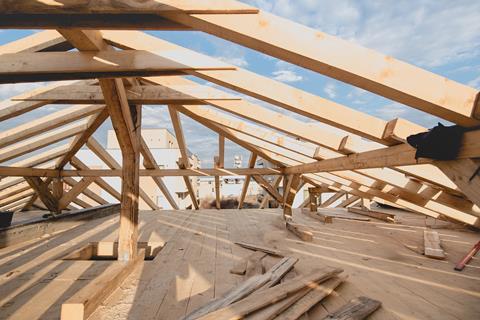
The Alliance for Sustainable Building Products (ASBP) has launched an international project to develop practical guidance for managing water and moisture risk throughout the lifecycle of mass timber buildings.
Funded by the Softwood Lumber Board (SLB) and Swedish Wood, the project will bring together existing research and industry expertise to address how moisture risks can be prevented, detected and managed across the design, construction and operation of timber buildings.
The guidance will cover the full building lifecycle, from design and manufacture through construction and occupation to maintenance and eventual reuse. It is intended to provide a common framework for architects, engineers, contractors, manufacturers, insurers, investors and building owners.
Water and moisture management is a particular consideration for mass timber construction, where exposure during construction or in-service water ingress can affect the durability and performance of timber components. ASBP’s previous work on mass timber insurance identified water damage during construction as an important insurance consideration.
The new project builds on the Mass Timber Insurance Playbook, published by ASBP in 2023 to help project teams and insurers address risks associated with mass timber buildings. The Playbook was subsequently republished in 2024 following backing from the Association of British Insurers, while a US edition was adapted by WoodWorks with support from the SLB.
The new guidance will focus specifically on moisture rather than insurance, although insurability remains an important consideration. It will cover measures to reduce water exposure during construction, moisture monitoring and leak detection, escape of water, flooding and condensation.
It will also examine approaches to durability, maintainability and repairability, reflecting the need to consider moisture risk beyond the construction phase and throughout a building’s service life.
The project is being led and managed by ASBP, with technical leadership from Dr Jim Glockling, co-author of the Mass Timber Insurance Playbook. An international steering group made up of representatives from the insurance, construction and timber sectors across the UK, Europe and North America will contribute to the development of the guidance.
ASBP said the guidance is intended to be applicable across multiple markets. While aspects of fire safety are often shaped by national regulations, it argues that the underlying principles of moisture management are more closely related to building physics and can therefore be applied internationally, with regional considerations incorporated where necessary.
Dr Jim Glockling, lead author of the project, said the guidance would bring together design features and methods for preventing, managing and controlling water and moisture risk across the building lifecycle.
The project began in May 2026 and is scheduled to conclude in October, when the new guidance is due to be published.




No comments yet