








Tragic events in Glasgow should prompt a UK-wide reckoning about maintenance, funding and what genuine regeneration requires, writes Matthew Mckeague, chief executive of the Architectural Heritage Fund says
This summer’s announcement that the Glasgow School of Art cannot afford the £265m needed to reinstate its fire-ravaged Mackintosh Building comes off the back of a spate of fires in the same city. These avoidable disasters have put Scotland’s built heritage back in the national spotlight and the lessons we should take away from this resonate across the UK.
The Mackintosh Building is the most famous casualty of pressures felt across the country, which include chronic underinvestment in maintenance, a wave of redundant religious buildings and genuine uncertainty about what sustainable, local regeneration should look like. What is happening in Scotland acts as a warning but it’s also a source for solutions.
Heritage means a lot to people and the public reaction to the Mackintosh fires, as well as the recent blazes elsewhere in Glasgow, tells us that historic buildings are not a niche conservation concern. Instead, they are part of how communities understand their own identity and when landmarks burn, people grieve the loss.
Councillors, MSPs and ordinary residents have all spoken up, making heritage a live political issue, not just a sector-specific one. Politicians at every level of UK government would do well to take note.
If the Houses of Parliament can reach this point, no building in the UK is safe from the consequences of deferred care
Unfortunately, these fires are usually the dramatic conclusion of more basic failures. Buildings rarely fall into disrepair in one bad night. Instead, roofs go unrepaired and routine works get deferred year after year until structures become vulnerable, whether to fire, water ingress or simple decay.
This is not unique to Scotland. Even the Palace of Westminster, one of the best-resourced heritage assets in the country, is edging towards crisis after decades of maintenance that is predicated on patches rather than long-term fixes. If the Houses of Parliament can reach this point, no building in the UK is safe from the consequences of deferred care.
Part of the problem is structural, and it sits with the Treasury as much as any building owner. VAT is charged at 20% on repair and maintenance to historic buildings, but new build is zero-rated, which means that demolition is incetivised over over routine care.
Successive governments have promised to look at this issue but we have not yet seen the change necessary. If we are serious about avoiding the next Mackintosh, then reform should start here, along with proper funding for long-term maintenance rather than the crisis-driven capital grants.
Transplanting Manchester’s approach wholesale risks flattening the imaginative reuse of heritage assets that makes a city distinctive
At the Architectural Heritage Fund, we have seen another pressure arising in Scotland, with the Church disposing of its estate at a rapid pace. Roughly 40% of the applications AHF currently receives from Scotland are from community groups trying to buy their local church before it is lost to the market or falls into disrepair. These are often the most significant buildings in their towns, and the communities fighting for them are aware that once the building falls out of local use, its almost impossible to bring them back.
Some in Glasgow are being urged to look to Manchester’s redevelopment model, but I would urge caution. Transplanting Manchester’s approach wholesale risks flattening the imaginative reuse of heritage assets that makes a city distinctive, in favour of a more commercially-led strategy.
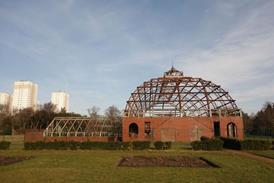
Glasgow, and Scotland more widely, has demonstrated the effectiveness of local regeneration. Work on bringing back The Briggait (Glasgow’s former fish market on the Clyde) began many years ago and it looked close to impossible. This year we held our 50th anniversary exhibition launch there and it has clearly become a genuine magnet for culture in the city. This summer it was part of the Turner Prize-winning artist Jasleen Kaur’s Commonwealth Games commission, further demonstrating what patient investment in a difficult building can deliver, if funders and owners stay the course.
Elsewhere, Huntly Development Trust has spent two decades showing what considered community-led ownership can achieve in a small town. Midsteeple Quarter in Dumfries has turned empty high street buildings into a resident-owned regeneration project. Above Adventure in Kilmarnock has brought an underused historic building back into daily community use. All of these case studies reveal how long-term, locally accountable work actually rebuilds a town’s fortunes and its confidence.
The fires in Glasgow should prompt a UK-wide reckoning about maintenance, funding and what genuine regeneration requires. Scotland is showing us both the risk of getting this wrong and, in the Briggait, Huntly, Dumfries and Kilmarnock, some of the best evidence anywhere in the UK of how to save these buildings and put them to good use.
Postscript
Matthew Mckeague is chief executive of the Architectural Heritage Fund







No comments yet