








Nicholas Boys Smith reviews the second edition of Street Design by John Massengale and Victor Dover
This is the most important book on street design in the English language. Every highways department, planning authority, urban designer and architectural practice, should have a well-thumbed copy. If they don’t, you should worry. Elected councillors working with highways or planning officials should check that they do. Clients commissioning streets, squares or neighbourhoods should do likewise. If they don’t have it, hire another consultant. Street Design is that good.
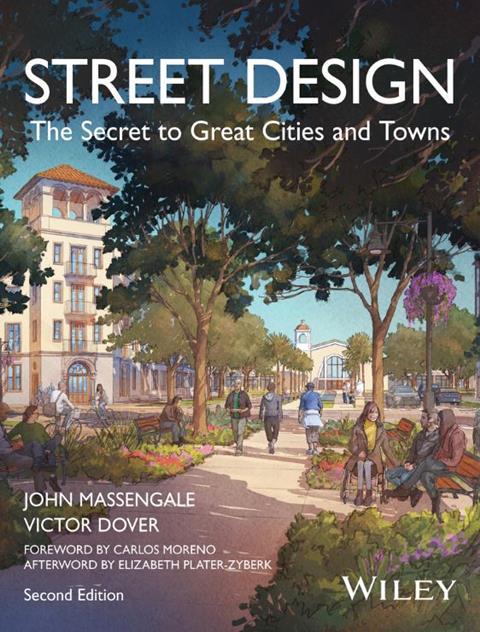
First published in 2014, this new and expanded second edition by the American architects and urban designers, Victor Dover and John Massengale, is not a lightweight. It weighs in at £56, 704 pages and over 2 kilograms. This is no field guide. Nevertheless, it is worth the investment in money, time and back muscles. The new edition adds detail, colour throughout, hundreds of illustrations and a convincing catalogue of street types accompanied by online three-dimensional models.
Street Design’s underpinning strength is that it understands why streets exist. Streets are not just to move through. They are also places in which our civic-life takes places. We dwell in streets. They are critical to the nature of our towns and cities. They should be ‘for people.’ The authors cite James Howard Kunstler approvingly; ‘Our streets and squares make up what we call the public realm, which is the physical manifestation of the common good. When you degrade the public realm, the common good suffers.’
Streets’ functions of movement and place should be held in symbiotic tension. Sadly, this is not true of most street design policies in North America and many in Europe. Place is not subservient to movement. If humans don’t want to be in a street, it is failing. Being enjoyable is as critical as being efficient. This argument is empirical not emotional. A tidal wave of evidence, much of which this book’s authors have read and helpfully summarise, demonstrates that more enjoyable, walkable and attractive places are reliably associated with improved health, higher property values, greater urban agglomerative effects and more neighbourly and pro-social behaviour patterns.
The melancholy harm that traffic engineers have inflicted upon American urban prosperity with their disproportionate focus on streets’ ‘design speed’ is laid bare. Dover and Massengale criticise ‘dendritic’ or tree-like networks which concentrate traffic on a limited number of arterial roads and highways. This remains the favourite approach of British volume housebuilders, many highway officials and the overly simplistic American road classification system. Dover and Massengale argue instead for a tissue of streets and plots. This better meets our human and communal needs to move about efficiently from any ‘A’ to any ‘B’ whilst simultaneously readily creating a myriad of plots in which we can swiftly pass from the
private to the public and back again. Influenced by the New Urbanist concept of the ‘transect’ from the city centre to the countryside, Dover and Massengale examine ten essential street types, illustrated through 28 variations, from Avenues and Boulevards to Drives and Parkways.
Street Design’s second great strength is that it does not shy away from concepts that terrify most designers. It understands ‘the importance of the building.’ The facades enclosing streets shape our experience of them. They need to be attractive as the public, not designers, understand it. They show that popularity can be measured and, in turn, influences behaviour, a train of evidence curiously anathema to many.
Dover and Massengale argue, correctly, that aesthetics is never, ‘just aesthetics.’ Even with the state of research in 2014 it was true, as they write, that ‘when people are given maps of a town or a city and asked to walk around and mark on the maps the places they like and don’t like, their choices correspond to a large degree.’ The evidence is even clearer now with the advent of digitally enabled visual preference surveys, though their argument does not take full account of the latest research in this domain in Britain, American and the Netherlands.
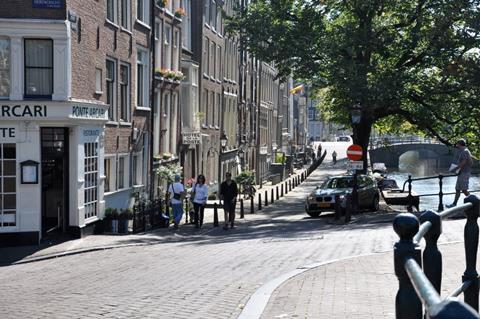
Street Design is supremely practical. It is theoretical and exhaustive, but it is also helpful. An historical discussion of the American street grid is followed by advice on how to ‘tame the grid’. (Grids can, after all, become a trifle relentless.) The expansive exploration of historic streets is beautiful, enthralling, even moving at times. It is always followed by practical advice for how to echo the best of the best. The penultimate chapter is a comprehensive gazetteer of excellent new or retrofitted streets.
One of the great dangers facing street design, now and always, is overcomplication: too many street signs, intrusive infrastructure, flashing lights, screaming stripes, zigzags and arrows. ‘Keep it Simple Stupid’ they wisely warn. The best streets are normally calm. Street Design extols the values of the simplest interventions such as continuous, or Copenhagen, crossings.
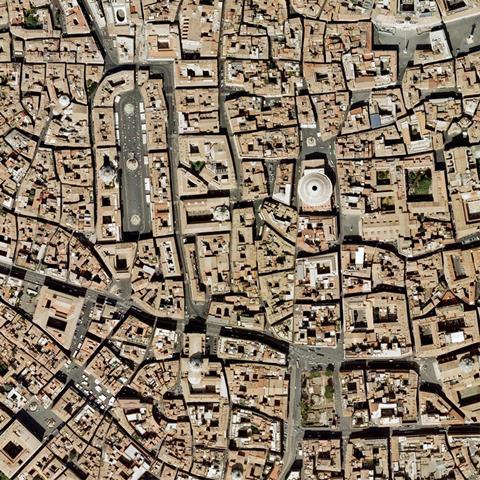
Streets, blocks and plots are the building blocks of the resilient city. Across culture, climate and the centuries, this pattern repeats from ancient Mohenjo-daro to Victorian Manchester and from Barcelona to Beijing. This disparate but parallel evolution is a textbook example of convergent evolution of a successful solution to a practical problem. Street Design’s rich historical chapters illustrate this vividly.
Le Corbusier wrote that ‘the street is altogether disgusting, why therefore do we not destroy it?’ Twentieth century traffic-modernist town planning sought to cure the chaos of the street, impose rationality from on high and decouple the street’s many functions by splitting the city into separate large zones for living, working or relaxing. Instead of a city of walkable Lego streets, they sought a city of large blocks of Duplo. As is now widely recognised, the results have been catastrophic for the wellbeing of our fellow citizens and the weight with which we all tread upon the planet.
Something of the book’s evolving intellectual and professional context is visible in the book’s two forewords. The first, from the 2014 First Edition, is by that wise pariah of modish placemaking, King Charles, then Prince of Wales. The second preface, from the 2026 Second Edition, is by the acme of fashionable planning, Paris’s Carlos Moreno. And yet they agree on almost everything. Traffic-modernism is crumbling.
The breadth of support for street-based city planning shows that the Street has Struck Back. However, the urban design war is not yet won. Street Design is a critical battle guide in the fight for more beautiful buildings, happier neighbourhoods and more prosperous cities.
Postscript
Nicholas Boys Smith is the founder and chairman of Create Streets and a Visiting Professor of Architecture at the University of Strathclyde. He contributed a short essay on the retrofit of Toulouse to Street Design.







No comments yet