





Finalist for Housing Architect of the Year Award 2025, Howells guides us through the specification challenges present at UNCLE Wembley Gardens
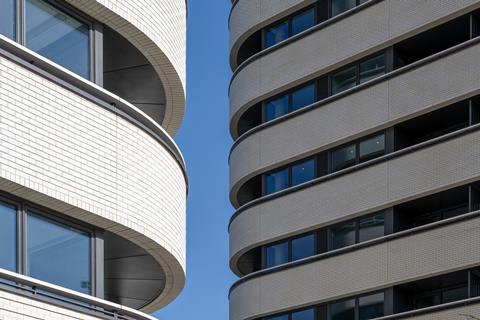
Howells’ body of work was shortlisted for last year’s AYAs, as the practice was named a finalist for two awards, including Housing Architect of the Year.
In this series, we take a look at one of the team’s entry projects and ask the firm’s partner, Dav Bansal, to break down some of the biggest specification challenges that needed to be overcome.
What were the key requirements of the client’s brief? How did you meet these both through design and specification?
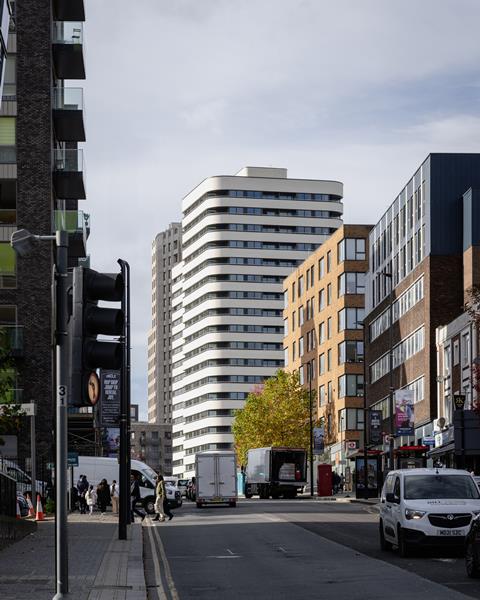
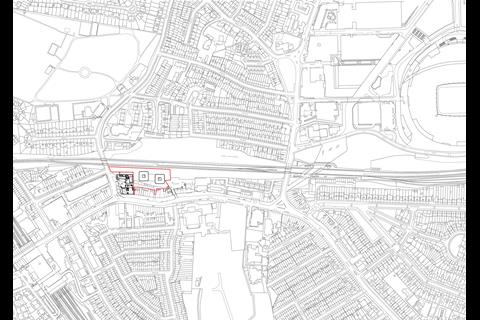
The brief was to unlock new homes on a challenging backland site while creating high-quality rental housing that felt distinctive, resilient and well-connected. The site was once a tipping ground behind the high street – transforming it into a new neighbourhood with homes, gardens and community spaces was central.
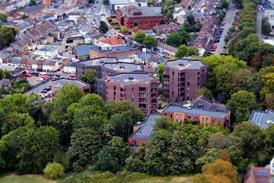
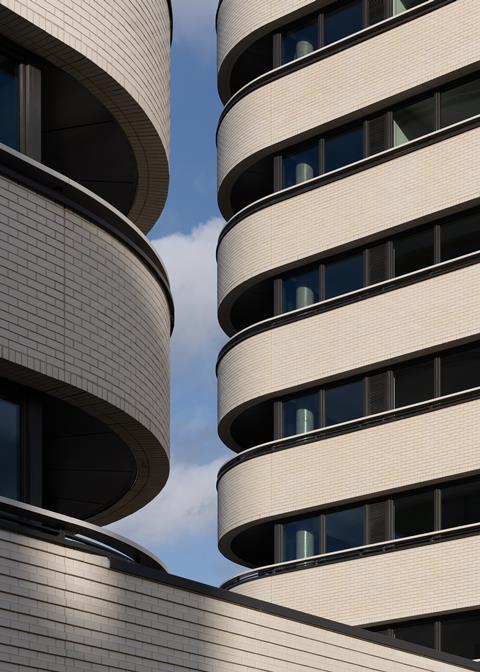
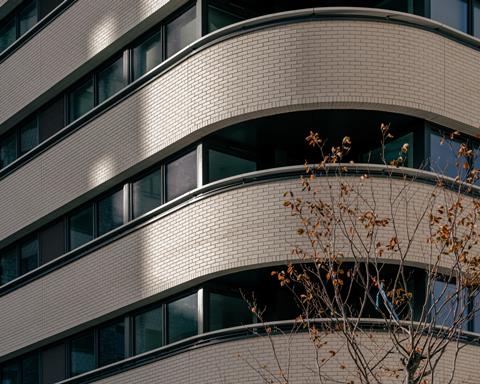
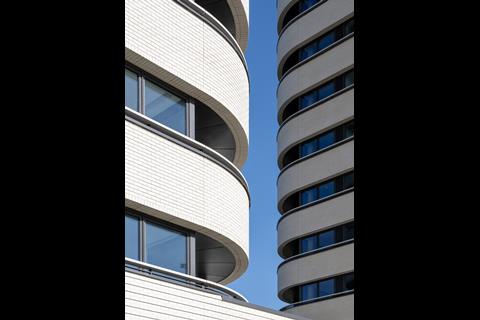
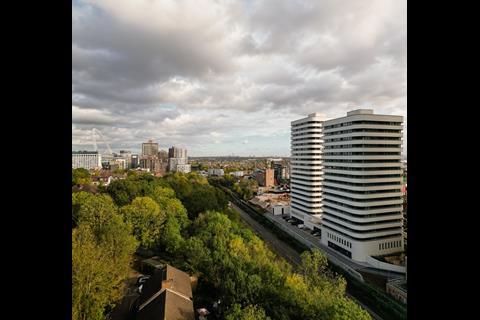
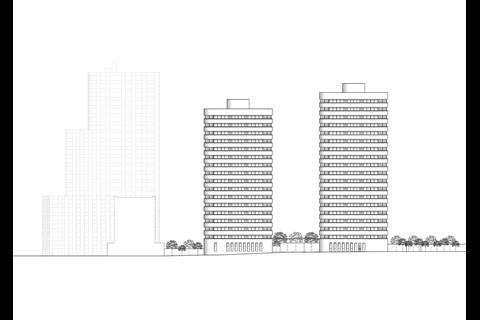
We met this by designing two confident modern-deco buildings that provide a backdrop to the town centre, support the high street economy and make the most of the excellent transport links. Specification choices such as robust warm white brick, recessed balconies and exposed concrete ensured durability and gave each home character.
What were the biggest specification challenges on the project and how were these overcome?
Building so close to the Chiltern railway brought acoustic and vibration challenges, requiring careful specification of facades and glazing to protect resident comfort while keeping apartments light and open.
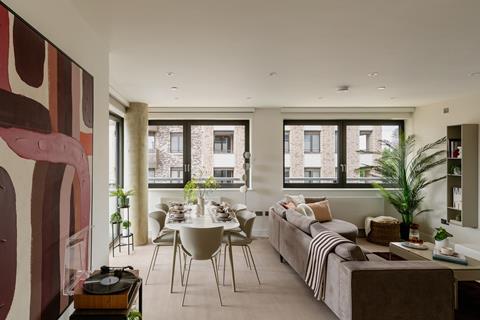
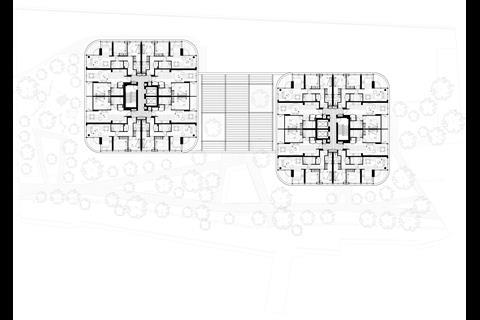
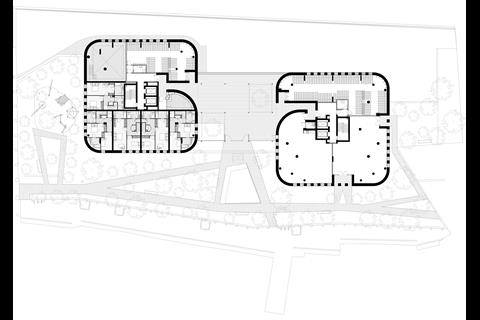
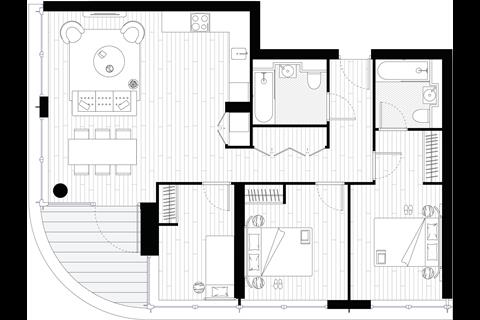
The constrained nature of the backland site also demanded efficiency in both structure and layouts. We overcame this with a square-plan arrangement around a central core, delivering 50% dual-aspect apartments and ensuring generous layouts despite the tight footprint.
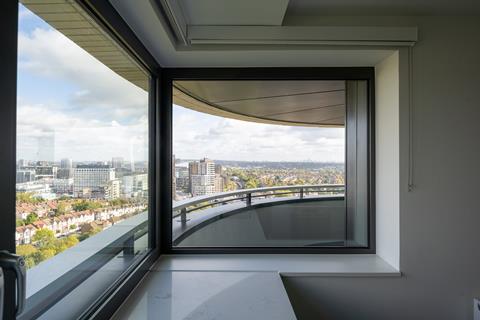
The horizontal banding to the facades allowed for panoramic views outward while the upstands protects inwards views and increases usable wall space. In addition, the east-west orientation of the homes ensure there are no single aspect north-facing homes.
What are the three biggest specification considerations for the project type? How did these specifically apply to your project?
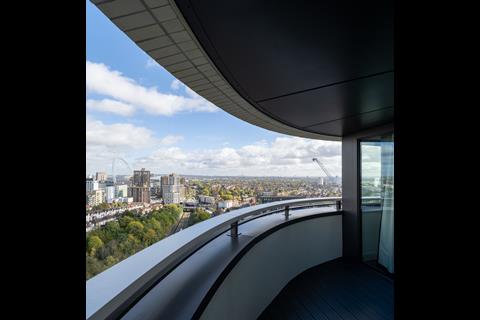
Resident comfort and liveability – more than just amenities. Here, recessed and sheltered balconies extend the living space and create protected outdoor rooms, while half the apartments benefit from dual aspect.
Durability of materials – crucial in BTR schemes. We used robust, low-maintenance brickwork, exposed concrete and metalwork that will age gracefully and reduce lifecycle costs.
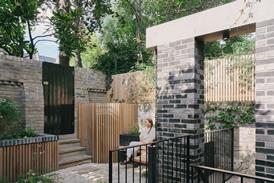
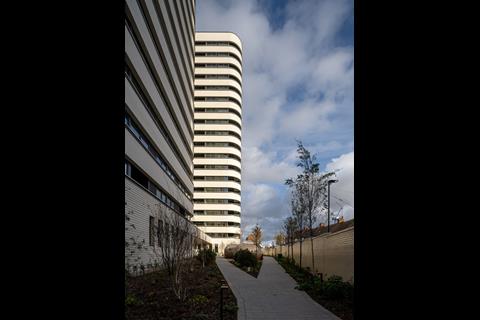
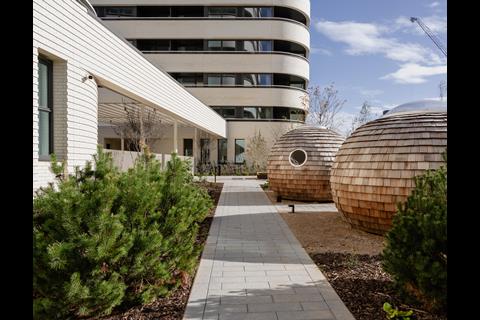
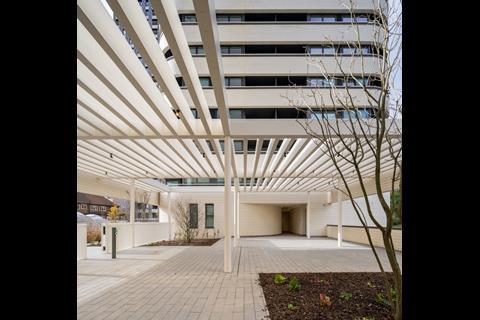
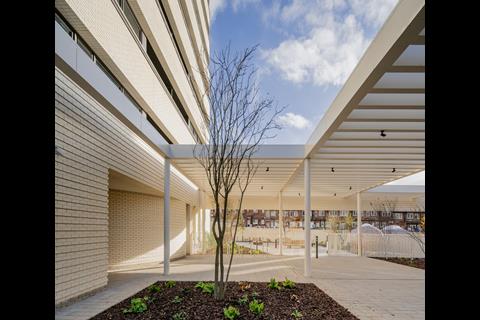
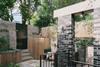
Integration with place – as BTR schemes should give back to the wider neighbourhood. We transformed former wasteland into a welcoming forecourt, communal gardens, play spaces, and timber coworking pods that encourage both resident wellbeing and interaction with the high street.
Do you have a favourite product or material that was specified on the project?
The warm white brickwork with its horizontal banding is a favourite. It ties into Wembley’s art-deco character while creating a strong identity when seen from passing trains. At ground level, the corbelled detailing makes the buildings tactile and inviting.
It embodies both durability and design ambition in one material.
Are there any suppliers you collaborated with on the project that contributed significantly? And what was the most valuable service that they offered?
We worked closely with JJ Rhatigan, Whitby Wood, Max Fordham and UBU Design. Their input was vital in realising such a complex site. UBU’s landscape design was particularly valuable – turning what was once a neglected backland plot into a green heart for the development, with gardens, play areas and work pods that foster community.
That transformation was only possible through genuine collaboration across the team.
What did you think was the biggest success on the project?
The biggest success was transforming a piece of underused wasteland into a thriving new part of Wembley. We’ve delivered hundreds of well-connected homes, supported the local high street and created communal spaces – from sheltered balconies and rooftop terraces to a secret walled garden – that bring residents together.
The scheme balances bold architectural identity with liveability, making a positive contribution both to its neighbourhood and to the wider housing need.
Project details
Architect Howells
Client HUB
Main contractor JJR
Structural engineer Whitby Wood
Sustainability consultant / services engineer Max Fordham
Quantity surveyor Circle Development
Build-to-rent operator UNCLE
Location Wembley, London
Size 0.63 ha
Status Completed 2024
Homes 256 build-to-rent homes
Our “What made this project” series highlights the outstanding work of our Architect of the Year finalists. To keep up-to-date with all the latest from the Architect of the Year Awards visit here.





No comments yet