






Finalist for Higher Education Architect of the Year Award 2025, Sheppard Robson guides us through the specification challenges present at the School of Science, Engineering + Environment (SEE) Building, University of Salford
Sheppard Robson’s body of work has been shortlisted for this year’s AYAs, as the practice was named a finalist for Higher Education Architect of the Year.
In this series, we take a look at one of the team’s entry projects and ask the firm’s associate partner, Matthew Taylor, to break down some of the biggest specification challenges that needed to be overcome.
What were the key requirements of the client’s brief? How did you meet these both through design and specification?
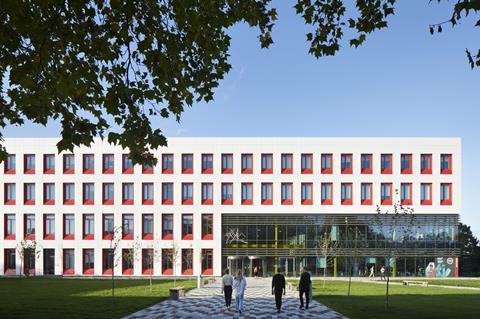
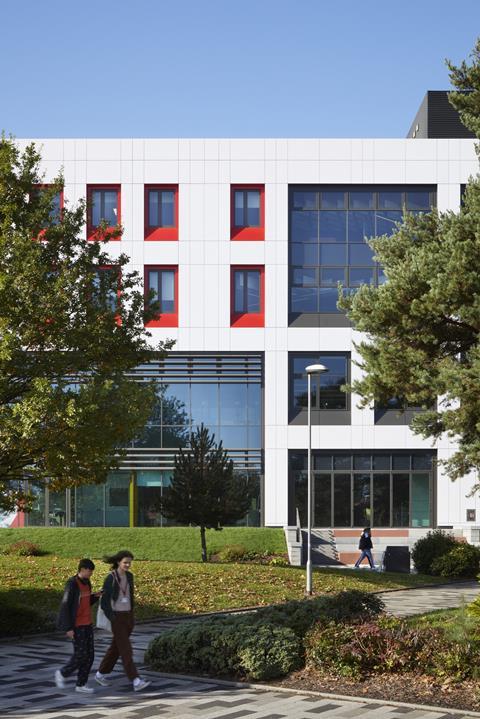
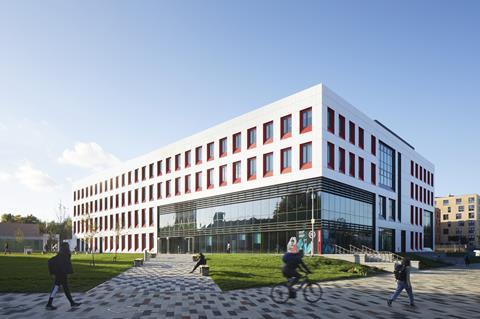
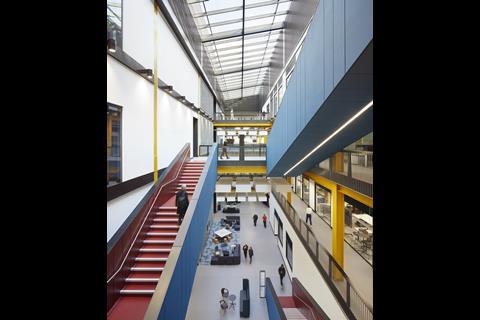
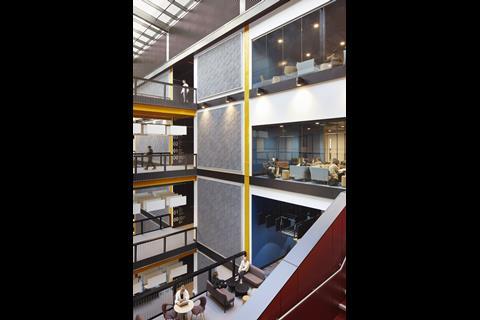
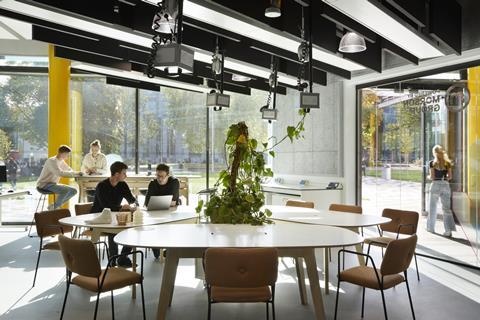
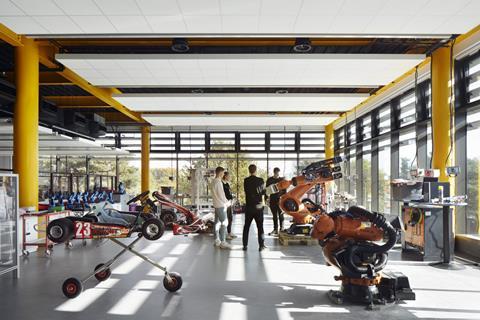
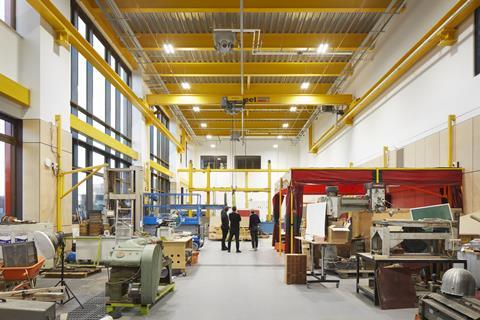
Client priorities were to unify the school (with no single directorate dominant), deliver long-term adaptability and prioritise sustainability. The design responds with a cohesive massing and a unified facade that fosters cross discipline interaction. Internally, daylight and visual connection are prioritised – all teaching and support spaces receive natural light and clear signage – to democratise circulation and encourage incidental encounters.
A central atrium and distributed learning hubs create a campus wide focal point. Flexibility is embedded through column free wings and open floorplates, enabling future reconfiguration. Sustainability was integrated from concept: an all electric strategy, mixed mode ventilation with openable windows and heat recovery, and use of the atrium to simplify airflow (reducing return ductwork) collectively improve energy performance.
What were the biggest specification challenges on the project and how were these overcome?
The primary challenge was delivering high‑quality, multifunctional spaces within budget. We addressed this through intensive stakeholder engagement and a collaborative supply‑chain approach. Early contractor involvement and regular value‑engineering workshops focused on durable, cost‑effective assemblies and avoided late-stage redesign, preserving design intent while controlling costs.
What are the three biggest specification considerations for the project type? How did these specifically apply to your project?
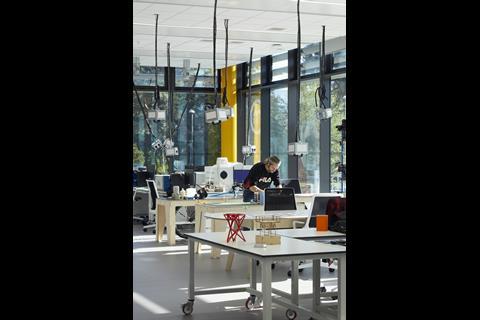
Accessibility and integration of technology: Ensuring spaces are inclusive and meet the standards outlined in the Equality Act while providing equivalent alternatives. Equally considering the future interdisciplinary use and learning dictated robust, coordinated MEP routing and adaptable laboratory services so that mechanical, electrical and plumbing systems can be reconfigured without intrusive works. This integrated approach ensured accessibility, flexibility and building services worked cohesively to support evolving pedagogies and research demands.
Sustainability: A fabric first strategy, supported by detailed energy modelling, allowed the building to exceed regulatory targets.
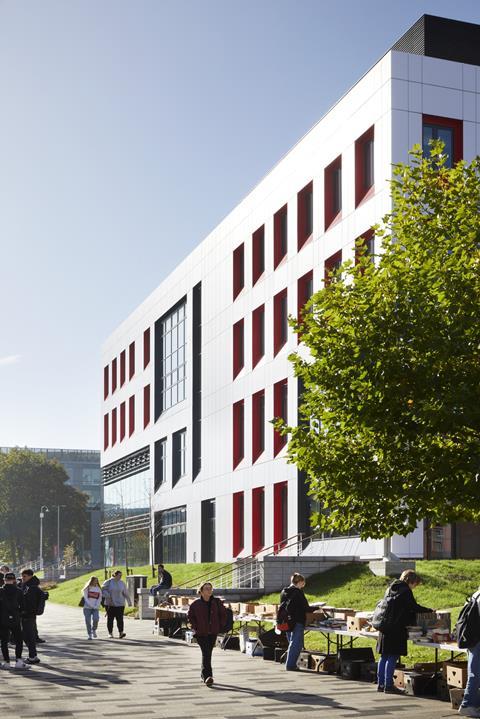
Architectural quality: We created a strong sense of place through thoughtful detailing and contextual design. The façade and interior spaces reflect the surrounding architecture and internal engineering functions, ensuring the building complements its context and use.
Do you have a favourite product or material that was specified on the project?
A favourite is the bespoke atrium balustrade developed with a specialist metalworker. The detailing reinforces the building’s engineering character, provides a distinctive spatial identity and demonstrates how careful detailing can be delivered within budget.
Are there any suppliers you collaborated with on the project that contributed significantly? And what was the most valuable service that they offered?
A+B Engineering (MEP delivery lead) made a decisive contribution. Early, integrated engagement enabled project specific solutions – such as high level, wall mounted radiant panels placed between windows – which supported a full, flexible floorplate while meeting heating and decarbonisation targets.
Their collaborative input refined system layouts and minimised intrusive services, directly supporting adaptability and architectural intent.
What did you think was the biggest success on the project?
Delivering an all electric, highly sustainable building that remains flexible for future academic change. The project demonstrates how technical performance and architectural quality can coexist: a durable, adaptable teaching and research hub that fosters collaboration across disciplines.
Project details
Architect Sheppard Robson
Client University of Salford
Main contractor Morgan Sindall
Structural engineer Arup
MEP designer Arup
MEP contractor A+B Engineer
Facade subcontractor Metclad
Laboratory furniture supply S+B
Our “What made this project” series highlights the outstanding work of our Architect of the Year finalists. To keep up-to-date with all the latest from the Architect of the Year Awards visit here.




No comments yet