






As NATO contemplates boosting defence spendng, CF Møller Architects’ barracks on the Baltic island of Gotland offers a possible model for a military architecture for the 21st century
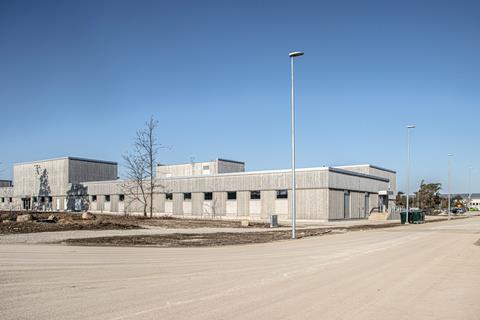
CF Møller Architects has designed new barracks for the Swedish army on the country’s strategically significant island of Gotland in the middle of the Baltic Sea.
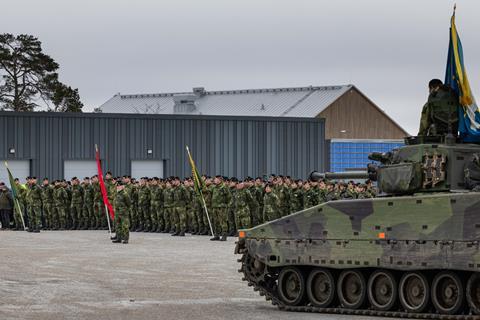
The barracks is home to the Gotland regiment, a recently revived armoured unit based on the island. The historic regiment was disbanded in 2005 as Sweden cut back military spending after the end of the Cold War. But it was reestablished in 2016 in response to rising tensions in the region after Russia’s annexation of the Crimea. As a result, new barracks were needed with the design chosen through a competition organised by the Swedish Fortifications Agency.
The utilitarian architecture is designed to support the troops’ day-to-day work, but it is also intended to allow the buildings to sit easily in their natural surroundings. The theme of the design competition was Camouflage, and the facilities echo the colours and materials of the austere landscape in which they are sited, where open alvar land (bare limestone grassland) meets sparse pine forest.
The complex includes barracks, vehicle and machinery sheds, training areas, a shooting range, offices, and fitness and social facilities. Layout is based on military logistics with an area for vehicles and machinery in the south, barracks in the north, and shooting range beyond. A new phase of the project is under construction that includes dormitories, classrooms, changing rooms and rec areas.
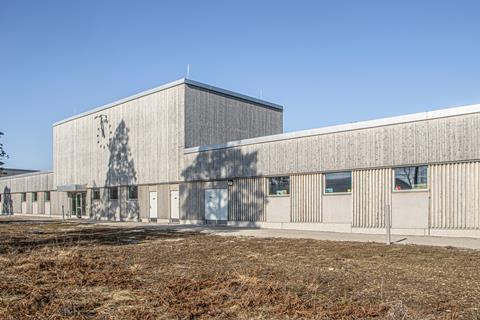
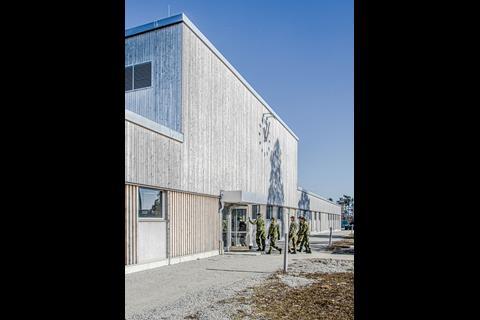
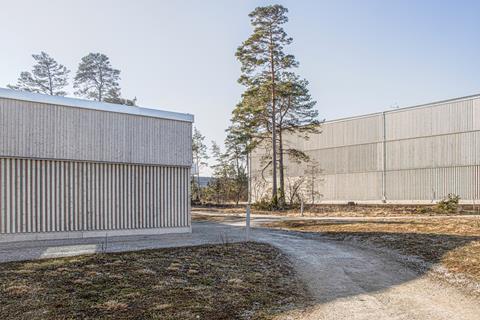
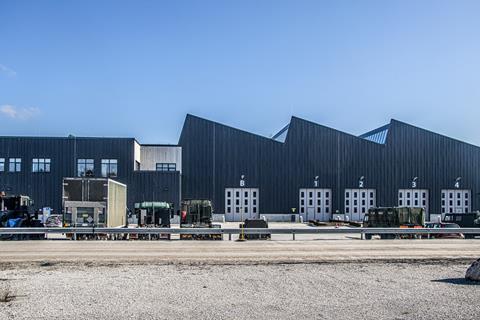
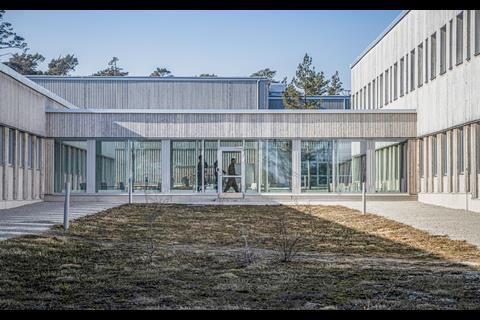
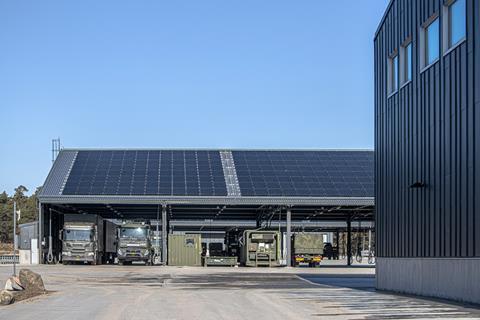
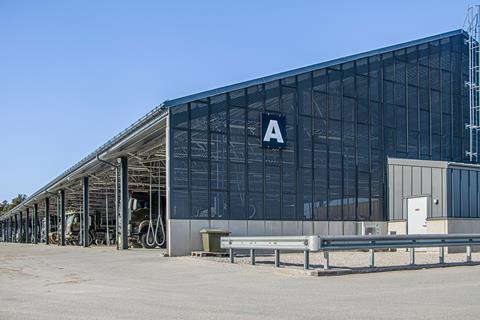
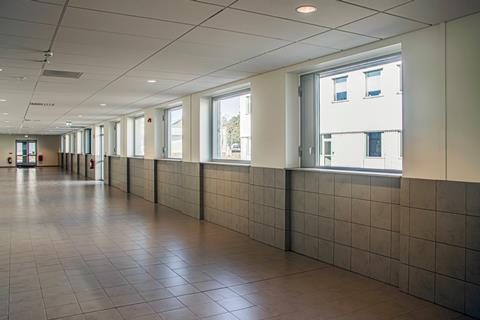
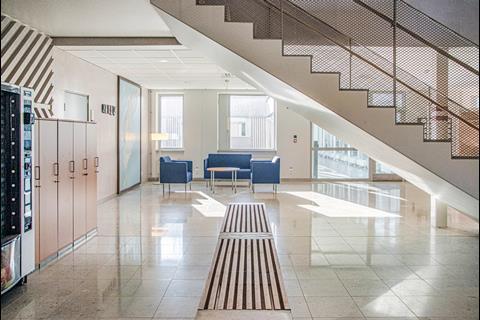
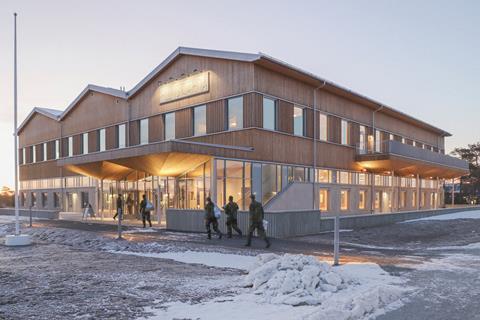
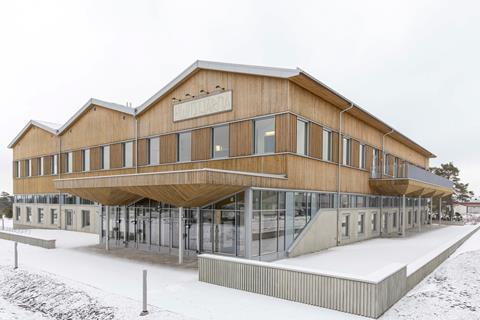
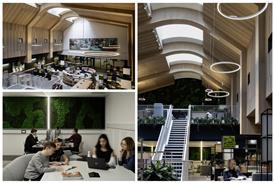
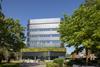
The technical buildings have standing-seam metal-clad facades, while light pigmented concrete is used for the high-security structures. The buildings that the soldiers occupy have timber facades treated with heat and linseed oil which are intended to weather naturally to give a more humane character to the base – and echo the pines in the compound. The complex is designed to feel embedded in the landscape and not to look obviously like a military base. The designers’ touchstones were light and close contact with nature – to support employee wellbeing – as well as adaptability.
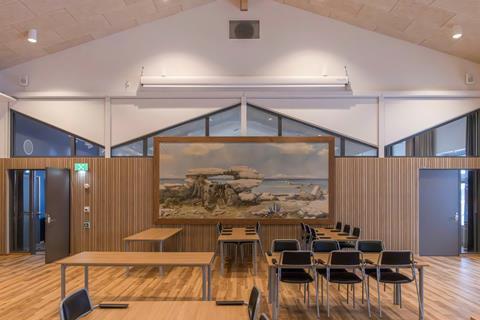
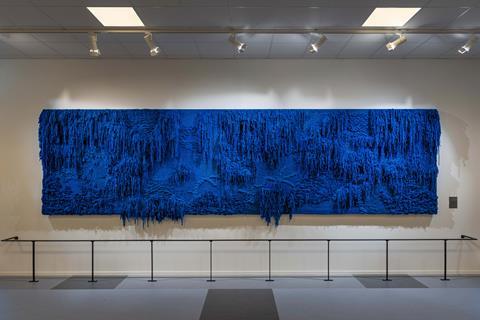
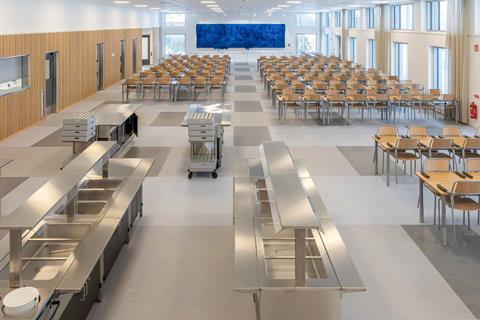
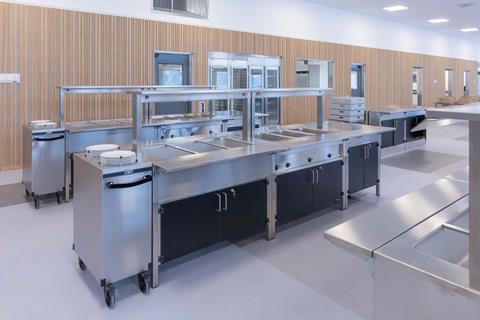
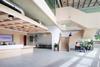
The regimental dining hall features a canteen, mess and reception areas and can accommodate 700 people across three sittings. A striking site-specific textile artwork, The Blue Hour by Katja Beckman Ojala, evokes Gotland’s coastal landscape, including its famous sea stacks.
Military architecture is a genre that has barely been required for decades, but with wars in Europe and the Middle East, and NATO countries under pressure to increase defence spending, it is a sector that looks set to be revived in coming decades. The Gotland barracks offers a first, Scandianavian vision of what the built infrastructure aspect of this new investment might look like.
Project details
Architect CF Møller Architects
Client Fortifikationsverket, Sweden
Contractor PEAB & Skanska
Engineer Ramboll
Size 43,500m²
Year 2016-2026

No comments yet