








The new theatre at the Queensland Performing Arts Centre is all about its dramatic high-performance folded glass facade
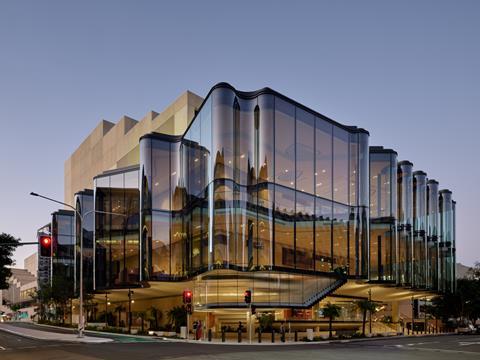
The Glasshouse Theatre in Brisbane, an extension to Robin Gibson’s Brutalist Queensland Performing Arts Centre, is defined by its dramatic rippling glass frontage. Although it looks like it could be the ultimate (house) curtain wall, it was in fact inspired by a poem by Aboriginal elder and artist Lilla Watson that talks about ripples in the Brisbane River and fish swimming below the surface.
Australian firm Blight Rayner Architecture and Snøhetta won the international design competition for the project in May 2019. The brief allowed for the building to cantilever 6m out on the two street frontages as a means to fit the required space onto the site. The designers decided to create a transparent edge to the cantilever to minimise its visual impact. “We thought to make the transparent facade a setting for a kind of public theatre where people in the foyers would be seen variously clear and blurred from the street. And we wanted to embed the beginnings of First Nations narratives related to the context into the design,” explains Michael Rayner, director at Blight Rayner.
His fellow director Jayson Blight adds, “We have tried through the design to maximise engagement between the public life of the city and the performing arts, and make the arts feel more accessible.”
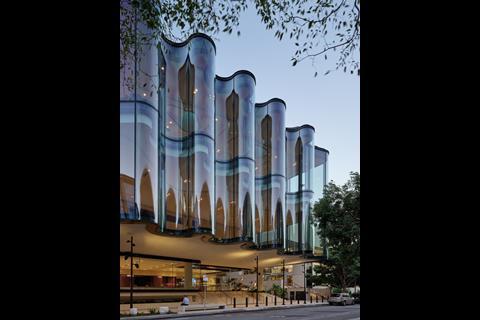
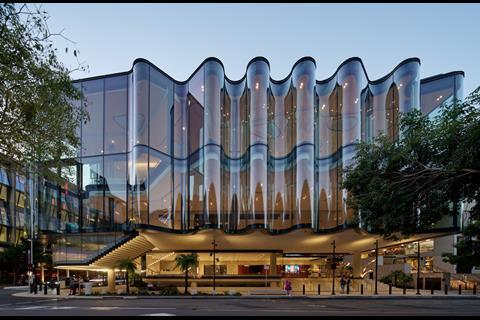
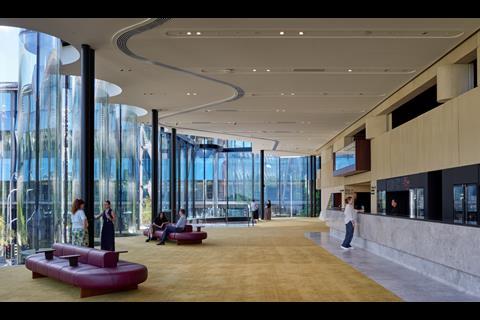
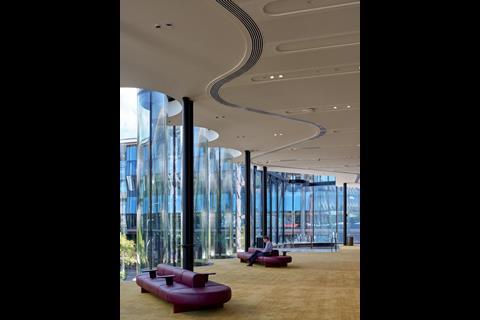
The glass facade is made of two tiers of 7m high panels, with a total height of 14.28m. Each panel is unique, manufactured by Austrian specialists Seele, also responsible for a host of other innovative facades at builds such as the Henderson in Hong Kong and Moynihan train hall in New York, the wraparound screen for the Globe entertainment complex in Las Vegas, and several distinctive Apple stores. The wavy glass walls are fabricated in four layers with an air gap. Facets that receive direct sunlight are embedded with a black ceramic inlay that acts as an integrated louvre.
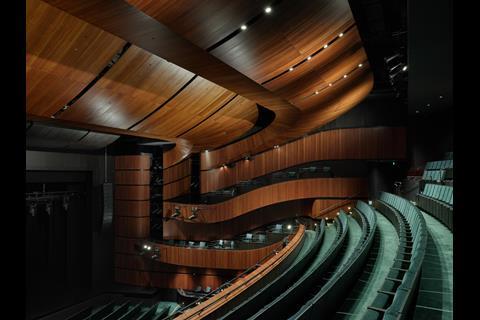
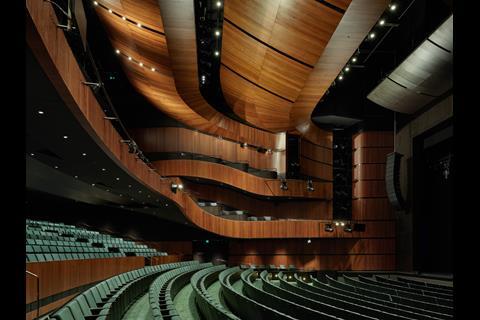
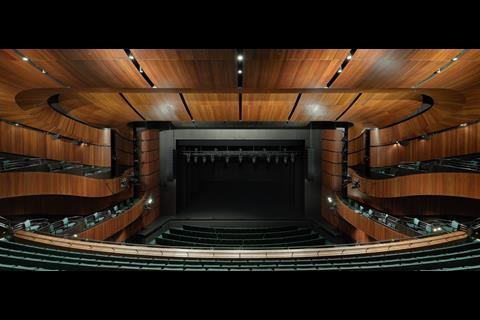
Inside the 1,500-seat auditorium is deliberately designed as a contrast to the light foyers with their glass walls. The dark interior is finished with grey ironbark walls and deep green carpet. There are 1000 seats in the stalls and 500 at balcony level. The automated fly system comprises 107 hoists and 29km of steel wire controlling theatre scenery, lighting rails, battens and curtains, and moving bars up and down at up to 1.8m per second. The orchestra pit has three floor sections that can be raised or lowered independently.
Postscript
All photos by: Christopher Frederick Jones


No comments yet