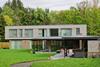






Nissen Richards Studio’s Hartdene Barns is a collection of distinctive contemporary homes designed to meet RIBA’s Climate Challenge 2030. It retains the spirit of the working farm that formerly occupied the site – while delivering sustainable luxury living
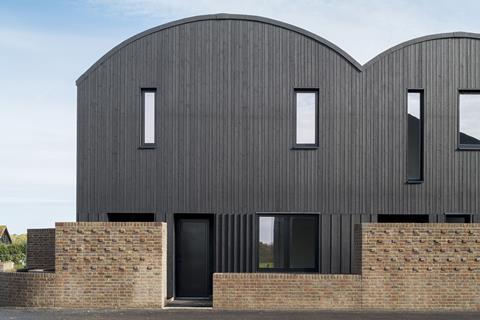
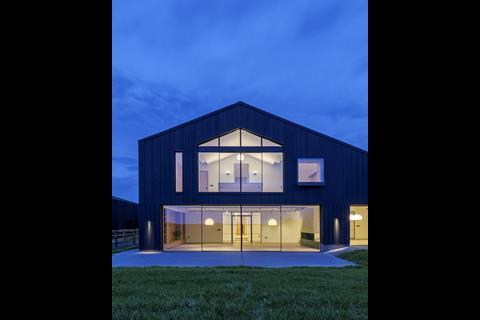
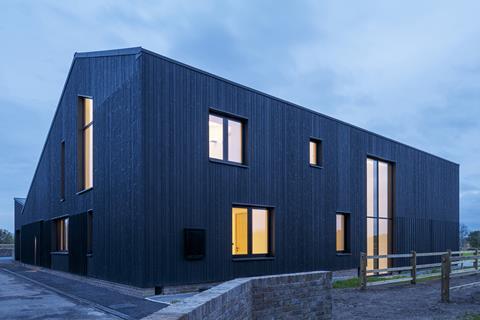
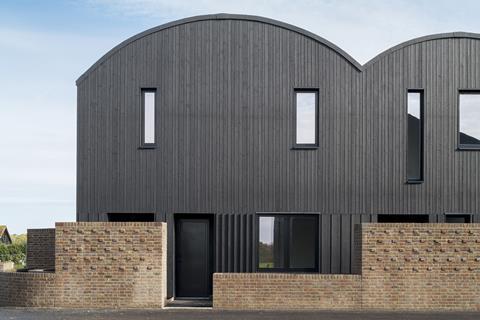
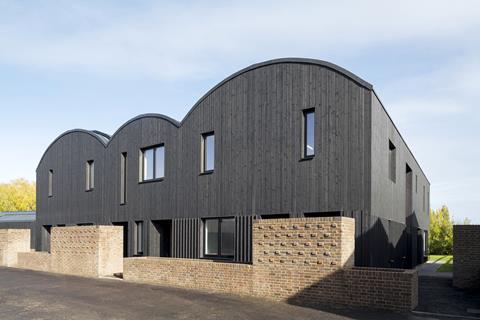
The rural residential development on the border of Kent and East Sussex comprises nine homes clad in stark, dark charred larch, with silhouettes and plan echoing the eclectic accretion of farm buildings they have replaced. The Barns sit within 37 acres in the High Weald Area of Outstanding Natural Beauty within the green belt, close to the villages of Hartfield and Cowden. The Barns range from three to six bedrooms, and the largest is 6,500ft2. Each has a private garden and separate “allotment” on site.
Dairy farm site
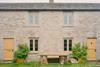
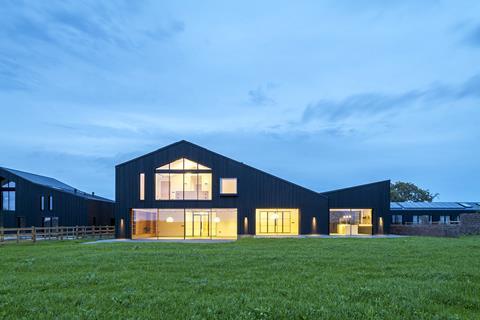
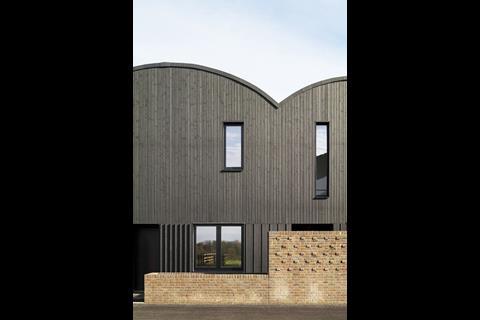
The development is on the site of a former dairy farm that had been in the same family for several generations until the death of the last 93-year-old farmer in 2017. Understandably, over the last years of his tenure, the farm had fallen into a state of disrepair, ending up as a series of dilapidated agricultural buildings and lean-tos. The least of these were demolished as part of the new vision – enabling the opening up of a central courtyard and creating views out towards the rolling landscape beyond – but the shape of the new dwellings was dictated by the shape of the main agricultural structures.
When the developers purchased the site, planning permission was already in place for a scheme created by another practice. The key stipulation was that the new dwellings should retain most of the structural frames of the existing farm buildings, so the houses would echo their forms – and, satisfyingly, this means some of the new homes have the distinctive curved roofs of the Dutch barns that once occupied the space. Nissen Richards Studio kept to the proposed building footprints but created new internal layouts, maxed the insulation and radically altered the homes’ external appearance to feature the charred timber and dark bricks.
Imaculate detailing
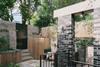
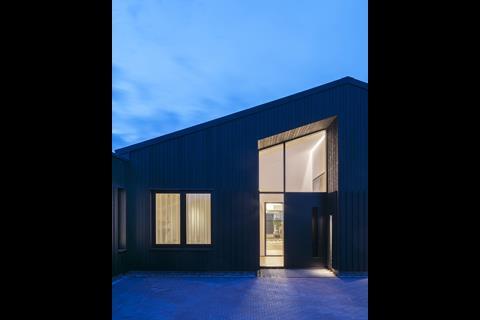
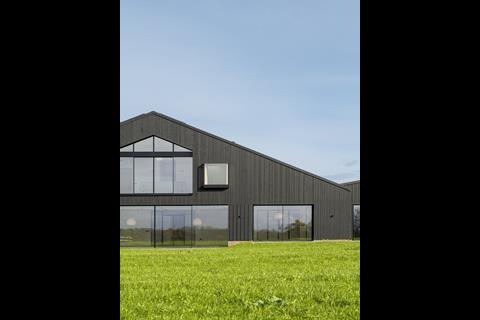
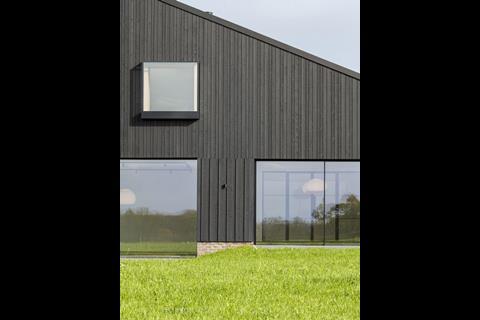
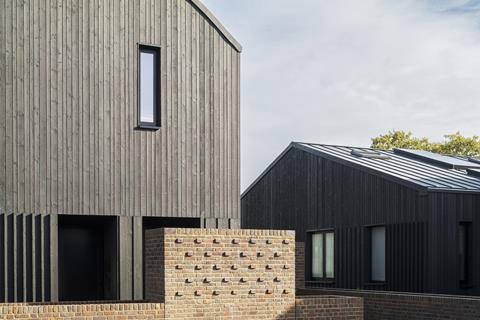
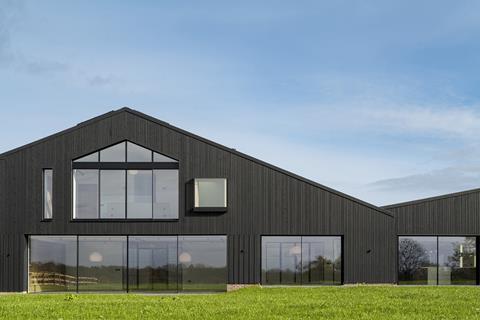
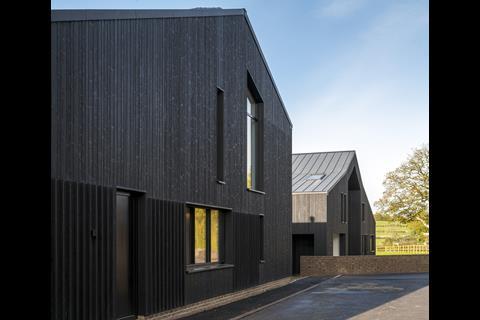
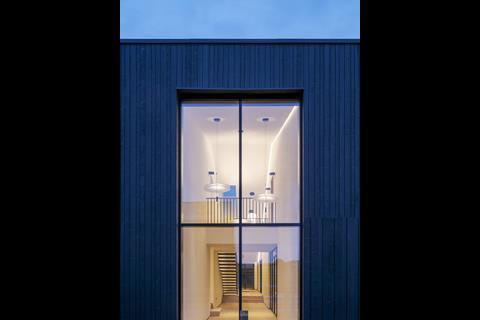
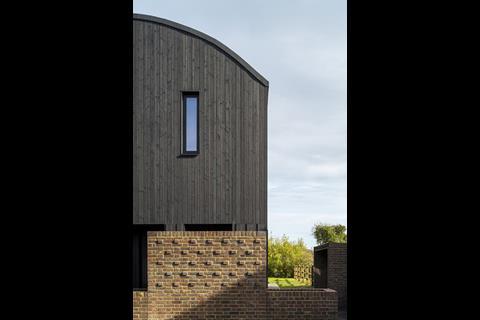
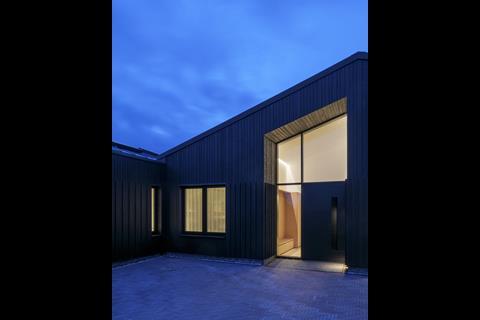
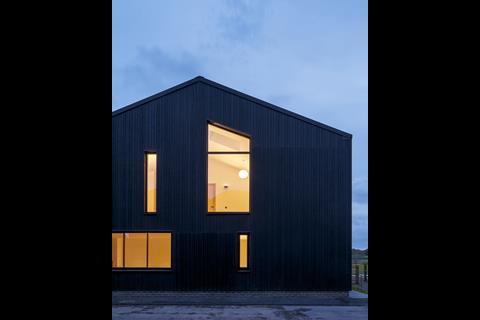
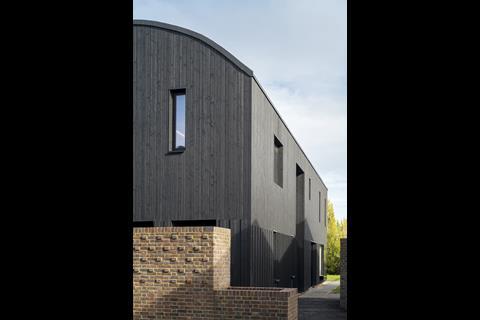
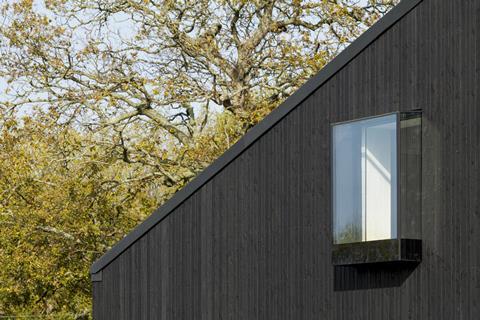
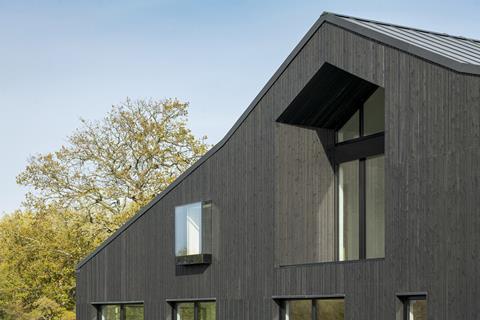
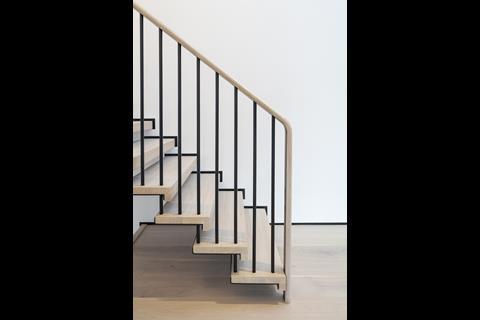
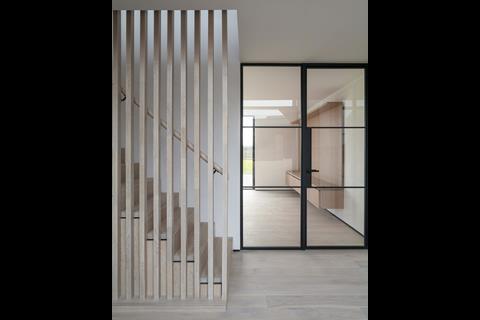
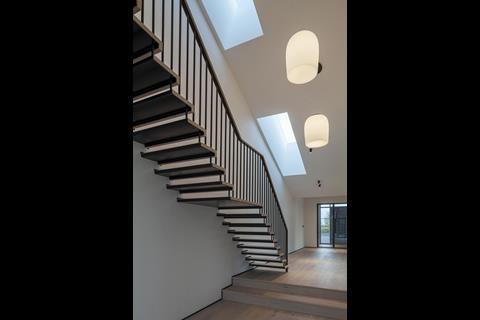
The design successfully partners the agricultural aesthetic of the original barns with a contemporary sensibility. Exteriors feature black standing seam zinc roofing, black spruce charred cladding, charred timber board, black aluminium powder-coated window and door frames and Michelmersh Selected Dark brickwork.
Different patterns in the cladding timber and brickwork are used across the site to highlight entrances and feature areas. These variations adds tactility and break up the large elevations, with the families of patterns creating a unique design for each dwelling while unifying the whole scheme.
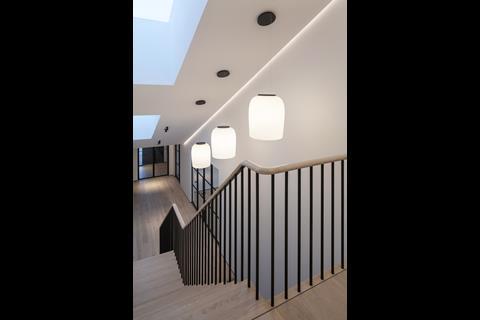
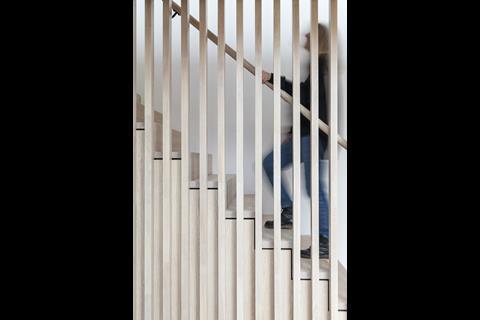
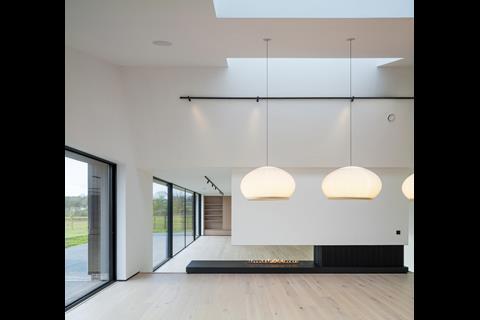
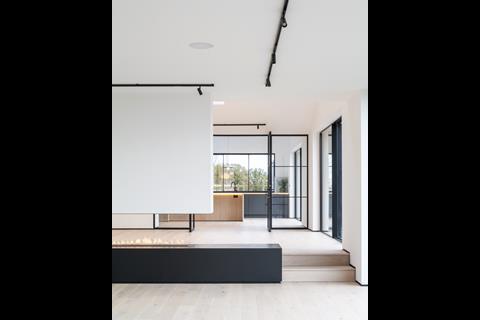
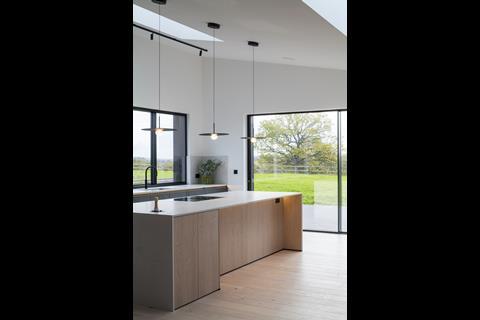
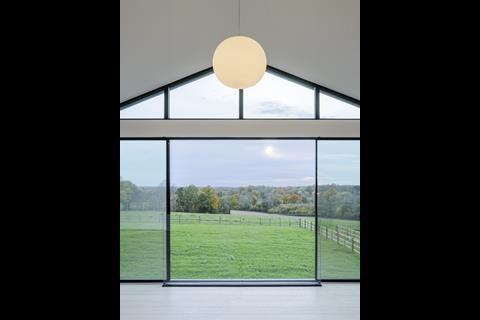
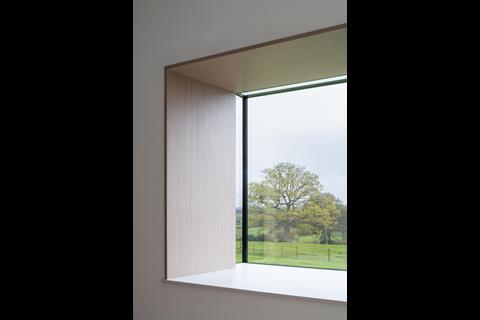
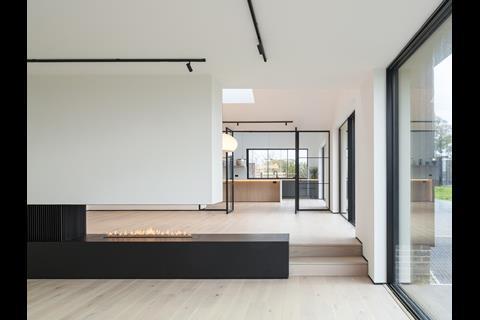
Large glazing is used wherever there are large views over the Weald, smaller windows where the view is towards common areas. In contrast to the dark exteriors, interiors are light and bright, filled with natural tones.
Sustainable choices
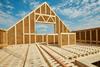
The houses are constructed from structural insulated panels with a mixture of glulam and steel beams, plus low-carbon concrete. Floor structures feature metal web joists, which use less timber to achieve the required joist strength and loading capability, while old concrete slabs and pathways were crushed for hardcore. There are air-source heat pumps, photovoltaic panels, extensive insulation, MVHR systems and electric car charging points as well as bioethanol fireplaces.
“Meeting the potable water use targets was definitely more challenging than anticipated,” Jim Richards, director of Nissen Richards Studio, explains. “While we met the Climate Challenge 2025 target of 105l through careful specification of appliances and fittings, we found the 2030 target of 75l was only achievable with rainwater harvesting and site-wide water recycling. Future projects will need to incorporate these strategies to reduce potable-water consumption.”
He continues, “This project proves you can push the boundaries of sustainability and still create homes that are luxurious. The forms and silhouettes of the old Dutch barns, the dairy, the hay barn, cottage and so on give a sense of place and create a reminder of this place’s past, but the modern incarnation is very much about providing high-spec, luxury eco homes.”
Project details
Procurement route Management contracting
Architect Nissen Richards Studio
Client Q New Homes
Main contractor Q New Homes
Structural engineer Jonathan Darnell Engineering
M&E consultant Integration
QS Q New Homes
Civil engineer Bellamy Wallace Partnership
SIP Structures SIPs Eco with Paramount Structures
Ecologist Corylus Ecology
Landscape consultant Sion Thaysen
Acoustic consultant Sharps Redmore
Whole-life carbon consultant Darren Evans
Energy consultant Doherty Energy
CDM principal designer ORSA
Approved building inspector Stroma Building Control
CAD software used Vectorworks
On-site energy generation 132% (predicted average)
Annual mains water consumption 92.5 litres/person/day (average)
Heating and hot-water load 11.22 kWh/m2/yr (predicted average)
Operational energy 58.34 kWh/m2/yr (predicted average)
Total energy load 58.34 kWh/m2/yr (predicted average)
Airtightness at 50Pa 3 m3/h.m2 (target)
Overall area-weighted U-value 0.18 W/m2K (average)
Predicted design life 60 years (minimum)
Embodied carbon 603 kgCO2eq/m2
Whole-life carbon 824 kgCO2eq/m2
Annual CO2 emissions -5.57kgCO2eq/m2 (predicted average)
Energy performance certificate rating 108 A (average)
Postscript
Photos: Gareth Gardner