




The government’s new equity loan scheme has been welcomed in principle - but price caps set too low for many local markets, a slow launch timeline and limited overall funding are stoking frustration. Joey Gardiner reports on who stands to gain, and who is being left out
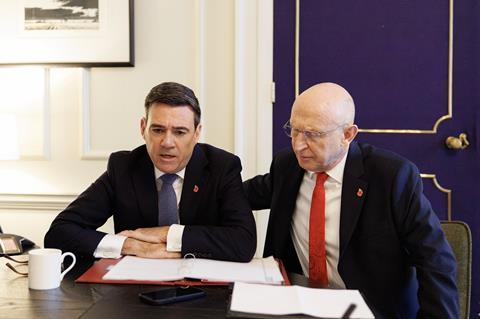
Sheetal Smith, sales and marketing director at New Forest-based housebuilder Pennyfarthing Homes, was waiting with some anticipation for the launch of the Your First Homes scheme after the idea was trailed by prime minister Andy Burnham at the Labour Party Conference.
Your First Home (YFH) is Burnham’s reboot of Help to Buy, offering first-time buyers an interest-free equity loan on qualifying new build homes – something for which the industry has been campaigning for years.
Pennyfarthing, which targets sales of 200 private and affordable homes a year, has been an enthusiastic user of previous incentive schemes, such as Starter Homes and First Homes, aimed at first time buyers.
But when the government belatedly announced the local authority maximum prices for homes to qualify for the programme, Smith realised Pennyfarthing will struggle to offer anything without losing money. “My initial thoughts were great - we need that kind of scheme,” she says. “And then when the price caps were announced, to say that I’m disappointed is an understatement.”
Smith is not the only person in the housebuilding industry to be disappointed by the shape and scope of the Your First Home scheme, which initially caused housebuilder shares to spike 13% when Burnham first trailed it. But at the Budget last month chancellor John Healey allocated just £4.7bn to it over five years, and set a series of conditions for usage which appear designed to limit uptake. The Budget watchdog, the Office for Budget Responsibility (OBR) branded the scheme as likely to have only a “marginal impact on housing supply given its limited overall size.”
But nevertheless, there are builders who spy a clear opportunity to benefit, and are optimistic about its longer-term impact. So, what are the problems that are worrying so many in the sector, can they be overcome, and who is set to benefit most?
Small beer
Housebuilding share prices fell an average of 7% on the Budget announcement of the details of the YFH scheme, given its scale. The government said the £4.7bn allocated is likely to support the purchase of 70,000 homes, of which around 20,000 will be additional to those planned by the industry anyway.
This puts the programme on a totally different – and much more modest – scale to the first Help to Buy programme, which delivered, over 10 years, 387,000 home purchases at a cost of £24.7bn – around three times the rate. Over that time the rate of housebuilding near doubled.
“My initial thoughts were great - we need that kind of scheme,” she says. “And then when the price caps were announced, to say that I’m disappointed is an understatement”
Sheetal Smith, sales and marketing director, Pennyfarthing Homes
Clearly, a 20,000 bump in housebuilding numbers is pretty small beer next to a target to deliver 1.5 million homes across the Parliament. Particularly at a Budget where the increase is swamped by the fact the OBR has downgraded its forecast for delivery across the parliament by 150,000 homes (to just 1.14 million from 2025/26 to 2029/30).
But despite its modest scale, many housebuilders remain positive and hopeful about the product, feeling that in a market seemingly assailed on all sides, this at least provides the hope of some stimulus. For example, a trading update by MG Gleeson last week said that “YFH has significant potential to assist Gleeson’s target demographic of first-time buyers looking to buy a new home at an affordable price.”
Philip Barnes, the former land and planning director of Barratt Redrow, now a director at Savills, says, similarly, that the scheme will provide a “significant boost” to developers by creating more confidence on future sales rates. “Housebuilders will likely start increasing their land buying activity in 2027 and we will see additional sales and completions that otherwise wouldn’t have happened,” he says.
Likewise, a senior figure at a listed housebuilder says: “We’re very positive about it. This will incentivise 2-3 bed home sales. It will take time, but this is meaningful.”
Your First Home: How does it work?
Your First Home is an equity loan scheme, which works by lending the purchaser 20% of the cost of a qualifying new build house to act as a deposit, interest free for five years. When the house is sold, any gains or losses in value of the equity loan are taken by the government on its stake.
Developers pay a sliding fee to participate in the scheme, and buyers must meet maximum salary tests, and homes sold must be priced within local authority price caps.
Buyer deposit: Minimum 2.5% of purchase price
Government equity loan: 20% of purchase price, interest free for five years
Buyer salary threshold: Up to £110k a year household income (£140k inside London)
House price caps: Homes qualify at a price of up to £650k in inner London, £500k in outer London, and according to local authority individual cap elsewhere
Developer fee: Up to 1% of purchase price on first 100 homes sold a year, 3% on the next 150, 4% on any above 250 homes
First property sales: April 2027
Price problem
There are a few significant issues, however, interrupting this positivity. The first, as indicated by Pennyfarthing’s Smith, is that of the price caps imposed by the housing ministry. These individual authority-by-authority caps are designed to ensure the funding is targeted at “access to modest homes”, according to a government explainer. The government has come up with the figures by using data from UK Finance on the median price paid by first-time buyers for new build homes in each local authority area, with an additional 10% added above this to account for inflation, and rounded up to the nearest £5,000.
The concern, however, from many is that these caps will actually be too low for many builders to be able to find any products that they can offer. Research by property website Zoopla, based on the price prospective buyers said that they would pay for new build homes in searches, found that the likely level of the caps would be below the cost of most new homes. Zoopla estimated it would rule out 63% of them.
This means, according to Richard Donnell, executive director of research at Zoopla, only smaller homes in most areas will be fundable under the programme: one-bed flats will certainly make the cut, two-bed flats and homes, likewise, in many but not all areas. But three-bed homes will be much more difficult.
“In some areas the price caps mean that they [first-time buyers] will only be able to use YFH on a one- or two-bed property or perhaps a flat instead of a house”
Philip Barnes, director of Savills
While in broad terms Savills’ Barnes believes that the caps are set at a level that will be attractive to first time buyers, the reality of what can be delivered may disappoint. “First time buyers increasingly want to buy three-bed houses, particularly since the rise in working from home,” he says. “In some areas the price caps mean that they will only be able to use YFH on a one- or two-bed property or perhaps a flat instead of a house.”
Of course, demand for flats has been weak for some time, and just because government is funding a deposit, it might not necessarily persuade buyers to take on an apartment. “First time buyers don’t want to compromise, and so if the development meets their requirements, they will do it,” Donnell says. “But they will be conscious of all the other charges that come with apartments.”
Broadly the caps should be a reflection of market strength – the stronger the market, the higher the cap.
But the Home Builders Federation (HBF) has complained to government that the methodology behind the caps – based on five years of new build sales to first time buyers in local authority areas – runs the risk of very thin datasets in some areas, and thus anomalies making it unusable in certain areas. Why, for example, does wealthy Bristol have a lower price cap, at £325k, than Bury, at £340k?
Likewise, Pennyfarthing’s Smith is mystified as to why the price cap in the New Forest, at £330k, is between £50-100k less than the cap at nearby rural authorities including Havant, Eastleigh, East Hampshire and Fareham – all of which have caps which would allow Pennyfarthing to press ahead with YFH projects. “I don’t think the government has really looked at the data,” she says. “I’m lacking a product that we can offer, and it’s just bitterly disappointing.”
“I can’t change the cost of land. I can’t ignore build costs, and I certainly can’t magic up three-bedroom homes at prices that simply don’t reflect the local market,” she says. “A cap of £400k–£450k would have given us a genuine opportunity to help more local families. But £330k? What am I supposed to do with that?”
The chart below shows the price cap in each local authority area.
Developer response
But can’t developers simply drop the price of their homes in order to fit under the cap, or re-plan their schemes to ensure they build more two-bed properties? The difficulty is that dropping the price of their homes simply wipes out profit on projects, in a market where viability is already a massive concern in the sector.
The government is charging a fee to participate in the scheme – from which the Budget document reveals it expects to recoup around £95m a year – which already reduces the margin for participating builders by an average, the government says, of 3.1%.
Zoopla’s Donnell says builders will have to drop prices by an average of between £13k and £23k to fit under the cap, something that will be viable “only where faster sales, lower incentives or lower marketing costs offset the cost.”
Pennyfarthing’s Smith says simply reducing the price of her existing three bed homes she is selling would see her lose £60k per sale, something that would quickly add up across the development.
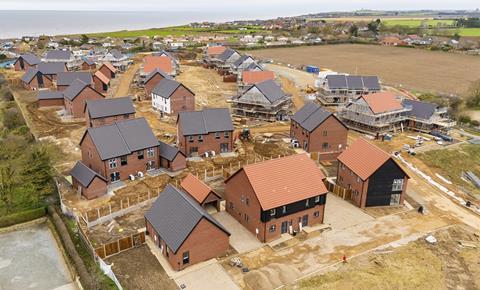
However, some that are more optimistic about YFH, see the opportunity in tweaking existing products and schemes to deliver smaller homes on existing schemes. For example, an analysis produced by Savills last week said there was “plenty of capacity for new build product to adjust to align with these caps”, given that the average size of new build home had increase by 7.5% since 2023, while conceding that “it may take some time to replan schemes to fit these new parameters.”
This re-planning, however, is not necessarily straightforward. Sheetal Smith says that a quick amendment to an existing permission, dropping in smaller homes for existing four-beds, can be achieved relatively quickly. However, here the developer again has to absorb a big drop in revenue from the site - £600k down to £330k per homes sale in the case of replacing four-beds with two-beds.
Of course, a developer can fit more two-bed homes on a site than four-beds. But doing a more comprehensive re-plan, to intensify the site with a higher number of smaller homes would, she says, require a whole new planning application, and thus a significant delay. “A whole re-plan, if putting more homes, could be a year’s delay,” she says.
Andy Hill, chief executive of Hertfordshire-based Hill Group, says similar. “By the time you replan these schemes, if they’re apartments, and you put them back in, what with [the] building safety [regulator] - the whole market could have changed by then,” he says. “It’s a long old process. So, I don’t think that’s really doable.”
“Who knows where the market’s going to be in a couple of years’ time?,” he adds.
Picking winners
The reality is, the existence of the price cap means that those builders that focus on smaller homes for first time buyers are going to benefit far more than those building bigger, more expensive or higher quality homes. Builders such as Gleeson and Persimmon, which sell cheaper houses, are far more likely to see their product fit under the price caps than the likes of Berkeley or Hill.
Hitting these lower values may, experts say, be something that is harder for SME builders to do, given they don’t benefit from large economies of scale in their supply chain, procurement and build processes. “I’d expect the major builders to be able to deliver homes under the price caps,” says one listed builder executive, “but SMEs may struggle.”
See below for chart showing the top 10 housebuilders and their average selling price last year – and how that matches up with the local authority price caps.
| Top 10 housebuilders by turnover (2025 YE)* | Average sales price | Proportion of councils in which average sales price is below YFH price cap |
|---|---|---|
| Barratt Redrow | £343,900 | 48% |
| Vistry Group | £275,000 | 80% |
| Taylor Wimpey | £324,000 | 55% |
| Persimmon | £255,752 | 89% |
| Bellway | £307,909 | 63% |
| Berkeley Group | £516,000 | 5% |
| Bloor Homes | £383,300 | 36% |
| Hill Holdings | £495,000 | 13% |
| Miller Homes | £513,000 | 6% |
| Morgan Sindall | £287,000 | 75% |
*Cala Homes not included as no ASP data provided
In terms of locations, industry insiders say the price caps look generous for London – particularly outer London – and, beyond there, for the north. However, the price caps don’t look great for building homes in high demand parts of the South and South east. “North of Brum and London look good,” says one “and Manchester best of all – surprise surprise. The South is not as good and East in particular looks low.”
Delayed departure
But if the low price caps have disappointed some developers, the biggest cause for immediate concern is the amount of time it is set to take for the scheme to come into place. Where the original Help to Buy scheme was brought in in 2013 within a couple of weeks of its initial announcement, YFH is not currently set to see its first completions under the scheme under April next year – much to the chagrin of many builders.
They fear the market will be hit hard between now and spring, when the scheme gets going. MG Gleeson, which said it saw “significant potential” from YFH overall last week, explicitly set out its concerns, saying the delay was “likely to postpone demand in the intervening period and to increase cancellations”.
The listed insider says: “What’s really not great is the amount of time this is taking to get going.”
This is not a minor issue. Hill’s Andy Hill says it is already seriously affecting his schemes, with his business having seen more cancellations than sales for the last two weeks running. “People are pulling out [of purchases] because they think, ‘Oh, I can qualify for that,’ and I can’t really blame them. It’s like getting 20% off what you’re going to pay on your mortgage for the next five years.
“We’ve seen some of our London flatted developments at the lower price end just get paralysed. In the last month, but particularly again this week, we’ve had people pulling out of transactions just because some people choose to wait.”
Asked about the delay, an MHCLG official said the ministry and its agency Homes England, which will operate the scheme, was “moving quickly” to get the scheme up and running, in order that first applications could be made in February next year prior to completions in April 2027.
Overall impact
The official added that Your First Home had been specifically designed and targeted to help people who are currently unable to buy because of deposit barriers, while supporting the construction of new homes.
Notwithstanding the problems identified, most builders are still pleased the government is introducing YFH. There is hope, too, that this may just be the beginning.
One senior listed company insider said: “This is not going to have the impact of Help to Buy. But the government is accepting the principle that assistance is needed. This opens the doors. If industry can show it is driving volume and growth, then perhaps funding can be expanded, and some of the wrinkles can be ironed out later on.”
For now though, the same executive says the industry just needs to do its best. “It’s very easy to be negative,” he says. “But this is better than a kick in the teeth.”







No comments yet