





New research from wienerberger suggests the practical implications of the act are placing unprecedented pressure on architectural practices
Since its introduction, the Building Safety Act 2022 (BSA) has fundamentally reshaped the way buildings are designed, specified and delivered in the UK. For architects, the intent of the legislation is clear and widely supported: to create a safer built environment, restore confidence after Grenfell, and ensure accountability throughout the lifecycle of a building.
Yet while the industry broadly agrees with the principles of the BSA, new research suggests its practical implications are placing unprecedented pressure on architectural practices – particularly when it comes to compliance, liability and product information.
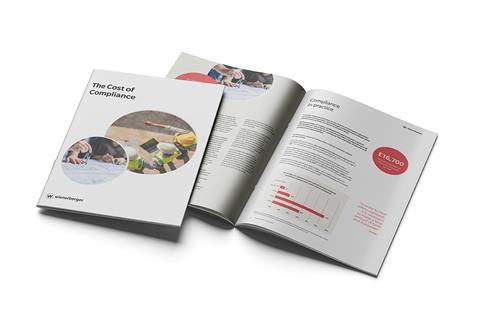
New findings from building materials manufacturer wienerberger, published in its white paper The Cost of Compliance, shine a light on this often-overlooked operational and financial burden now facing architects. Drawing on an independent survey of 80 UK practices, alongside commentary from leading firms and academic voices, the research reveals a profession grappling with rising workloads, increased risk and a growing distrust of product data.

A profession under pressure
One of the most striking findings from the research is the scale of additional administrative work triggered by the BSA. An overwhelming 95% of architects surveyed reported an increase in compliance-related tasks since the legislation came into force, with overall workloads rising by an average of 16%. For one in five, that increase exceeded 25%.
Much of this additional burden centres on product verification. Architects estimate they now spend an average of four extra hours each week checking product claims, certificates and performance data to ensure compliance. Based on a typical UK day rate, this equates to around £16,700 per employee each year – a significant hidden cost at a time when many practices are already operating under tight financial constraints.
For smaller and medium-sized practices, the challenge is particularly acute. While larger firms may have in-house compliance teams or specialist expertise, others are forced to divert valuable design time into administration and risk management.
Alan McCartney, Partner at Howells, explains, “Larger firms are more likely to have the resource, time, and breadth of expertise to manage and adhere to the latest legislative changes. The challenge is for smaller or medium-sized practices, who face bigger hurdles in demonstrating that they have the necessary experience to meet compliance demands.”
Rising liability and professional risk
Alongside increased workloads, architects are also feeling more exposed under the new regulatory regime. The BSA places greater responsibility on dutyholders to demonstrate compliance, maintain the golden thread of information and ensure that products perform exactly as specified.
Four in five architects (81%) are more concerned about potential professional indemnity claims since the introduction of the BSA, with 88% agreeing that the legislation has “fuelled rising liability”. These concerns are not merely theoretical: two thirds (67%) said they had already experienced an increase in claims, either personally or within their practice.
This heightened sense of risk is compounded by ambiguity within the regulatory framework. While the BSA sets out clear objectives, many architects report challenges interpreting guidance consistently – particularly when it comes to how different building control bodies apply the rules in practice.
Kristofer Adelaide, Director of KA—Architecture, highlights the issue, “There is so much room for interpretation that you can read through the relevant documentation and genuinely not know if what you’re proposing is acceptable or not. One building control officer might approve something that another is quick to reject. This subjectiveness creates huge uncertainty.”
In this environment, even well-intentioned design decisions can feel fraught with risk, encouraging more conservative specification choices and increasing reliance on extensive documentation.
Creativity under constraint
While safety and accountability are non-negotiable, the research suggests the cumulative effect of rising workloads and liability concerns is beginning to stifle creativity. Four in five architects agree that increased regulatory demands are hindering innovation, while seven in ten say they feel overwhelmed by their growing responsibilities.
Architecture has always required a careful balance between creativity, technical performance and compliance. However, the BSA has tipped that balance further towards risk mitigation, with many practices defaulting to familiar products and systems rather than exploring new or innovative solutions.
This cautious approach is understandable, but it raises questions about the long-term impact on design quality, sustainability and the industry’s ability to respond creatively to challenges such as net zero and housing delivery at scale.

A crisis of confidence in product information
One of the most revealing aspects of the research is the widespread lack of trust in construction product information. More than half of architects surveyed (58%) said they do not fully trust manufacturers’ product claims, citing missing, inconsistent or unclear data as a major barrier to confident specification.
For a profession now expected to verify and stand behind every aspect of product performance, this lack of confidence has serious implications. As one respondent noted, “Sometimes the specifications look perfect on paper but once we use the product on site, it just doesn’t perform the way it promised.”
The consequences are twofold. Architects are forced to spend additional time cross-checking information and seeking reassurance from multiple sources, while perceived risk limits specification choice – even where innovative solutions could offer performance or sustainability benefits.
Rob Charlton, CEO of Space Group, underlines the shift many practices have made, “The increased risks and responsibilities around product performance, testing and certification is an area of real focus since the introduction of the BSA. At Space Group, we do not specify any non-tested products, and we select from a limited manufacturer range focused on those with robust quality checks.”
The call for a single source of truth
When asked what would make compliance easier, architects were almost unanimous in their response: clearer, more transparent and independently verified product information, ideally accessible through a single digital source of truth.
Key priorities identified include mandatory independent testing with clear visibility of results, standardised product data, digital tools that streamline verification, and better integration with BIM and golden thread requirements.
These demands reflect a broader recognition that compliance cannot rest solely on the shoulders of designers. Manufacturers, regulators and industry bodies all have a role to play in ensuring reliable information is readily available and easy to use.
Raising the bar on product transparency
In response to the findings, wienerberger is calling for wider industry adoption of independent product assessments as a practical way to reduce risk and ease the compliance burden for architects.
A key part of this is alignment with the Code for Construction Product Information (CCPI) initiated by the Construction Products Association. The CCPI sets standards for how manufacturers record, verify and communicate product data, with the ambition of creating a trusted framework that could become a single source of truth.
In 2025, wienerberger became the first UK manufacturer to achieve CCPI assessment for its UK-manufactured bricks and pavers, setting a new benchmark for transparency. For architects, this provides greater confidence that product claims are accurate, substantiated and clearly presented – reducing the need for additional verification and helping maintain the golden thread of information.
These independently assessed products are supported by tools such as BIM objects, enabling seamless integration into digital workflows and improving traceability throughout the design and construction process.
Simplifying specification in a complex landscape
Beyond individual products, fragmentation across the building envelope remains a major challenge. Multiple suppliers, systems and data formats can quickly complicate specification and documentation.
To address this, wienerberger’s OneSpec service brings together an all-in-one specification guide for the entire building envelope. By considering sustainability, performance and technical objectives for each project, OneSpec consolidates compatible, compliant products into a single coherent document, helping to reduce duplication and save time.
Paul Instrell, Chief Commercial Officer at wienerberger UK & Ireland, says, “While there is consistent support for the BSA, our research has exposed what we are hearing from architects daily – that they are losing time filling the gaps when it comes to product information.
“The sector is already facing tighter budgets and increasingly complex design challenges, so there is an urgent need to work more collaboratively and efficiently. By committing to independent assessments and providing comprehensive documentation on compliant products, our aim is to ease the burden of compliance for architects.”
Building for what’s next
The BSA represents a necessary shift towards greater accountability in construction. However, as this research shows, its success depends on how effectively the industry supports those delivering compliance on the ground.
For architects, the challenge is not willingness, but time, clarity and trusted information. Improving product transparency, embracing independent verification and investing in genuinely useful digital tools will be critical if the profession is to move beyond risk aversion and continue to innovate.
By helping reduce the hidden costs of compliance, manufacturers can enable architects to focus on what they do best: designing safe, sustainable and inspiring places to live and work.
The Cost of Compliance white paper is available to download from wienerberger, offering further insight into the realities of compliance under the BSA and how the industry can better support architects in building for what’s next.
You can download The Cost of Compliance white paper here.