







The next generation of architects wants to contribute to public work but faces a system stacked against them. Nasios Varnavas and Era Savvides have some solutions…
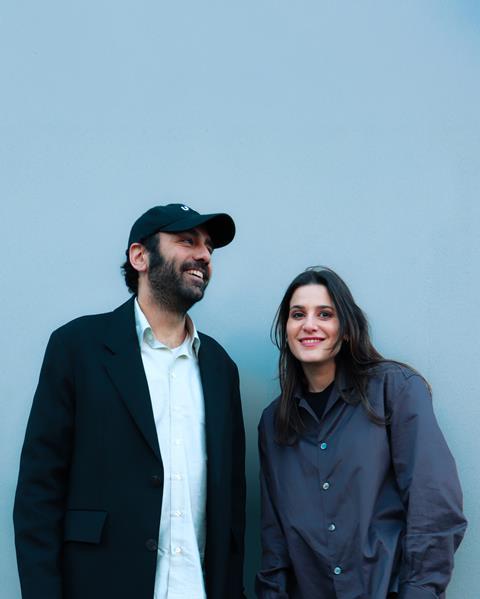
We started Urban Radicals with a belief that architecture is a public discipline. We built our practice without significant access to capital, driven by the social value of design and its responsibility to cities and people. Like many small practices in the UK, we remain excluded from public work by systems that reward repetition, scale and liability.
This should not be happening when public procurement claims to champion widening participation and fair access. Many small practices are drawn into open tenders, only to find themselves screened out by the challenges of a process which has been formed by non-architects and is almost impossible to tip.
We are designed out by means of risk, while real systems of support that can enable meaningful change and fair access to public work are barely there, leading to an almost decapitated generation of young professionals.
Established practices with public sector track records keep winning, while “the other” is filtered out before it even gets a seat at the table. And we have normalised this to the extent that we no longer name it as the failure it is
A chicken-and-egg situation has been established in which you need to have delivered a near-identical previous project in order to win the advertised one. The result is a closed circle in which established practices with public sector track records keep winning, while “the other” is filtered out before it even gets a seat at the table. And we have normalised this to the extent that we no longer name it as the failure it is.
Here are five ways that could recalibrate the procurement system to enable the next generation of architects to contribute to public work.
Break down the SME bracket and produce scale-specific tenders
The SME bracket was never calibrated to the realities of architecture practice. It currently groups a “small” practice of 10 people, with a “medium” practice of up to 249 people, as if they can compete on equal terms, despite obvious differences in resources and capacity to absorb risk and unpaid work. The same bracket includes “micro-entities” of under 10 people and under £1m turnover, which, crucially, make up the majority of UK architecture practices.
Is it really ethical to compete under these terms?
Procurement should distinguish between micro, small and medium practices with scale-specific commissions, insurance requirements and portfolio expectations set accordingly for each category.
Subdivide large commissions into smaller lots - smaller but with “more resolution”
We must move away from bundled contracts that award the design of entire housing blocks to a single practice. This type of commissioning limits authorship to a narrow field of practices, often working in very similar ways, which may be administratively easier, but often comes at the expense of the stated purpose of commissioning: to produce better places.
We see it in batch housing going up right now, at scale, across the country – with little specificity, connection to identity, local communities and genuinely new approaches of how we live together ethically and sustainably.
Subdividing larger sites into smaller packages designed by different practices creates routes for the new generation and other types of practice to contribute to our cities and people. Each subdivision adds more ideas, resolution, local specificity and intensity of thinking and design, raising quality and producing the variety and human scale that single-firm mega-sites almost never achieve. Smaller but with “more resolution”.
S+L=M
To overcome the administrative issues that may arise from this subdivided approach, we propose S+L=M: a new hybrid model built through collaboration between the fresh ideas and design intelligence of new practices and the technical infrastructure and experience of larger, established firms.
In response to its own stated aims of widening participation and fostering collaboration, procurement could mandate mentorship and intergenerational collaborative models that broaden authorship across types and scales of practice. S+L=M could take the form of a “custodianship” model in which a larger practice leads the overall design package and oversees the delivery and sharing of design responsibilities with a smaller practice or practices, which in turn can act as the design quality guardian(s). This ensures knowledge exchange and transfer between the two organisations, design quality, professional parity, legacy and potential for local specificity.
To incentivise large practices, contracts could be adjusted to ensure continuous service throughout the process from planning to building. In many European countries, the architect who wins planning is automatically contracted to follow the project through to delivery. In the UK, design and delivery are routinely separated in public contracts, often to the detriment of both and to the dilution of the architect’s agency and value.
Combining small (S) with large (L) practices can result in truly innovative work – we call this the middle way, towards a medium (M) scale of architecture.
Stop asking small practices to work for free
Tender submissions regularly demand substantial unpaid work that, for new practices, competes directly with fee-earning work and the basic task of staying afloat. Few other professions are asked to produce these amounts of work and complexity of outputs for free, just to compete in public tenders.
Outputs for competitive tendering at unpaid stages should be strictly capped and clearly scoped, reducing ambiguity and limiting the advantage of practices with more resources who can afford to invest extensively in unpaid work. A standardised public portal, where all applicants submit the same information within fixed formats and word limits, would reinforce parity across the process and remove the hidden cost of polished documents tailored for each tender.
Often, extensive concept design, narratives, diagrams, visualisations, method statements, costing and subconsultant input are requested – entirely unpaid. Where teams are shortlisted and asked to develop concept proposals, this work must be paid at a fair honorarium that reflects the real time and resources required, based on professional standards and rates, or as a percentage of the project value.
This is a relatively small percentage of the overall project budget. Investing and rewarding practices properly to carry out a feasibility study would benefit design quality and final outcomes.
Push professional bodies to act
It is easy to imagine new ways of doing things, and yet ideas are hard things to make happen. If there is no state system or mechanism in place to support and let them grow, they eventually disappear.
At a time when architects are leaving the profession in record numbers and the function of the architect is being progressively watered down, our professional bodies must do more to represent all their members – including the micro-entities that make up the majority of UK architecture practices. That means pushing harder on the government to legislate against unpaid speculative work and to reevaluate the SME bracket for architects.
Opening public work to new practices should not be seen as charity. It can bring design quality and professional value back to the conversation
They should help clarify to public clients what these categories mean in real terms for our profession so that they can recalibrate their expectations, fine-tune tender outputs and honoraria, and level the process to become more equitable. They can also push for the incentivisation of the kind of intergenerational collaborative models that can support a more diverse range of practices, creating a future legacy through solidarity and support of our profession.
Opening public work to new practices should not be seen as charity. It can bring design quality and professional value back to the conversation, enabling forms and spaces which are relevant and which represent, care and stand for the urgent issues of our times.
A new generation of ambitious, socially-engaged practices are ready to contribute. Can we work together to enable this?
Postscript
Nasios Varnavas and Era Savvides are the founders of Urban Radicals, a practice based between London and Nicosia. A longer version of this article appears on their Substack here







2 Readers' comments