





David Rudlin pays tribute to a an ‘utterly fearless’ Irish journalist who raged against the destruction of historic Dublin
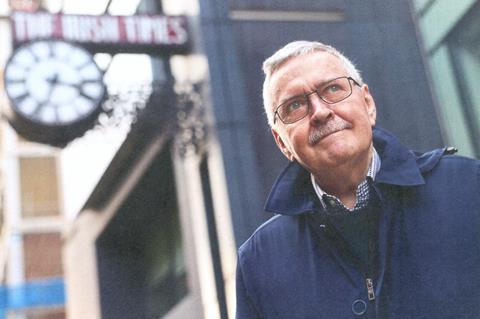
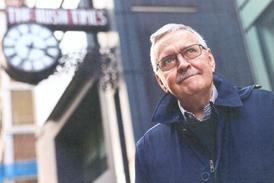
When I became chair of the Academy of Urbanism, one of the first things I did was to get the boat to Dublin to placate Frank. This was Frank McDonald, who died in August, a friend who was lovely, waspish, knowledgeable and exasperating in equal measure.
He was a journalist for 35 years at the Irish Times and, for much of that time, was the paper’s environment editor writing almost exclusively about urban planning and architecture. Bob Geldof described him as “a permanent thorn in the fat arse of municipal pretention”.
Tony Reddy called me to tell me about Frank’s death. They had been friends since university, compared to which I only knew him slightly. However, Frank was possibly the most important urbanist you have never heard of.
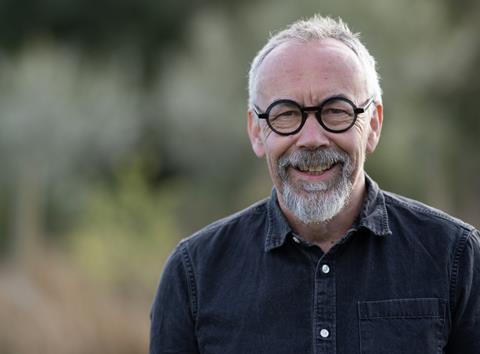
Frank resigned from the academy over its failure to support him in a battle he was fighting in Kilkenny. In this he was almost certainly in the right, but the former academy chair John Thompson needed the support of the council to hold an event in the city and, as often happens with these things, couldn’t openly criticise them.
Frank was the writer in residence at the academy and taught me so much about writing pieces such as this. I worked with him on the academy’s first two books, once sending him a chapter to copy edit and receiving it back 20 minutes later. He had lost nothing, strengthened the argument and mysteriously reduced the word count by a third.
My mission to persuade him not to resign from the academy was successful and coincided with his retirement. He spent the day walking me around Dublin, recounting the history of every building and gossiping scurrilously about every architect and property developer in the city.
He made his name with his monumental book The Destruction of Dublin published in 1985. The architectural historian Maurice Craig described the book as being “written in rage!”
Frank was furious at the way that historic Dublin was being destroyed, sites were being cleared for car parking, surrounded by advertising hoardings, road building was cutting great swathes through the Georgian city and insensitive planning was destroying the city he loved.
But more than that, and much more controversially, he linked the destruction to alleged corruption involving the shadowy “Grand Canal Syndicate”. In the book he named names, including individuals in the city corporation, developers, prominent local architects and even the property editor at his own paper (much to the annoyance of his editor).
Later, in 1991, he ran a series of Irish Times front page stories with fellow journalist Mark Brennock alleging corruption in the local planning authority. The pieces led to tribunals that sat for a combined total of 30 years and cost some €300m, leading to significant reforms in accountability and oversight.
He ended up objecting to every licence renewal in the area, becoming a proper thorn in the side of city authorities
He used his retirement to write his autobiography, Truly Frank – a Dublin Memoir, published by Penguin. He recounts his experience living as a gay man in Ireland in the years when it was still a criminal offence. He lived for 40 years with his partner Eamon and was delighted to marry him in 2016 after gay marriage was approved by referendum.
One of the campaigns he fought was for the regeneration of Temple Bar. The council had been planning to demolish the area to build a bus station but it was saved and regenerated. Frank was one of the first to buy a flat in the area but was outraged by the way Temple Bar was overrun by bars and hen parties.
On another occasion when I was with him in Dublin, we returned from a meal to find a wonderful group of drummers, with a huge crowd, busking on his street. I thought it was great but, turning around, realised that Frank was berating the group in front of the crowd because it was five past ten and there was a 10pm curfew.
He ended up objecting to every licence renewal in the area, becoming a proper thorn in the side of city authorities, with a one-man campaign to tame its nightlife. In his autobiography he describes a confrontation with one local bar owner: “Her attitude was just so negative, she just smirked and said: ‘It’s a nightclub – what do you expect?’ I basically put my hands on either side of her head and shook it for a few seconds. I shouldn’t have done that.” Soon after he moved to Blackrock.
Frank’s friends knew he was ill, he had always been a smoker and had lung cancer, but thought he had a few more years. His sudden death came as a great shock and we will miss him hugely. As his obituary in the Irish Times said, “he was utterly fearless and ferocious” – and he changed Ireland forever.
Postscript
David Rudlin is founding principal of Rudlin & Co and visiting professor at Manchester School of Architecture. He is a co-author of High Street: How our town centres can bounce back from the retail crisis, published by RIBA Publishing.






No comments yet